
















Life should be large and not long; spreading joy is of greater importance than owning the riches of the world
Bhaskar Parichha
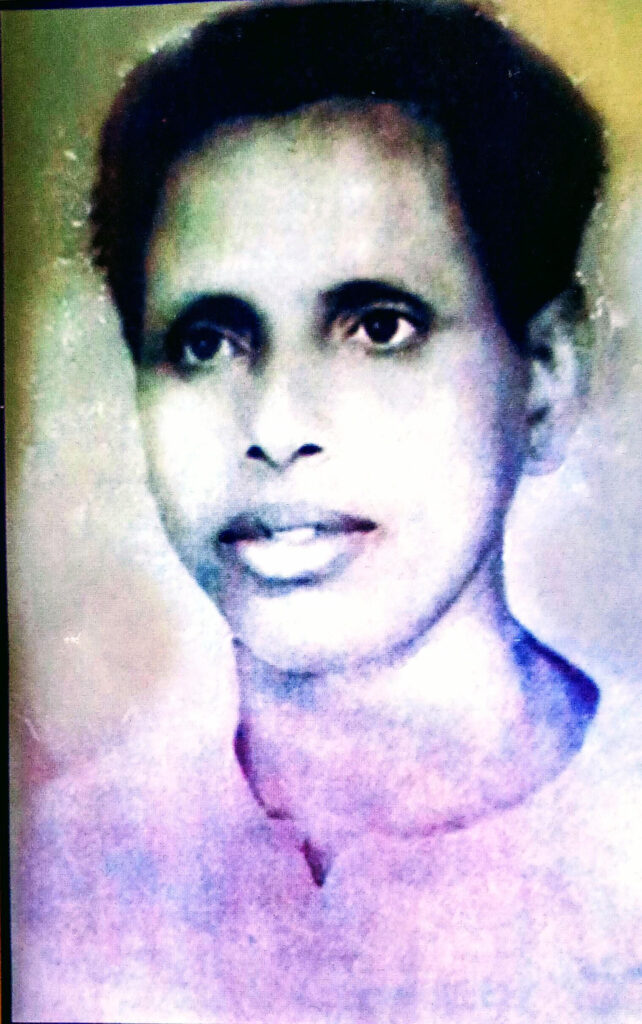
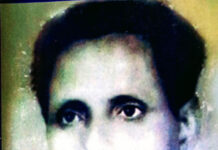
This simple yet profound philosophy guided the life and work of Guru Dayanidhi Das (1926-1979), one of the pioneering architects of modern Odissi dance and music. Though he passed away at the relatively young age of fifty, his contributions to dance, music, drama, literature, education, and social service left an enduring legacy that continues to shape Odisha’s cultural landscape.
Today, Guru Dayanidhi Das is remembered not merely as a dance teacher or cultural organizer, but as a visionary whose dedication helped transform Odissi from a regional performing tradition into a recognized classical dance form of India.
Born in the village of Sajana Pada in Nayagarh district of Odisha, Dayanidhi Das displayed an extraordinary fascination for the performing arts from an early age. As a child, he spent countless evenings attending village jatras, learning folk dances, and experimenting with musical instruments, particularly the tabla. His passion for artistic pursuits often came at the expense of his formal education, much to his father, Sanatana Das’s, displeasure.
Family opposition, however, did little to diminish his determination. A severe reprimand from his father eventually drove the young Dayanidhi to leave home while still a Class XI student. Forced to fend for himself, he continued his studies through sheer perseverance, supporting himself by giving private tuition lessons. He completed his matriculation from Nayagarh and later moved to Cuttack, a city that would become the center of his life’s work.
In Cuttack, Dayanidhi Das immersed himself in the worlds of music, dance, and scholarship. While pursuing higher studies at Ravenshaw College, he received formal training in Kathak and Hindustani classical music. At the time, the city’s leading institutions for performing arts were the National Music Association and Utkal Sangeet Samaj. These institutions provided him with opportunities to refine his artistic abilities and interact with some of the most accomplished musicians and dancers of the era.
Although he could not complete advanced training in vocal music, he earned the prestigious Nritya Pravakar qualification in Kathak and Odissi from the Prayag Sangeet Samiti in Allahabad. He also trained rigorously in tabla under the renowned musician Radha Gobinda Ghose. This broad artistic foundation equipped him with a rare understanding of rhythm, movement, music, and stagecraft that would later prove invaluable in the development of Odissi dance.
The turning point in his career came when Babulal Doshi, founder of Kala Vikash Kendra in Cuttack, invited him to join the institution during its formative years. Dayanidhi Das accepted the challenge wholeheartedly and became its first dance teacher. His involvement extended far beyond classroom instruction. He participated in institution-building, curriculum development, student recruitment, fundraising, performance organization, and artistic planning.
One of his most significant achievements occurred during 1952–53 when he prepared one of the earliest systematic syllabi for the dance form that would later gain worldwide recognition as Odissi. At that time, the dance tradition lacked a standardized curriculum and even a universally accepted name. While developing the syllabus, Dayanidhi Das adopted and promoted the name “Odissi” to identify the classical dance tradition of Odisha.
This contribution was historic. What appears today as a simple nomenclature was, in fact, a crucial step in defining the identity of the dance form. The syllabus he prepared established a structured approach to training and enabled institutions to teach the art in a systematic manner. He subsequently developed an Odissi curriculum for the Prayag Sangeet Samiti in Allahabad, a framework that continued to influence dance education for decades.
His contribution extended even to terminology within the dance repertoire. He named the opening segment of an Odissi recital “Mangalacharan,” a term that has since become an integral part of the classical performance structure.
During the 1950s, Odissi faced significant social challenges. Dance and music were often viewed with suspicion by conservative sections of society, and many families hesitated to allow their daughters to pursue training in the performing arts. Dayanidhi Das worked tirelessly to change these perceptions. Through public performances, educational outreach, and institutional initiatives, he helped establish dance and music as respectable and intellectually rich artistic disciplines.
His efforts coincided with a growing movement among artists and scholars to revive and codify Odisha’s classical dance traditions. Recognizing the need for collective action, Dayanidhi Das played a leading role in bringing together eminent dance gurus, musicians, scholars, and cultural activists. Their collaborative efforts led to the formation of Jayantika, an organization that would become one of the most influential forces in the evolution of modern Odissi.
Widely regarded as a watershed in the history of the dance form, Jayantika undertook the task of standardizing techniques, repertoire, terminology, costume conventions, and performance structures. As General Secretary of the organization from 1958 to 1963, Dayanidhi Das provided crucial leadership during its formative years. His organizational ability, scholarly insight, and commitment to consensus-building helped shape many of the foundational principles that continue to guide Odissi today.
His dedication to the cause was so profound that he resigned from a teaching position at Utkal Vidyapitha in Kharagpur in order to return to Cuttack and devote himself fully to the activities of Jayantika and Kala Vikash Kendra.
Even while pursuing cultural work, Dayanidhi Das maintained an impressive academic career. He earned a Bachelor’s degree with honors in Odia and later completed his Bachelor of Education training at Radhanath Training College. His academic excellence attracted the attention of distinguished educationist Baidyanath Rath, who encouraged him to join educational institutions under the state education system.
Over the years, he taught subjects such as Geography, English, and Odia in various schools. Simultaneously, he remained deeply involved in arts education. The Board of Secondary Education entrusted him with responsibilities related to music education, including curriculum development, question setting, and practical examinations. Through these roles, he helped institutionalize the study of music within formal educational structures.
His influence extended across numerous cultural organizations, including the National Music Association, Utkal Sangeet Samaj, Lalita Kalapitha, Kalinga College of Dance and Music, and several other institutions. He also founded Kalabhavan, which emerged as an important center for artistic activity and remains one of his enduring legacies.
Beyond dance and music, Dayanidhi Das was a prolific writer and creative thinker. He authored dance dramas, plays, ballets, poetry, and educational literature, including works designed for young learners. Many of his literary contributions are preserved in libraries and archival collections. His creative productions were regularly broadcast by All India Radio and Doordarshan, helping bring Odia culture to wider audiences.
As a choreographer, he excelled in both Odissi and Kathak traditions. His talents as a dramatist and actor further enriched his artistic repertoire. One notable achievement was his contribution to the dance sequences in the Odia film Laxmi (1962), which received national recognition through a President’s Award.
Despite his extensive commitments in urban cultural circles, Dayanidhi Das never forgot his roots. In 1968, he established Khandapada Nayagarh Janata High School and the Baliarsingh Library in his native region, reflecting his belief that education and culture should reach rural communities as well. He consistently worked to create opportunities for young people to access knowledge and artistic training.
Another remarkable aspect of his cultural vision was his effort to promote classical music. Through Kalabhavan, he organized regular vocal music concerts, often held on full-moon evenings. These gatherings attracted eminent musicians and fostered an atmosphere of artistic exchange and appreciation.
Yet the achievements of Guru Dayanidhi Das came at a personal cost. Financial constraints, relentless work, and the physical demands of his mission gradually affected his health. Nevertheless, he remained committed to his ideals until the very end. His spirit never weakened, even when his body did.
Guru Dayanidhi Das passed away at an early age. He was only fifty-three. Although his life was relatively brief, the impact of his work has endured for generations.
His legacy lives on through the institutions he nurtured, the students he inspired, and the artistic traditions he helped preserve. Jayantika, Kalabhavan, and numerous other organizations continue to reflect his vision.
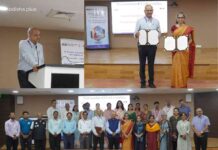
In 1990, his daughter, Dr. Bijayalakshmi Das, founded the Dayanidhi Smruti Kala Parishad in Cuttack to preserve and promote his memory. The organization remains active, supported by teachers, students, artists, and admirers dedicated to carrying forward his ideals.
Guru Dayanidhi Das occupies a unique place in Odisha’s cultural history. He was simultaneously a teacher, scholar, administrator, choreographer, writer, organizer, and social reformer. Most importantly, he was a unifying force who brought together artists, institutions, and communities in service of a larger cultural mission.
Modern Odissi owes much to his vision, scholarship, and tireless labour. His contributions helped define the identity of the dance form, establish its educational foundations, and secure its recognition as one of India’s great classical traditions. For these reasons, his name continues to be remembered with respect, gratitude, and admiration as one of the principal architects of Odisha’s cultural renaissance.
(The author is a senior journalist and columnist. Views expressed are personal.)