






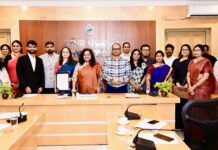




















Combining scientific childcare practices with community-led care, Bhubaneswar’s Model Creche is nurturing young minds through a holistic approach to early childhood development
Abhishek Ray and Sourav Prakash Das
A child’s early years lay the foundation for a lifetime of learning, growth and development. Yet, for many working parents, ensuring the right care and attention for their little ones while meeting professional responsibilities remains a daily challenge. In a city like Bhubaneswar, where nuclear families and dual-income households are increasingly common, the need for safe, reliable and affordable childcare has become more pressing.
Addressing this need, a model creche in Bhubaneswar is offering more than just a place for children to stay while their parents are at work. It is creating a nurturing environment where little ones can eat well, learn, play, interact and grow under attentive care.
Established through a collaborative initiative of the United Nations Development Programme (UNDP) and Bhubaneswar Municipal Corporation (BMC), the centre is managed by Mobile Creches, an Indian non-profit founded in 1969 which aims to provide early childhood care and development for children of marginalised migrant and informal-sector workers, particularly at construction sites and urban slums. It caters to children aged six months to six years and its approach brings together essential elements of early childhood care, with particular attention to nutrition, health, education and emotional and physical development.
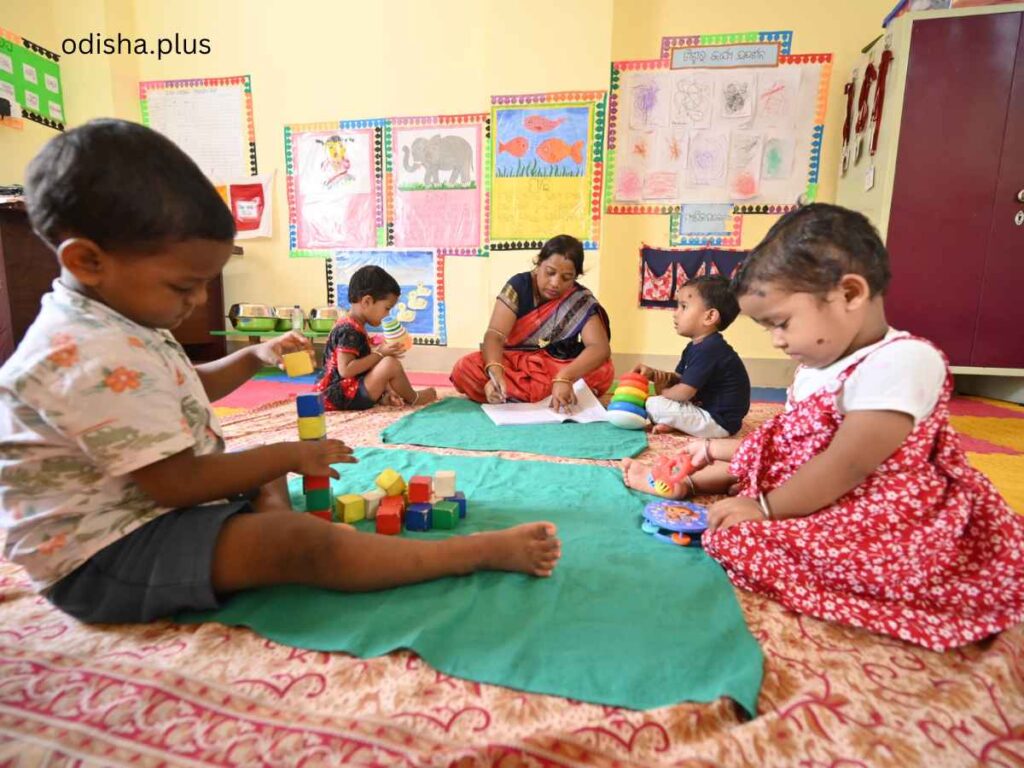
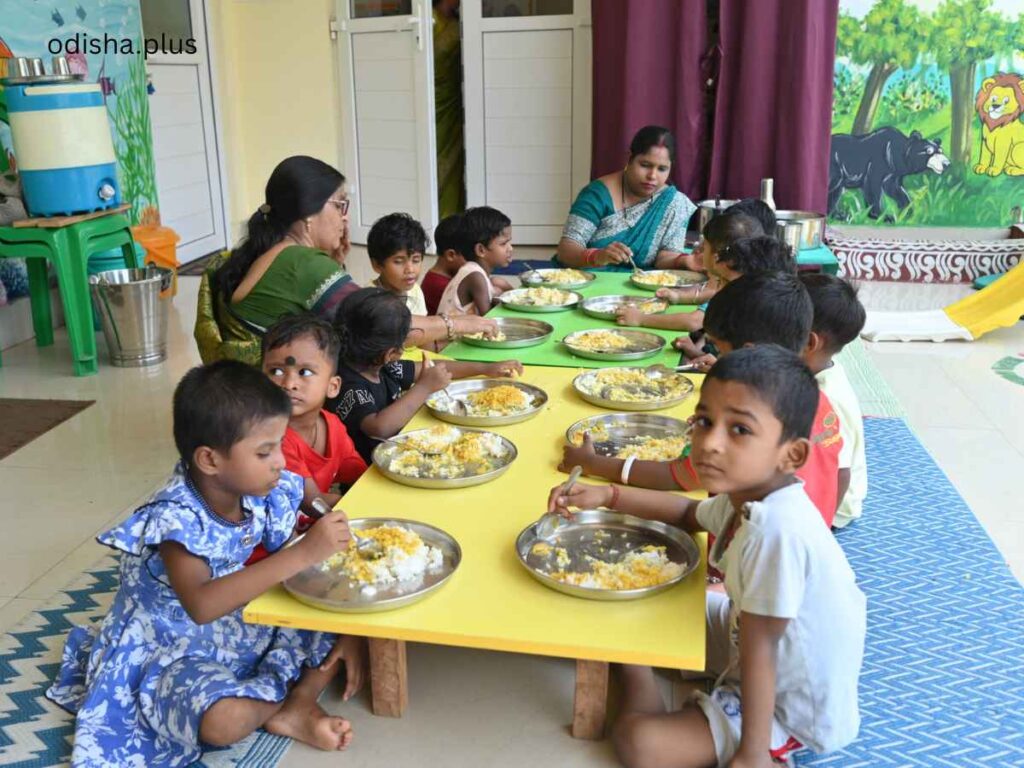
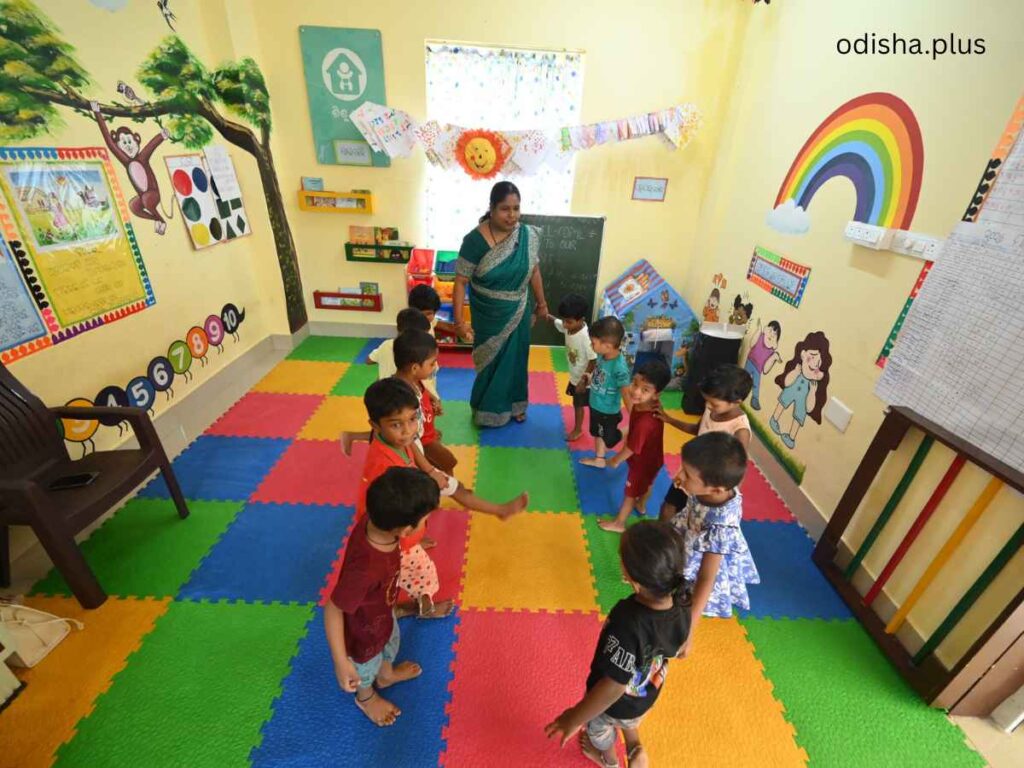
The centre follows a structured daily routine, beginning with breakfast and extending through fruit breaks, lunch and evening refreshments. Dedicated spaces for sleeping and playing, age-appropriate learning activities and basic health monitoring ensure that children’s everyday needs are addressed. An on-call paediatrician is also available to attend to any medical requirements.
Dr Abha Mishra, Former State Head, UNDP Odisha, emphasises that the creche has been designed around a scientific, holistic approach to early childhood care. “During the formative years, childcare must address every aspect of a child’s development. Along with proper nutrition and early education, equal attention must be given to their physical and emotional well-being. The creche brings all these essential elements together to provide children with a healthy and nurturing environment,” she says.
What makes the model particularly distinctive is its community-led management. Women from Self-Help Groups (SHGs) have been trained by UNDP to manage the centre and provide appropriate care. From maintaining daily routines to preparing meals and engaging children in learning and play, these caregivers play an important role in shaping the children’s experience.
For working parents, the centre offers reassurance alongside affordability. With nominal registration and admission fees of ₹100 and ₹500 respectively, it provides an accessible alternative to private daycare facilities. Parents have also noticed positive changes in their children’s habits and development.
Purnima Parida, a parent, says the attentive care provided by the creche staff has made it easier for her to pursue her work without worrying about her child. Another parent, Simarani Behera, a healthcare professional, has observed improvements in her child’s communication and eating habits since joining the centre.
Recognising the potential of this initiative, BMC is planning to establish two more such centres where working families, including those from economically vulnerable communities, need dependable childcare support.
Priyanka Mallick, Deputy Commissioner (Social Welfare), BMC, says, “We are planning to establish two more centres of this kind, one in the Mancheswar industrial area and another in Bharatpur, where a significant number of families from slum settlements live. Both parents in many of these households go out to work, making accessible childcare facilities particularly important.”
The model creche reflects a larger understanding that early childhood care is not merely about supervision; it is about creating the right conditions for every child to thrive. By combining professional guidance, community participation and accessible services, the initiative is taking a meaningful step towards making quality childcare an integral part of an inclusive urban environment.
(The writers are communications professionals specializing in content writing, digital journalism, and public relations. Views expressed are personal.)