


















The post-cyclone Ganjam floods trigger a political confrontation between BJP and BJD over relief management, reservoir operations, and preparedness
OdishaPlus Bureau
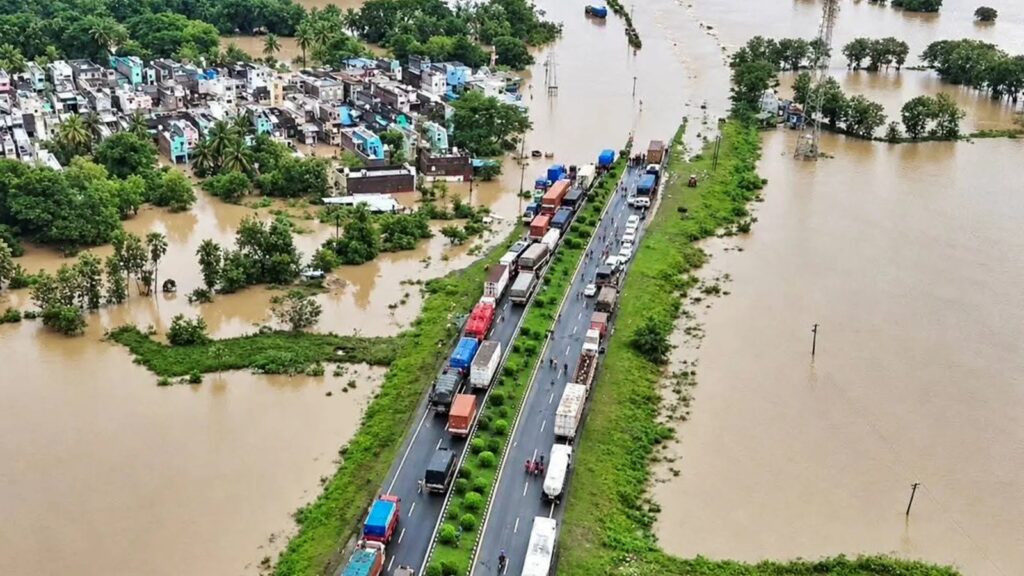
The devastating floods in Ganjam district following Cyclone Arnab have triggered a political confrontation between the ruling BJP and the Opposition BJD, with allegations of administrative negligence, inadequate relief and a delayed response dominating the political discourse even as thousands of people struggle to rebuild their lives.
The disaster has put the Mohan Majhi government under pressure, with videos of ministers and BJP legislators facing angry residents during visits to affected areas circulating on social media. The Opposition has described the floods as a “man-made disaster”, alleging that inadequate preparedness and mismanagement of reservoirs aggravated the situation.
The BJP, meanwhile, has sought to turn the spotlight on BJD president and Leader of the Opposition Naveen Patnaik, questioning his absence from Hinjili, his Assembly constituency and one of the worst-affected areas. Posters describing Patnaik as “missing” appeared in parts of the constituency, triggering another round of political exchanges.
Parliamentary Affairs Minister Mukesh Mahaling questioned why Patnaik had not visited his constituency even as BJD leaders criticised the government’s handling of the crisis. Patnaik, however, spoke to the Ganjam Collector to take stock of the situation and directed party workers to assist affected residents. He was also scheduled to visit Surada, Sheragada, Aska and Hinjili on Saturday.
The BJD has alleged that despite advance warnings of extremely heavy rainfall, the administration failed to take adequate precautionary measures, particularly in managing reservoirs in the Rushikulya river basin. Former bureaucrat and BJD leader Sujata Rout Karthikeyan claimed that several reservoirs were nearly 80 per cent full and that the opening of their gates after heavy rainfall, without adequate warning to downstream residents, aggravated the flooding.
However, the state government’s assessment has offered a different explanation. According to the Water Resources Department, water storage had been reduced in 10 reservoirs ahead of the cyclone following advance instructions issued on October 23. The department attributed the unprecedented flooding largely to the extraordinary intensity of rainfall, with October 28 and 29 accounting for more than 70 per cent of the month’s total precipitation. Patrapur recorded 546 mm of rainfall in 24 hours on October 29.
The BJP has blamed the previous BJD government for inadequate long-term flood-control infrastructure, including the management of riverbanks and reservoirs. The Opposition, in turn, has questioned the present administration’s preparedness despite meteorological warnings.
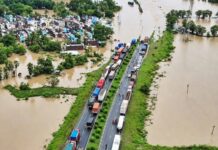
Ganjam, along with neighbouring Gajapati and Kandhamal, witnessed one of the worst flood situations in decades, reviving memories of the devastating 1990 floods in the Rushikulya River basin. Roads, bridges, houses and public infrastructure suffered extensive damage, while standing paddy crops and vegetable fields were inundated. Thousands of people were forced to take shelter in relief camps.
The scale of the destruction has also prompted a major administrative response. A central inter-ministerial team visited the affected districts to assess the damage. Following its visit, the state government sought preliminary financial assistance of Rs 2,526 crore from the Centre for immediate relief, restoration and reconstruction. It has also sought a special package of Rs 10,000 crore for long-term disaster-resilient infrastructure in Ganjam, Gajapati and Kandhamal.
Chief Minister Mohan Charan Majhi has held discussions with legislators from Ganjam and directed the Revenue Department to ensure that affected families receive assistance and damaged infrastructure is restored. Several ministers and senior BJP leaders have also visited the district to oversee relief operations and interact with residents.
The political significance of Ganjam makes the controversy particularly important for both parties. The district has 13 Assembly constituencies and two Lok Sabha constituencies. In the 2024 elections, the BJP won 11 Assembly seats and both parliamentary constituencies, ending the BJD’s longstanding dominance in the region. The BJD retained Hinjili, while the Congress won one Assembly seat.
For the BJP, the floods present a challenge to its political standing in a district that contributed substantially to its electoral victory. For the BJD, the crisis offers an opportunity to question the new government’s administrative record while invoking its own experience in disaster management during Naveen Patnaik’s tenure.
But beyond the political sparring lies a more consequential question: whether the scale of human suffering could have been reduced through better forecasting, reservoir operations, timely evacuation and coordination among departments.
As relief and rehabilitation gather momentum, the people of Ganjam will expect answers that go beyond political accusations. An independent assessment of reservoir management, flood preparedness and the administration’s response will be essential to establish accountability and prevent a recurrence of such devastation.