

















In his final interview on OdishaLIVE’s ‘Kete Katha’, the legendary neurosurgeon shared a vital roadmap to combat brain stroke, the ailment that ultimately claimed his life
By Nilambar Rath
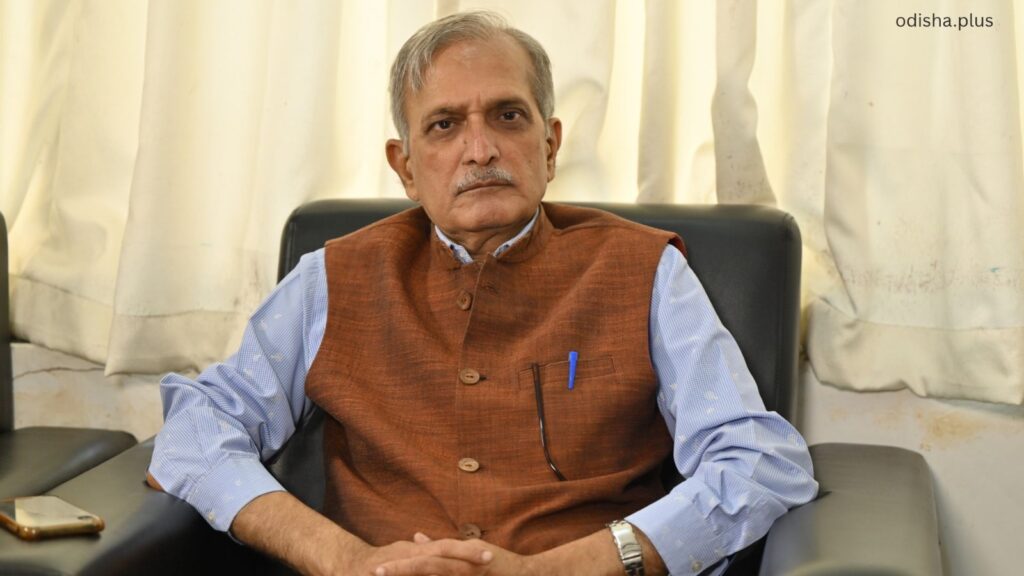
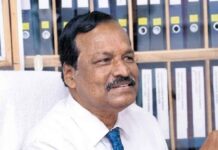
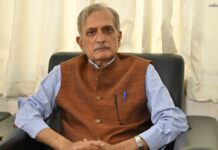
Destiny often writes its scripts with a poignant, cruel irony. When the news arrived that Padma Shri Dr. Ashok Kumar Mahapatra, one of India’s greatest neurosurgeons and the founding Director of AIIMS Bhubaneswar, had breathed his last at AIIMS New Delhi while undergoing treatment, a profound silence fell over Odisha and the country’s medical fraternity. What made his departure even more heartbreaking was the cause: he had suffered a severe brain stroke.
For over four decades, his steady hands had navigated the most delicate corridors of the human brain, restoring life and dignity to thousands of patients. He was a clinician who relentlessly campaigned to educate the public about neurological emergencies. Yet, in the end, the master healer succumbed to the very condition he had spent a lifetime fighting.
Not long before his passing, we had the privilege of hosting Dr. Mahapatra for an exclusive, in-depth conversation on OdishaLIVE’s flagship podcast series, ‘Kete Katha’. Running over 70 minutes, that conversation stands today as probably his last elaborate public interview.
Listening back to his voice now is a deeply moving experience. Every word he spoke about prevention, golden-hour management, and systemic readiness sounds less like a routine medical discussion and more like a final, urgent testament left behind for society and policymakers.
Understanding the “Brain Attack” and Its Root Causes
During our OdishaLIVE podcast, when the conversation turned toward neurological emergencies and our public health awareness campaigns under the IFI Foundation alongside the World Stroke Organization [48:24], Dr. Mahapatra immediately pointed out a fundamental communication gap. He noted that while the common citizen instantly senses danger and rushes to a hospital upon hearing the term “heart attack,” the phrase “brain stroke” fails to evoke the same urgency [44:45].
“People do not understand ‘brain stroke’; if you call it a ‘brain attack,’ they will immediately grasp its gravity,” he explained during the interaction [44:45]. Tracing global medical priorities back to the 1990s, which was declared as the Decade of the Brain, he observed that brain stroke has rapidly escalated into the second leading cause of death and permanent disability worldwide, right alongside heart attacks and cancer [44:58].
In his characteristically lucid style, Dr. Mahapatra used a simple rural metaphor to explain the two distinct types of stroke to the layperson: an irrigation canal feeding a paddy field [47:09]. If the canal gets blocked by silt or debris, the crops downstream wither and die from lack of water; in the human brain, this is an ischemic stroke (caused by a blood clot blocking an artery), which accounts for nearly 85 percent of all cases [47:12, 52:52]. Conversely, if the embankment of the canal breaches under excessive pressure, the rushing water floods and destroys the surrounding crops; in the brain, this is a hemorrhagic stroke (caused by a ruptured blood vessel leading to internal bleeding), accounting for the remaining 15 percent [47:24, 52:52].
What drives this modern public health crisis? Dr. Mahapatra pointed to five primary lifestyle and clinical culprits: hypertension (high blood pressure), diabetes, obesity, high cholesterol, and smoking or alcohol consumption [46:08]. A person carrying all five risk factors faces a three-to-five-fold higher risk of suffering a heart attack or brain stroke compared to a healthy individual [46:19].
He was particularly vocal about dietary habits in Odisha, singling out excessive salt consumption as a silent killer fueling rampant hypertension across the state [01:02:39]. He remarked with concern how people habitually add raw salt to their plate even when eating a traditional meal of Dalma, curry, and greens that already contain adequate salt. He urged citizens to give up this practice immediately [01:02:39]. Alongside mindful eating, he strongly advocated mandatory annual preventive health check-ups, monitoring blood pressure, blood sugar, lipid profiles, ECG, and liver and kidney functions, for every individual crossing the age of 40 [01:03:10].
Recognizing Warning Signs and the Sacred “Golden Hour”
One of the most valuable segments of his final interview was his emphasis on recognizing the early warning signs of a stroke. Unlike a heart attack, which announces itself with crushing chest pain, a brain stroke can sometimes be deceptive, causing families to lose precious hours in hesitation [49:03].
Dr. Mahapatra highlighted the concept of a “warning bleed” or sentinel headache, which manifests as a sudden, severe headache accompanied by neck stiffness [49:03]. Too often, individuals dismiss this as a routine migraine, acidity, or cervical spondylosis, taking painkillers at home until a massive second bleed pushes the patient into paralysis or a coma [49:19, 57:07]. He stressed a vital clinical thumb rule: if a person experiences a sudden, severe headache accompanied by a sharp spike in blood pressure (such as 180-200 systolic), or sudden slurring of speech, facial drooping, or weakness in an arm or leg, they must be rushed immediately to a hospital equipped with a CT scan [49:52, 54:18].
In stroke management, time is brain. Dr. Mahapatra underscored the sacred value of the “Golden Hour,” specifically the first two to three hours (and up to four-and-a-half hours) from the onset of symptoms [56:03, 56:17]. If an ischemic stroke patient reaches a capable hospital within this window and a CT scan rules out internal bleeding, doctors can administer thrombolysis, a clot-dissolving injection that restores blood flow and saves brain tissue [52:04, 53:08].
To illustrate how transformative golden-hour intervention can be, he shared a personal memory from November 2019 [51:29]. His own aunt, then 88 years old and living in Bhubaneswar, suddenly lost her speech and developed paralysis on one side [51:29]. Because her family immediately recognized the signs and alerted him, she was rushed to a nearby hospital within minutes, scanned, diagnosed with a blocked arterial branch, and given a clot-busting injection within two hours [51:42, 52:04]. Within four hours, her speech and movement returned, working “like magic,” as he fondly recalled [52:04].
Even more astonishing was a revelation from his own life. Years ago, while waiting at the Kolkata Airport, Dr. Mahapatra himself experienced a sudden, temporary loss of speech, known clinically as a Transient Ischemic Attack (TIA) [54:39]. Recognizing the neurological emergency instantly, he procured and self-administered a Heparin injection right there at the airport before boarding his flight back to Delhi, where an angiography later confirmed an arterial blockage that could have turned fatal [54:55, 55:11].
“Because I was a doctor, I knew what to do,” he reflected softly on the podcast [55:34]. “But what about the common man?” [56:03]
A Blueprint for Healthcare System Readiness
That single question, “What about the common man?”, formed the crux of Dr. Mahapatra’s vision for overhauling our public healthcare architecture. While public awareness is half the battle, he was candid about the reality that awareness means little if a patient reaches a hospital on time only to be met by systemic delays and unequipped wards [52:22, 53:46].
From his insights in the interview, a clear four-pillar roadmap emerges for making our healthcare system ready to respond to the brain stroke crisis:
1. Decentralizing Dedicated Stroke Units Across Districts: A stroke patient cannot survive a five-hour road journey from a remote district to Bhubaneswar or Cuttack; by the time they arrive, the golden window has closed, and brain cells are irreversibly lost [53:24, 53:33]. Dr. Mahapatra advocated establishing specialized Stroke Units at the district level and across regional medical hubs so that no citizen is more than 50 kilometers, or a one-to-two-hour drive, away from a facility equipped with a functioning CT scanner and thrombolytic medication [53:24, 56:17].
More importantly, hospitals do not need to wait for a super-specialist neurosurgeon to initiate stroke care; trained general physicians and MD medicine specialists at district hospitals can read a basic CT scan to rule out hemorrhage and administer life-saving thrombolysis [53:08, 01:01:46].
2. Fast-Track Hospital Triage – From the Security Gate to the Scanner: One of Dr. Mahapatra’s sharpest observations was how hospital bureaucracy kills golden hours [59:13]. In an overcrowded casualty ward, a stroke patient often gets stuck in the same queue as patients with routine fevers or diarrhea while relatives run from counter to counter filling out forms and paying fees [58:43, 59:13]. He insisted that stroke training must begin at the hospital entrance, starting with the security guard, the stretcher-bearer, the registration clerk, and the triage nurse [50:57, 59:43, 01:00:28]. The moment a patient arrives with suspected stroke symptoms, the security guard and paramedical staff must bypass routine queues, alert the emergency physician, and wheel the patient straight to the CT scan room within 15 minutes [01:00:13, 01:00:43].
3. True “Advanced Life Support” Ambulances: Right at the opening of the podcast sits a pointed critique of our emergency transport system [00:00, 01:01:13]. Simply painting the words “Advanced Ambulance” on the exterior of a van does not make it one [01:01:27]. A genuine stroke-ready ambulance must be equipped with vital monitors, blood gas analyzers, portable ventilators, and trained paramedics capable of stabilizing airway and blood pressure in transit while alerting the receiving hospital before arrival [01:01:13, 01:01:46].
4. Decongesting Tertiary Care Through Strict Referral Discipline: Reflecting on the massive crowds outside AIIMS New Delhi and AIIMS Bhubaneswar, Dr. Mahapatra pointed out that nearly 70 percent of patients queuing at super-specialty OPDs are suffering from primary ailments, like seasonal fevers, gastroenteritis, or basic hypertension, that can easily be treated at local Primary Health Centres (PHCs) or District Headquarters Hospitals [35:45, 36:00]. Strengthening peripheral health centers and enforcing a proper referral mechanism is essential so that apex institutions like AIIMS can dedicate their bandwidth to complex surgeries, acute stroke interventions, and critical care [36:31, 37:36].
Remembering a Man of Conviction: A Personal Tribute
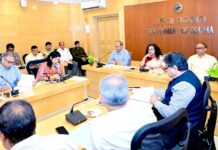
For me, watching Dr. Ashok Mahapatra speak on ‘Kete Katha’ brought back vivid memories of an afternoon in 2015. At the time, I was serving as the founding Editor of News18 Odia, and I had the opportunity to interview him for my weekly flagship talk show, ‘Sidhakatha’. He was then at the helm as the founding Director of AIIMS Bhubaneswar, and we recorded the conversation right inside his office chamber on the AIIMS campus.
Even in that first long interaction, what struck me immediately was how remarkably candid, unpretentious, and straightforward he was. Unlike many top administrators who speak in guarded, diplomatic platitudes, Dr. Mahapatra spoke with fearless conviction. Whether he was discussing the early hurdles of building a premier institution from scratch in Odisha, the ethics of medical practice, or the responsibilities of the state, he never minced words.
He embodied a rare blend of world-class surgical brilliance and deep-rooted personal humility. Having risen from a modest middle-class joint family in Puri and studying at a village school in Birnarasimhapur [01:50, 04:58], he went on to head the neurosurgery department at AIIMS New Delhi, treat Presidents, Prime Ministers, Chief Ministers, and Governors [01:06:02], and lead the historic, globally acclaimed craniopagus separation surgery of Odisha’s conjoined twins, Jaga and Kalia [17:21, 20:39].
Yet, he remained a doctor anchored in empathy for the ordinary citizen. As he recounted in our podcast, he never allowed VIP culture to supersede a critically ill poor patient waiting in his hospital [01:07:31, 01:08:53]. For him, medicine was never a commercial enterprise; it was a sacred vocation demanding relentless hard work, ethical integrity, and human compassion [08:30, 08:53].
Dr. Ashok Kumar Mahapatra was a doctor’s doctor: thoroughly patient-oriented, fiercely upright, and driven by an unwavering spirit of public service. Though the cruel irony of a brain stroke took him away from us, his final elaborate conversation on OdishaLIVE leaves behind an enduring prescription for our healthcare system. The greatest tribute we, as citizens, media professionals, and policymakers, can pay to this legendary son of Odisha is to turn his words into action and build a stroke-ready Odisha where no life is lost for want of awareness or timely golden-hour care.
On behalf of the OdishaLIVE family, I offer my deepest tributes to this illustrious son of the soil and his departed soul.
(The author is a senior journalist and public health communication specialist. He is the Founder & CEO of aml Communications, Co-Founder & Mentor of IFI Foundation and Swasthya Plus Network, and Founder Editor of OdishaLIVE.)