





















Je M’appelle Agneta is a heartfelt feminist dramedy about freedom, self-discovery, and rediscovering joy beyond society’s expectations, set in the scenic French countryside
Dr Khusi Pattanayak
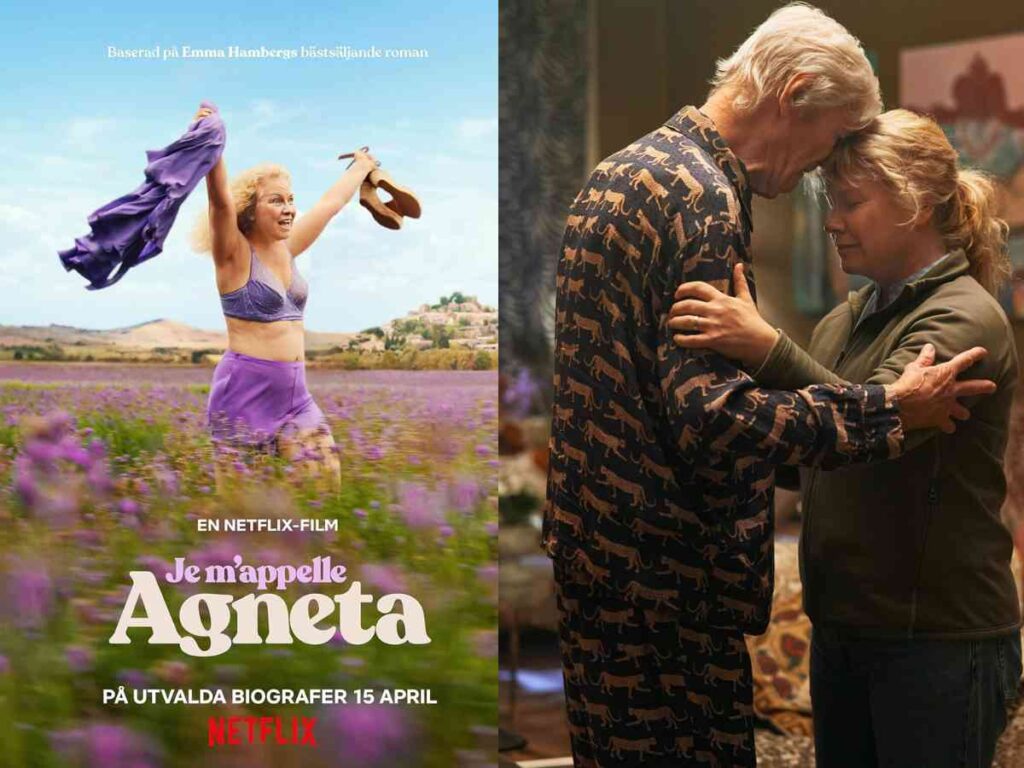
Je M’appelle Agneta (2026) is a powerful existentialist-feminist Swedish/French language movie that is based on a bestselling novel.
I have not read the original work by Emma Hamberg, but I feel the film retains its original vibrancy because Hamberg is credited as one of the writers for the film.
The movie is engaging in the most delightful manner. Je M’appelle Agneta refrains from sermonising or intellectualising the mundane, tedious, monotonous status of post-40s women and their invisible life. Rather it calls for a dreamy graceful spirited alternative that will resonate with women and people across geographical boundaries who have been persecuted by patriarchal world view.

Agneta lives a socially confirmed life. During the course of the film, Agneta’s husband decides to adopt a certain lifestyle in his efforts to lead a healthy life and builds his own support group. He expects his wife to follow the same -food, habits, schedule – without ever consulting or making an effort to understand whether she has similar desires or aspirations.
Being perpetually unappreciated and undervalued at work and in home front Agneta had stopped confronting the boss(es) or the husband or the children (who only got in touch with her whenever they were in need of money). She had accepted her realities but her heart still longed for a life where she was just Agneta, devoid of other social identities.
An unexpected twist of fate and Agneta lands in the country of her dreams, France. Wrapped in fear, anxiety, nervousness, timid Agnetare-discovers life at 49!
The narrative brings together the dreamers and the social non-conformists who have been denied a dignified life by those in power. In her new world, Agneta comes across people who question the notion of being “normal” and remain unapologetically themselves despite being socially unsuccessful or having failed in love or being disowned by family for being gay.
Je M’appelle Agnetais for everyone – who wanted to experience the joy of living; who wanted tobreak free from social prejudice and bias.
The film integrates food and dance as the quint essential form of spiritual growth. And what a indulgence audience is offered! Afterall, who with a zest for life can escape the melodies of art and food! The two superlative pleasures of living for both of them have the ability to bring emotions, humans, and ideas together.
When Agneta first met Einar she had misconstructed the sacred dimensions of his nourished consciousness. It is only after engaging in the form herself she understands the transformative power of the rituals.
Agneta’s inherent love for French cheese and food in general always helped her heal her inner conflicts and emotional vulnerability; and France taught her food was transcendental. Agneta understood food was gratitude, celebration, and resilience. The act of eating was not just an engagement with food but a more harmonic expression of diverse collective identities and beauty in everyday life.
Je M’appelle Agneta is set in the scenic French countryside and is beautifully captured by the cinematographer Ragna Jorming that faithfully echoes the world that Agneta had forever envisioned living in. The film is littered with some incredible dialogues and moments (watch to know) and full credits to the writers’ team for keeping them so memorable.
A film about life, art, and reinventing oneself is incomplete without good music. The composer-duo do not disappoint moving seamlessly between minimalist and maximalist moods. The music orchestras a sensory experience that helps build a cohesive narrative which lingers beyond the cinema-viewing hours.
The editing is crisp and compact leaving no room for dull moments or redundancy. The well-timed transitions help balance the serious moments with the light hearted scenes; enhancing the narrative flow.
One of the most remarkable aspects of Je M’appelle Agnetais its ensemble cast and that’s why casting director Victoria Svanell deserves a special mention.
There is a generous use of lavender colour (and flower) in the second half of the movie. The colour has both aesthetic and symbolic presence. Lavender usually occupies a space between aggression (red) and passivity (white) that represents both strength and vulnerability – making a perfect colour for a middle-aged woman negotiating with complex emotional and social dynamics. The colour beautifully deconstructs the visual notion of a 50-year-old as designed by patriarchy. Lavender does not hide her in plain sight rather it explores her femininity beyond conventional stereotypes and presents Agneta as someone who is wise, mature, and evolved.
The movie has nude scenes. They are employed as narrative deviceto explore the ideas of identity and self; andnot for titillating purposes.
The film might come across as whimsical or impractical at times. But that is the whole point of watching a dramedy film like this. It is not real life. It is wish-fulfilment.
JeM’appelle Agneta is one of the better movies streaming on Netflix (India). Do watch if you are struggling with life in general or looking for a feel-good happy movie without pretentions.
(The author is an internationally published writer & corporate communication specialist. Views are personal)