














Political will is the key to tackling drug trafficking and drug abuse in India. Explore challenges, reforms, NDPS enforcement, rehabilitation, and Odisha’s perspective
Dr. Saroj Kumar Misra
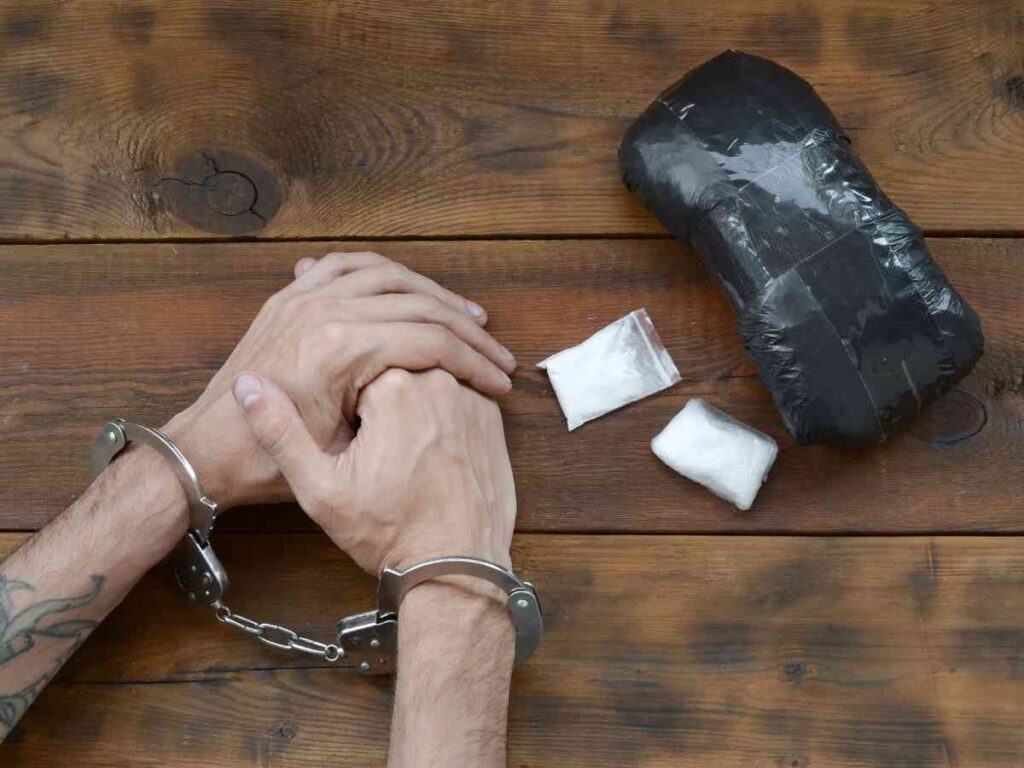
The role of political will in combating drug trafficking is very important. In India, strong political will can bring many changes in addressing the burning problem of drug trafficking and drug abuse. You can have the best laws, the best doctors, and the best NGOs. But without political will, it’s like performing surgery with no anaesthesia – all pain, no progress. Drug trafficking is organized crime. Drug abuse is a public health issue. Both need the state to actually want to fight the menace.
A Law Without Will Is Just a Piece of Paper
So many laws, Acts, and Missions do exist. But their proper enforcement on a regular basis is lacking. We create humps and speed breakers after a road traffic accident. We enforce traffic rules and check for helmets after a road traffic disaster. We enforce fire safety rules after a fire disaster in a hotel or hospital. Similarly, we have many rules and regulations like the Narcotic Drugs and Psychotropic Substances (NDPS) Act, 1985, the Cigarettes and Other Tobacco Products Act (COTPA), 2003, and the Nasha Mukt Bharat Abhiyan in our country. But their activities are limited to celebration and observation on designated days in various departments.
Of course, many states are unable to deliver the goods due to constraints in finance and human resources. But the ultimate goal of freebies and protecting the wrong people from accountability, while looking at their five-year tenure, dilutes all the Acts, Rules, and Abhiyans with a rubber-stamp statement – “Law will take its own course.”
So, the conviction rate under the NDPS Act is approximately 50%. Most cases remain stuck for years. Why? No fast-track courts, no forensic labs, no witness protection?
Political will comes from budget provision and prioritisation. Manipur, Punjab, and Odisha – states hit hardest by trafficking—need labs, prosecutors, and judges dedicated to the NDPS Act. That only happens when Chief Ministers put it on their daily agenda, not just in election speeches.
Breaking the nexus is the most important step in the prevention and control of drug trafficking. The unpleasant truth is that drug trafficking survives on protection. Local police, politicians, and border officials sometimes look away – or take a cut in some situations.
Political will means sacking your own party worker if he’s caught with a consignment. But that needs strong willpower to save the next generation. For example, the Philippines’ Duterte was brutal and controversial. But Colombia’s change came when successive presidents refused deals with cartels. Half-measures keep the trade alive.
Supply vs Demand: Both Need State Backing for Effective Control over Drug Trafficking
Borders, ports, and dark web sites need the intervention and coordination of the NCB, BSF, and Coast Guard. Only the Centre and the States can make these agencies share data instead of egos. On the demand side, schools, PHCs, and rehab centres need healthcare, counselling, education, and coordination with the Social Justice Ministries. Political will puts them in one room with one budget.
Coming to the Odisha context, ganja from Malkangiri, brown sugar via Balasore port, and pharma drugs from many cities always pose challenges for the administration. If we talk about the budget, we have the Nasha Mukt Bharat Abhiyan with ₹180 crore for 272 vulnerable districts. That’s approximately ₹66 lakh per district per year—barely enough for two counsellors.
Political will needs to take steps towards moving money from publicity to ground staff. More de-addiction centres, more field officers, and more ASHA training are needed. But the pathetic aspect of our budget is that we plan to fill our treasury with thousands of crores in liquor revenue while spending around five percent of that on de-addiction. It is a political choice.
There is another factor in the role of political willpower, i.e., stigma vs vote bank. The hard truth is that many users are poor, underprivileged, and tribal youth. Many small peddlers are women running homes. There is no political will to treat them as anything other than criminals. Vote bank logic says, “Don’t raid too hard in my constituency.” But the real will should separate users from traffickers. Rehab for one, jail for the other. Portugal did this in 2001. Overdose deaths dropped by 80%. But it took a Prime Minister staking his reputation on it.
International Pressure & Treaties have a great role in the control of drug trafficking. We have two vulnerable routes for the easy entry of drugs into our country. These are the Golden Triangle and the Golden Crescent in the east and west of our country, through which drugs enter from Myanmar and Afghanistan.
Political will plays an important role in activating the Ministry of External Affairs and the Ministry of Home Affairs to push these nations through the United Nations Office on Drugs and Crime (UNODC), the Shanghai Cooperation Organisation (SCO), and the Bay of Bengal Initiative for Multi-Sectoral Technical and Economic Cooperation (BIMSTEC). It means sealing borders even if it hurts local trade. But sometimes there is no will, expressed by the States with the excuse that it is a matter under the Centre’s domain, and by the Centre with the excuse that it falls under the States’ law and order responsibilities (where dissimilar political parties rule). The users of drugs die in the middle.
Consistency across Governments often changes the scenario on substance use issues. The biggest killer is when a new government changes policy. One bans liquor, the next brings it back. One runs awareness programmes, the next cancels funds. Political will requires a 20-year vision that survives elections, just as we have eradicated smallpox, eradicated poliomyelitis, and controlled HIV/AIDS. But drug abuse won’t end in one term.
Political willpower will only come into force when all the stakeholders of the Government work in true letter and spirit. The Chief Minister should chair monthly reviews on NDPS cases and cases admitted for rehabilitation. There should be a mandatory provision for utilising 10% of MLA funds for de-addiction and skill centres in vulnerable blocks. There should be zero tolerance for insiders. Cops or netas, if caught, should be subjected to a fast trial and double sentence, with no bail. One hour of school curriculum per week should be devoted to life skills.
A simple statutory dialogue – “Say No to Drugs” – does not serve the purpose. A public dashboard should be updated every month, highlighting the quantity of drugs seized, the number of victims rehabilitated, and the number of relapses, district-wise.
Finally, a surgeon needs steady hands and the will to cut deep. Society needs leaders with steady will and the guts to cut traffickers off from power. Revenue from alcohol fills treasuries. But only political will can stop drugs from emptying homes.
A smile is free but precious. If the father is not an addict, there is a smile in the family. If the son is not an alcoholic and takes care of his parents, the parents always smile and even die with a smiling face. This is the unspoken price of a smile. A strong political will to eradicate drug abuse and illicit drug trafficking will always favour a healthy society with a smile.
(The author is a Surgeon, Public Health Expert and a health Administrator having more than 42 years of experience in rural area and tribal districts. He is also a writer, Author of four books in Odia and English language. Views expressed are personal.)