



















As the government prepares to replace physical toll barriers with satellite-based tracking by 2026, drivers weigh the promise of fair, distance-based billing against the anxiety of new device costs and digital glitches
OdishaPlus Bureau
In a massive shift for Indian highway commuters, the days of slowing down at physical toll plazas and waiting behind boom barriers are nearing an end. Minister of Road Transport and Highways, Nitin Gadkari, recently affirmed in Parliament that India will completely transition to a barrier-free, Global Navigation Satellite System (GNSS) for toll collection by the end of 2026. While the promise of zero wait times and fair, distance-based billing sounds like a win, the transition is sparking both excitement and anxiety among everyday drivers.
How Satellite Tolling Actually Works
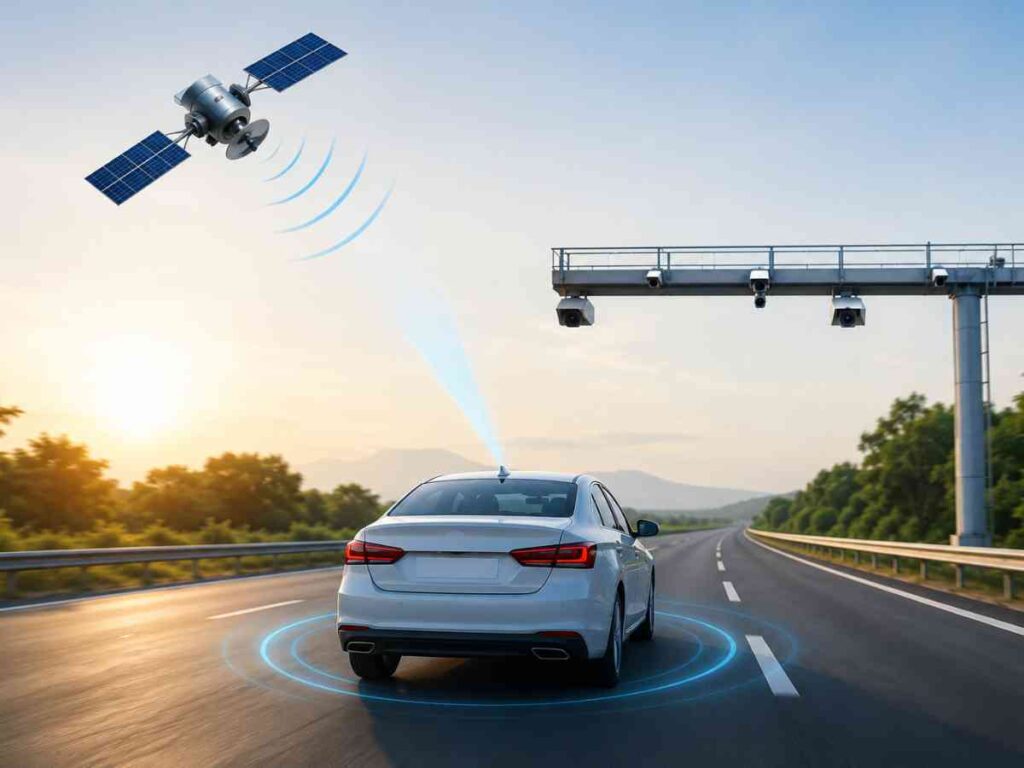
Unlike the current FASTag system, which charges a flat rate between two toll plazas regardless of where a vehicle enters or exits, the GNSS model relies on an On-Board Unit (OBU) installed in the vehicle. This small device communicates with navigation satellites to track the car’s precise coordinates on geo-fenced national highways. Commuters will be charged based strictly on the exact kilometers traveled.
To ensure compliance, overhead gantries equipped with Automatic Number Plate Recognition (ANPR) cameras will act as a secondary mechanism. These high-speed cameras will cross-reference number plates with existing FASTag accounts, ensuring that vehicles without an OBU cannot bypass tolls during the transition.
Global Precedents
India is not the first nation to explore satellite-based road pricing. Germany has successfully utilized a GNSS-based system called “Toll Collect” for heavy goods vehicles since 2005, which accurately charges trucks based on the distance traveled on federal highways. Similarly, Singapore is currently upgrading its famous Electronic Road Pricing (ERP) network to a next-generation satellite platform (ERP 2.0) to manage urban traffic dynamically without physical gantries.
The Commuter’s Perspective: Savings or New Costs?
For the daily commuter, the shift brings undeniable benefits. Under the current setup, residents of towns situated midway between two toll plazas often pay the full toll just to use a short stretch of the highway. The GNSS system fixes this inequity—commuters pay only for the exact segment they drive on. Furthermore, the elimination of highway bottlenecks will drastically reduce travel time and fuel wastage, saving drivers money at the pump.
However, consumers remain wary. Transitioning to the new system means acquiring and installing OBUs. While the government has yet to announce the pricing or distribution strategy for these units, citizens fear it may become just another mandatory compliance expense. There are also practical anxieties regarding technical precision. Can the system accurately differentiate between a tolled national highway and a free, parallel service road? If a geofencing error leads to an incorrect deduction, the mechanism for grievance redressal and quick refunds must be robust and user-friendly.
Fact-Checking the Transition Timeline
Amidst the excitement, misinformation has also spread. Following recent rumors that FASTag would be abruptly discontinued by May 2025, the Ministry of Road Transport and Highways (MoRTH) issued a strict clarification that no such nationwide mandate was taking immediate effect. The rollout will be gradual. Initial trials are already underway on select highway stretches, and for the next few years, a hybrid model will operate. FASTag is not dead—it will be fully integrated with ANPR cameras to ensure a smooth transition.
The Road Ahead
The GNSS tolling system is a major technological leap designed to plug toll evasion and boost government revenue by an estimated ₹6,000 crore annually. Yet, for the average Indian driver, the true test will not be the advanced satellite technology itself. Success will depend on how flawlessly the system is executed on the ground, and whether the promised “distance-based savings” truly outweigh the anxieties of moving to a fully monitored, digital-first highway network.