













Rooted in a century of community devotion, Dhenkanal’s Gajalaxmi Puja blends religious symbolism, elaborate pandals, silver medhas and local traditions, preserving Odisha’s distinctive cultural heritage
Dr Aditi Panda
India’s festive pulse accelerates with the birth of Krishna and the celebration of Janmashtami. The nation appears to enter a season of festivities almost immediately, with one cultural festival smoothly transitioning into another. The streets come alive with colour, temple bells blend with the rhythm of drummers, and the air fills with the aroma of flowers, fragrance, and festive treats. Every region of India has its own distinctive features, from the glory of Ganesh pandals to the colourful Durga Puja celebrations and the brilliance of innumerable lamps that bring vibrancy to the rhythmic Garba nights of Navratri. A magnificent journey of faith, culture, and communal celebration is woven together as homes open their doors to deities, communities come together in devotion and festivity, and ancient customs come to life throughout cities, towns, and villages.
Between the victory of Dussehra and the glory of Diwali, particularly in Dhenkanal, Gajalaxmi Puja takes place in Odisha. This year, the festivities will commence on October 25, the day before the auspicious occasion of Kumar Purnima, as Goddess Lakshmi arrives on her celestial elephants, bringing blessings of wealth and prosperity. To welcome her, intricately decorated pandals will shine like pearls as night sets in. Conch shells will echo, the aroma of dhupa will permeate the air, and innumerable lamps will flicker before the goddess, illuminating houses and hearts with a golden glow. Dhenkanal’s Gajalaxmi Puja is unique because it is more than just a religious celebration. It is the town’s cultural identity, similar to Durga Puja in Kolkata, and a time of year when many families with roots in Dhenkanal travel home.
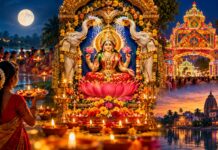
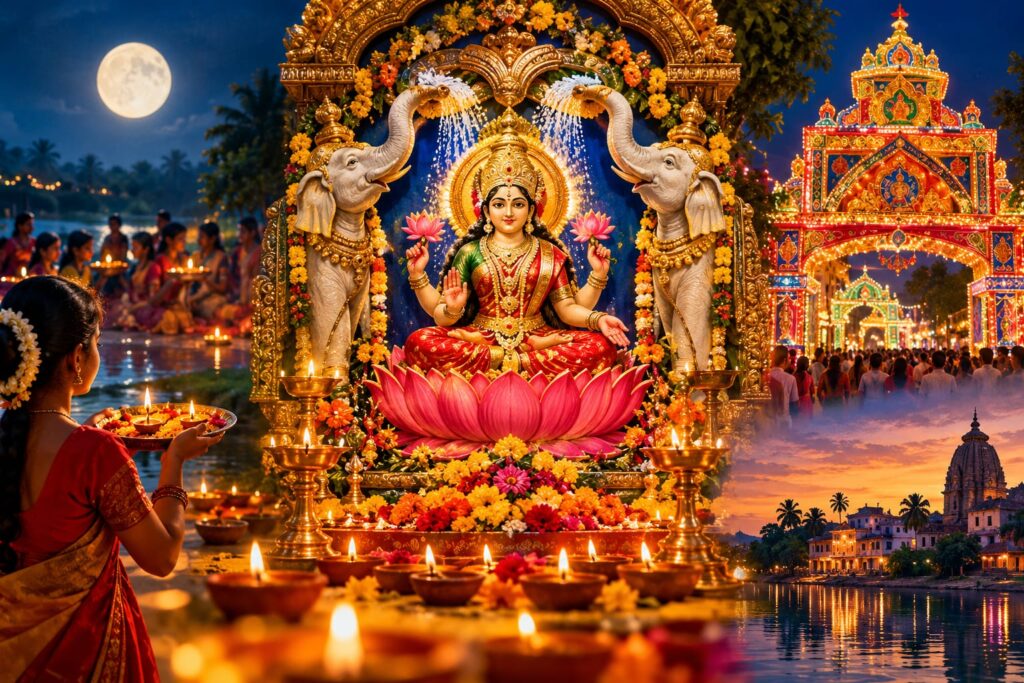
Gajalaxmi Puja remains one of Odisha’s most treasured but lesser-known festivals, even though Kumar Purnima is more widely recognised for its moonlight festivities and musical traditions. The celebration, which honours Gajalakshmi, the goddess of wealth and plenty, is based on an ancient image of Goddess Lakshmi seated on a lotus and surrounded by elephants that pour holy water over her, symbolising regal elegance, fertility, and good fortune. Although the goddess is worshipped by hundreds of people every year, the magnificence of the festivities often overshadows the rich symbolism and legends underlying her unique form.
The story of Dhenkanal’s Gajalaxmi Puja began with the commitment of a few residents rather than a royal decree. The first public Lakshmi Puja took place in what is now Mahavir Bazaar in 1923. Meena Bazaar soon joined the festivities, and in the 1940s, the festival was revived with renewed zeal despite the disturbances during the violent Prajamandal movement. With the community’s support and the royal family’s encouragement, the celebration expanded from a small-scale event into one of Odisha’s most magnificent autumn festivals, giving Dhenkanal a distinctive place on the state’s festive map.
Dhenkanal’s Gajalaxmi Puja is special because its story focuses on both the community and the deity. It is a perfect example of community effort, whereas Kendrapada’s celebrations are rooted in the devotion and ritual traditions of Maa Gajalaxmi. Over the years, generations of market-based puja committees have transformed humble public worship into a magnificent cultural spectacle, known for its lavish pandals, illuminated arches, silver medhas, and a spirit of civic engagement that continues to define the town’s identity.
At the same time, one of Odisha’s most beloved customs is Kumar Purnima, which young girls celebrate with great enthusiasm and happiness. The celebration honours Lord Kartikeya, also known as Kumar, who is regarded as the epitome of beauty, bravery, and youth. Unmarried girls fast from the very beginning of the day and offer janai, chhena, khai, ukhuda, bananas, and coconuts as sacrifices to the Sun God. As twilight falls, they assemble under the bright autumn moon, singing the traditional Kuanra Punei Jahnlo melodies, balancing earthen lamps on ornate pithas, and praying to Kumar Kartikeya and the moon for wealth and happiness. The festival serves as a bright prelude to Gajalaxmi Puja, marking a night of beauty, aspiration, and community from the coastal plains of Puri and Cuttack to the towns of Kendrapada, Jagatsinghapur, and Balasore.
Beyond its elaborate silver medhas and brilliant illuminations, Gajalaxmi Puja’s genuine legacy is also reflected in the way the festival unites generations of artisans, traders, and devotees in a celebration that is as much about community as it is about belief. For more than a century, it has symbolised the town’s collective character. Dhenkanal continues to uphold this custom, which remains a source of pride for the town and a cultural icon of Odisha, as countless lamps evoke the blessings of the divine goddess. Today, the celebration remains one of the most recognisable representations of Dhenkanal’s cultural heritage, reflecting a tradition sustained and shaped by generations of locals with pride and devotion.
(The author is a development sector professional. Views expressed are personal.)