





















Despite abundant natural resources, Odisha has struggled with poverty, political instability and governance failures. Bhaskar Parichha examines how decades of leadership choices shaped the state’s development trajectory
Bhaskar Parichha
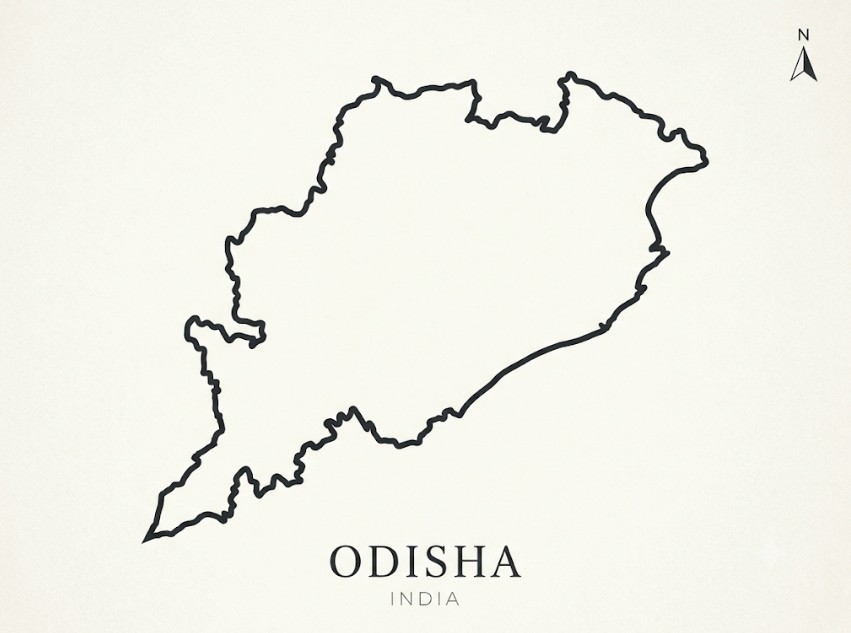
Political independence brought democracy to Odisha, but not necessarily development. For three decades after Independence, the state witnessed power struggles, factionalism, corruption, and administrative inertia. The tragedy lay not in a shortage of resources or capable leaders, but in the failure to convert political freedom into economic emancipation.
Odisha’s post-Independence history raises an uncomfortable question: why did a state endowed with extraordinary natural wealth remain trapped in poverty, backwardness, and economic dependence? Geography, colonial exploitation, and recurring natural calamities explain only part of the answer. Much of the rest lies in the political choices successive generations of leaders made.
The three decades between 1946 and 1975 were meant to be the formative years of a new Odisha. The transition from colonial administration to democratic governance offered an unprecedented chance to rebuild a deeply impoverished society. The first election under universal adult franchise, held in 1951-52, was a historic departure. Leaders who had fought together against British rule became political rivals, and an electorate once united by the nationalist movement was divided along party, regional, and caste lines. Democracy had arrived, but the political culture needed to sustain it was still taking shape.
Power Politics
The early years of Independence saw leaders of considerable stature. Harekrushna Mahatab, Nabakrushna Choudhury, and Biju Patnaik represented different political approaches and ambitions. Yet the wider political system was gradually consumed by factional rivalry, personal loyalty, and the struggle for power.
The contradiction was striking. A generation that had mobilised people against colonial exploitation now found itself immersed in political manoeuvring. Parties with progressive credentials often struck compromises with conservative and feudal interests. The Ganatantra Parishad and, later, the Swatantra Party drew strength from landed and princely interests, while the Congress emerged as a broad coalition of the educated middle classes, bureaucrats, landed communities, tribals, and Dalits. The Communists and Socialists tried to mobilise agricultural workers, landless peasants, and labour organisations, but ideological divisions weakened their influence.
The question was never whether political competition was undesirable. It was whether competition could produce an alternative vision of development. Too often, the answer was no.
Impoverished People
Odisha’s economic paradox was visible from the start. The state had enormous mineral resources, a long coastline, abundant rivers, and considerable agricultural potential. Yet its people struggled with illiteracy, malnutrition, low agricultural productivity, and chronic poverty.
Agriculture remained dependent on rice, and landlords showed little enthusiasm for modernisation, mechanisation, or diversification into cash crops. Recurrent natural calamities further weakened the rural economy. Without an agricultural revolution, the rural population lacked the purchasing power needed to stimulate industrial growth.
The industrial story was equally disappointing. By 1978, Odisha had only 957 working factories, and industrialisation and urbanisation proceeded at a painfully slow pace. The state failed to create an entrepreneurial class capable of turning its mineral wealth into local prosperity.
Most troubling of all, mineral extraction did not necessarily empower the people living above it. Industries came, minerals were carried away, and profits were made, but local entrepreneurship, employment, and prosperity remained inadequate. Odisha increasingly took on the character of a resource colony: rich in minerals, poor in economic control.
Governance Machinery
Political freedom did not automatically transform the machinery of governance. The administrative structure inherited from the British was largely retained, with its hierarchy, bureaucratic rigidity, and distance from ordinary citizens.
Rather than remodel the system, successive governments simply operated it for new political purposes. The result was an administration that often seemed more at home with files and procedures than with the problems of rural communities.
Corruption further weakened public institutions. A new class of political intermediaries emerged in villages and Panchayats, whose loyalty often lay with individual leaders rather than public welfare. Local decision-making became vulnerable to patronage and personal influence. Elections gave people political rights, but those rights did not always translate into meaningful participation in governance.
Economic Liability
The period after 1964 was particularly damaging. Odisha saw repeated changes of government, defections, factional battles, and leadership struggles; seven Chief Ministers and eight governments during this phase reflected the fragility of the system.
The consequences went beyond political uncertainty. Long-term planning suffered, administrative continuity weakened, and development initiatives often lost momentum.
The Janata Party’s arrival in 1977 briefly raised hopes of a different political culture. Nilamani Routray became Chief Minister, but the government lasted only about three years. Congress returned in 1980 and brought Janaki Ballav Patnaik to power with an ambitious promise: one thousand industries in one thousand days, with an investment of one thousand crore rupees.
The slogan captured the aspirations of a state desperate for industrial transformation. It also exposed a recurring feature of Odisha’s politics: the distance between grand announcements and sustained implementation.
Social Representation
Perhaps the most uncomfortable dimension of this history is social representation. Odisha’s political establishment remained largely dominated by traditional upper-caste groups. Dalits and tribal communities entered politics through constitutional reservations, but their presence did not always translate into independent leadership or real influence over decision-making.
The poor were electorally important but politically underrepresented. They could vote, yet their ability to shape the state’s economic and administrative priorities remained limited.
This was the deeper contradiction of Odisha’s democracy: political participation expanded, but the distribution of power and economic opportunity stayed unequal.
Opportunities Lost
The period between Independence and the Emergency should therefore be judged not only by the governments formed or the leaders who held office, but also by the opportunities lost.
Odisha had the resources, the geographical advantages, and a generation of leaders who had taken part in the freedom movement. Yet poverty persisted, industrialisation lagged, and administrative institutions failed to become instruments of mass transformation.
The Emergency ended in 1977, but did it usher in a genuinely new political era? Or did it merely rearrange alliances and give competing factions another chance to capture power? That question remains relevant today.
Odisha’s historical tragedy was not simply that it was poor. It was that its poverty coexisted with immense natural wealth and repeated political promises. The failure was not of democracy itself, but of political leadership in making democracy deliver.
The most disturbing question is whether Odisha’s later decades, up to the present time, broke with this legacy or merely modernised its vocabulary. Have successive governments fundamentally changed the relationship between natural resources, political power, and public prosperity? Until that question is answered honestly, Odisha’s journey from political freedom to economic emancipation will remain unfinished.
(The author is a senior journalist and columnist. Views expressed are personal.)