














A birth centenary tribute to former Lok Sabha Speaker Rabi Ray, reflecting on his socialist ideals, parliamentary impartiality, and simplicity in Indian public life
Ambika Prasad Kanungo
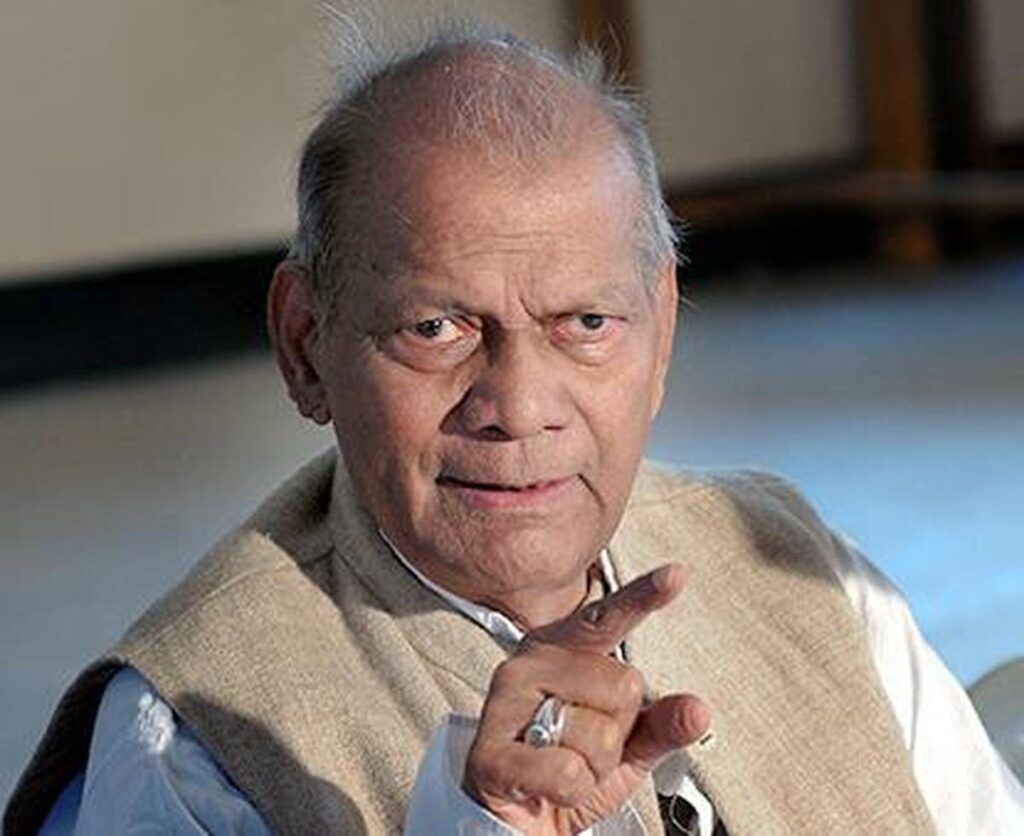
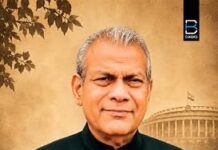
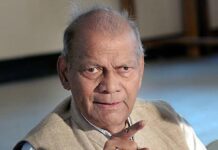
Rabi Ray was one of the most distinguished figures in Indian parliamentary democracy. A freedom-loving socialist, an able parliamentarian, and an outstanding Speaker of the Lok Sabha, he represented a rare combination of political conviction, intellectual integrity, and personal simplicity. His life was guided not by the pursuit of power, but by a deep commitment to democratic values and public service.
Born on 26 November 1926 at Bhangarh in Odisha’s Puri district, Rabi Ray developed an interest in public affairs during his student days at Ravenshaw College, Kataka. Influenced by socialist thought and the ideals of equality and justice, he became associated with the socialist movement. His political journey was shaped by a belief that democracy must serve ordinary people, particularly the disadvantaged.
His parliamentary career began with his election to the Lok Sabha from Puri in 1967. He later entered the Rajya Sabha in 1974 and served as Union Minister for Health and Family Welfare in the government led by Morarji Desai in 1979. During the Emergency, he was imprisoned in Ambala for his opposition to authoritarian rule. His political commitment remained firm despite the personal hardships he faced.
In 1989, Rabi Ray was elected to the Lok Sabha from Kendrapada. On 19 December that year, he became Speaker of the Ninth Lok Sabha. His tenure was marked by political turbulence, intense debate, and shifting parliamentary equations. Yet, he upheld the dignity of the House with remarkable impartiality and restraint.
One of the most challenging moments came in November 1990, when the Janata Dal split and the government led by Prime Minister V. P. Singh faced a confidence motion. Rabi Ray conducted the proceedings with constitutional discipline, even as political tensions ran high. He also presided over important parliamentary proceedings, including a motion seeking the removal of a judge. His conduct demonstrated that the Speaker’s office must remain above party politics.
Rabi Ray’s relationship with Biju Patnaik, another towering political figure from Odisha, was particularly interesting. Their political philosophies and approaches were often different, but they shared mutual respect and a personal bond. Their relationship reflected a political culture in which differences did not necessarily become personal antagonism.
What made Rabi Ray truly exceptional was his simplicity. Even after occupying one of the highest constitutional offices in the country, he remained untouched by the trappings of power. He preferred an Ambassador car to more luxurious vehicles and was known for reducing unnecessary security and expenditure, including electricity consumption. For him, public office was a responsibility, not a privilege.
He also maintained close relationships with journalists, intellectuals, and ordinary citizens. Senior journalist Kuldeep Nayar was among those who appreciated his democratic convictions and personal integrity. Rabi Ray took an active interest in rural development, education, and public welfare. His concerns included agricultural development through Krishi Vigyan Kendras, the establishment of Jawahar Navodaya Vidyalayas, the availability of irrigation water in Shyamsundarpur, and the development of the Acharya Harihar Regional Cancer Centre. He also encouraged intellectual and cultural activities through institutions such as the Lohia Academy.
My association with Rabi Ray was not merely that of a journalist with a political leader. It had a personal dimension. My family lived near Dolamundai Square in Kataka, and through Chitta Mohanty—affectionately known as Chitta Bhai—I came to experience the warmth of Rabi Ray’s personality beyond his public role.
I still remember his visit to our old residence in Kataka when he was Speaker of the Lok Sabha. Despite his high constitutional position, he interacted with us with the warmth and informality of a family member. His residence in Delhi, which he shared with his wife, Professor Dr Saraswati Swain, also reflected the same simplicity and gracious hospitality.
These personal experiences remain among my most cherished memories. They revealed a man who never allowed the distinction of office to create a distance between himself and the people.
Rabi Ray’s life offers an important lesson at a time when public life is increasingly associated with power, privilege, and political confrontation. He demonstrated that authority derives its real strength from integrity, fairness, and humility. As Speaker, he protected parliamentary dignity; as a socialist, he stood for equality and justice; and as an individual, he remained accessible and unassuming.
His birth centenary is an occasion not merely to remember an eminent son of Odisha, but also to reflect on the values he represented. Rabi Ray belonged to a generation that believed democracy was sustained by principles, not positions. His legacy will continue to inspire those who believe that public service must always be guided by conscience, constitutional responsibility, and compassion.
(The author is a senior journalist. Views expressed are personal.)