























Prashant Kishor’s Bankipur bypoll victory signals a shift in Bihar politics, raising questions about the BJP, Jan Suraaj, and the state’s changing political landscape
Bhaskar Parichha
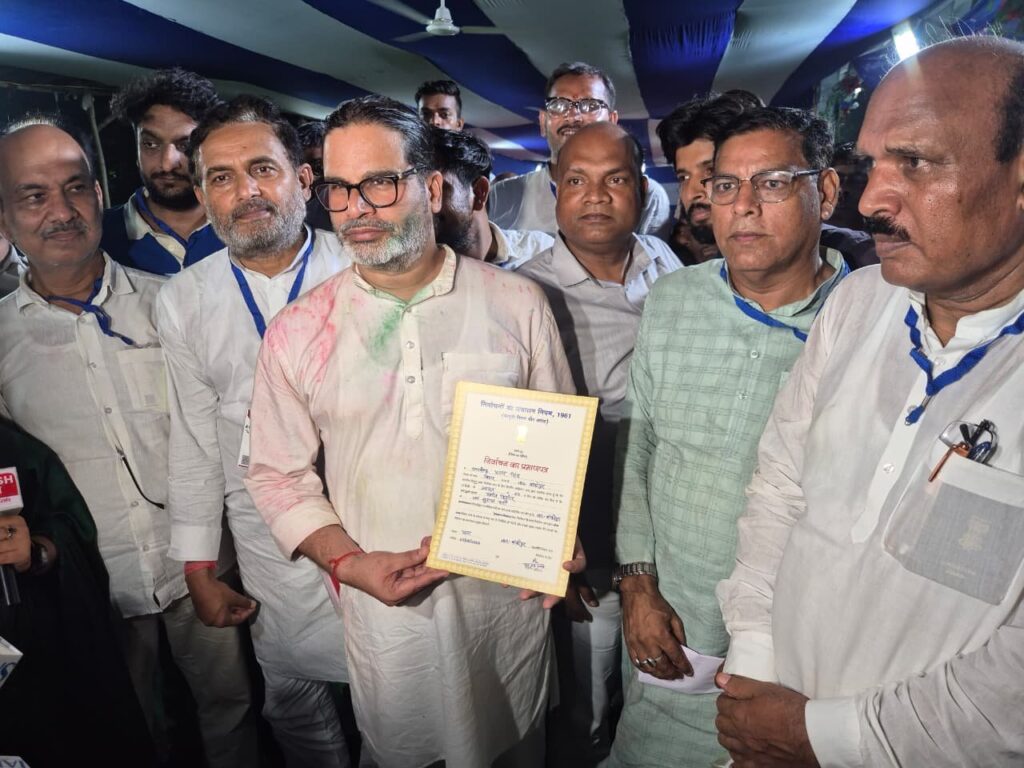
Barely nine months after his fledgling Jan Suraaj Party (JSP) was decimated in the Bihar Assembly elections, Prashant Kishor has staged a remarkable political comeback. His emphatic victory in the Bankipur Assembly bypoll is more than a personal triumph—it is a statement that Bihar’s political landscape may no longer be confined to the familiar contest between the NDA and the RJD-led opposition.
The significance of Bankipur cannot be overstated. Long regarded as a BJP stronghold, the seat was vacated by BJP president Nitin Nabin following his election to the Rajya Sabha. For the ruling party, losing such a prestigious urban constituency is a political setback with consequences extending beyond the numbers in the Assembly. It raises uncomfortable questions about the BJP’s hold over its traditional support base and the effectiveness of its leadership in Bihar.
The verdict is particularly embarrassing for both Nitin Nabin and Chief Minister Samrat Choudhary, the BJP’s first chief minister in the state. Over the past several months, Kishor has relentlessly attacked the government over corruption, unemployment, deteriorating law and order, and the persistent migration of Bihar’s youth. The Bankipur result gives credibility to those criticisms and strengthens Kishor’s claim that voters are willing to consider an alternative to both the NDA and the RJD.
For Kishor, the victory marks a decisive transition from election strategist to elected politician. Having spent years crafting winning campaigns for leaders across the political spectrum, he has finally demonstrated that he can convert his own political vision into electoral success. It is an important psychological breakthrough for the Jan Suraaj Party, which had struggled to convince observers that it could move beyond being a movement centred on one individual.
Whether this momentum can be sustained remains an open question. Bihar’s politics is deeply rooted in caste arithmetic, entrenched party networks and local leadership. A bypoll, however symbolic, cannot by itself establish a statewide wave. Jan Suraaj must now prove that it possesses the organisational depth, cadre strength and policy credibility needed to challenge established parties across Bihar.
Even so, the timing of the victory is politically significant. It comes at a moment when the BJP is grappling with a series of challenges at the national level. The bypolls in Bihar, Madhya Pradesh and Gujarat were the first electoral tests after the nationwide Gen Z-led protests over the NEET paper leak and alleged irregularities in competitive examinations. While the BJP retained Gujarat’s Manjalpur seat, it suffered setbacks elsewhere, including the Congress victory in Datia, Madhya Pradesh. The mixed results indicate that public discontent is beginning to find electoral expression, even if only in limited contests.
Compounding the BJP’s difficulties are controversies that strike at both governance and perception. Allegations surrounding the theft of donations at the Ram Mandir have the potential to dent the party’s carefully cultivated image among sections of its core supporters. Together with concerns over examination integrity, unemployment and inflation, these issues have provided the Opposition with fresh ammunition against the ruling party.
The BJP, therefore, faces a dual challenge. It must not only contain anti-incumbency in states like Bihar but also restore public confidence in governance at the national level. With the crucial Uttar Pradesh Assembly elections only months away, the party can ill afford complacency. Administrative efficiency, transparency and swift responses to public grievances are likely to matter as much as electoral messaging.
For the Opposition, the bypoll results offer encouragement but not complacency. The Congress in Madhya Pradesh and Jan Suraaj in Bihar have demonstrated that the BJP is not invincible. Yet isolated victories do not automatically translate into broader political gains. Opposition parties will need coherent leadership, organisational discipline and a persuasive governance agenda if they hope to convert public dissatisfaction into sustained electoral success.
In Bihar, however, one conclusion is already inescapable. Prashant Kishor has altered the political conversation. His victory has given Jan Suraaj credibility and injected uncertainty into a contest that once appeared comfortably bipolar. Whether he can build a durable third force or whether Bankipur remains an exceptional triumph will depend on what follows. But the bypoll has served notice that Bihar’s political script is being rewritten—and Prashant Kishor intends to be one of its principal authors.
(The author is a senior journalist and columnist. Views expressed are personal.)