
















Analysis of the 2026 BRICS Summit, New Delhi Declaration, multipolarity, currency dynamics, and shifts in global geopolitics
Suresh Chandra Sarangi
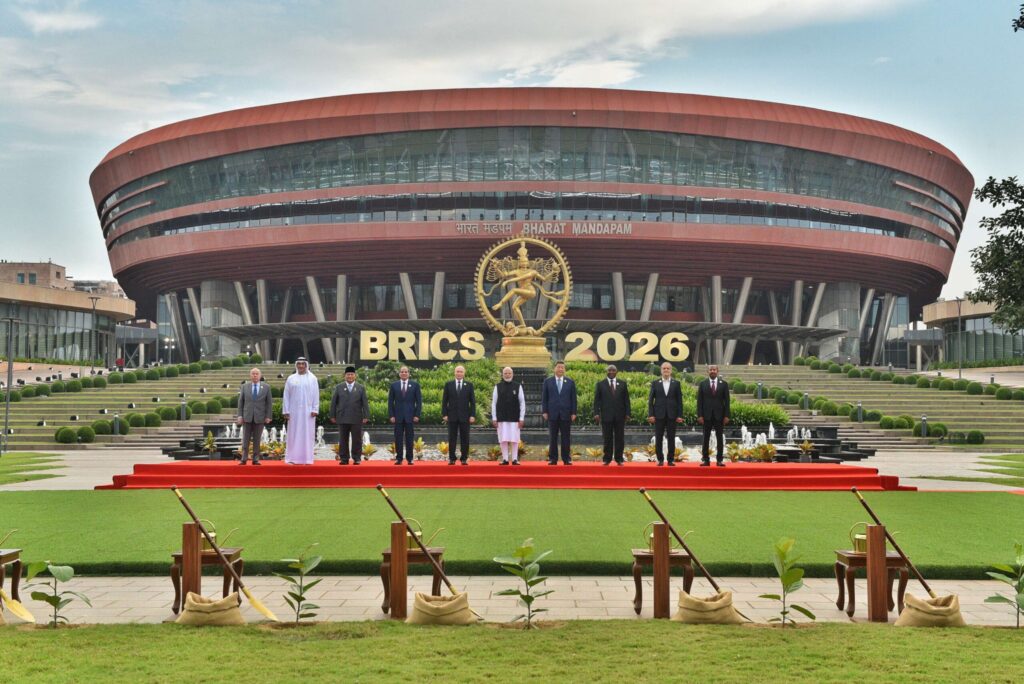
Russia’s President Putin calls for a reset of the world order. He said BRICS is no small organisation, as it commands half of the world’s population and 41% of the world’s GDP, reiterating Prime Minister Modi’s keynote address. Putin also said that the BRICS countries are advanced, with strong potential and intellectual capacity.
BRICS was founded on equality and mutual understanding from the beginning. It has a great tradition and values embedded in the culture of this half of humanity’s voice, which is an advantage. BRICS has been steadily growing over the years in search of standard global governance. This conference was aimed at genuine multilateralism and inclusive global governance, for the sake of international peace and equity. The world is undergoing profound geopolitical, geo-economic, social, and political transformation that touches every aspect of human life. The global centre of power is no longer unilateral, but multilateral. The colonial hangover and legacy are fading out by embracing the new realities.
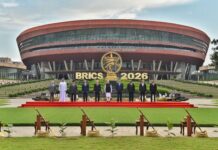
BRICS stands for respecting national sovereignty and national interests, and does not want any interference or ideological confrontation. This comes at a time when the entire international relations and multilateral institutional mechanism has been thrown into the wind. BRICS, during the course of deliberations, issued the New Delhi Declaration, which was a new charter and new deal in an era of conflicting international understanding and threats to the global politico-economic order. The beauty of the New Delhi conference was that it was presided over by Indian Prime Minister Narendra Modi and attended by Chinese President Xi Jinping and Russian President Vladimir Putin, representing the Global South and the emerging economies. PM Modi had made it clear that this grouping is not “against anyone,” calling for, in the case of war and misunderstanding, “maximum restraint” to be observed.
The September 12, 2026, declaration forged a consensus after Iran and the United Arab Emirates agreed to a last-minute compromise about the language used in the declaration. This was a milestone declaration. Prime Minister Modi said BRICS had come of age. It was also reiterated by PM Modi that BRICS respects each other’s perspectives and strives for consensus. Amongst others, emphasis has to be laid on mechanisms for skill development and new technologies. It also called for “comprehensive reforms” for enlarging the Security Council, which has to include representation from all continents, and for a restructuring of the United Nations.
The biggest concern for conflict resolution was through a process of “dialogue and diplomacy.” The BRICS business session emphasised BRICS as the world’s most influential platform for cooperation amongst emerging markets and developing countries. The declaration expressed deepest concern over attacks and airstrikes on civilians, infrastructure, and nuclear facilities. Gaza bombardment was under severe criticism; a solution to the Palestinian problem was under focus.
As the eleven countries represent 51% of world GDP, BRICS countries decided to make payments in national currencies, and the resolution for a BRICS common currency was not adopted, which otherwise would have created a lot of pressure on a battered dollar. No joint declaration on the Iran issue was issued, in view of the Iran-UAE internal squabble.
President Xi Jinping had offered five initiatives on greater cooperation among the BRICS countries in matters like the adoption of AI, trade and investment, manufacturing, digital industry, and developing a talent pool. Even the UN Secretary-General has underscored the importance of multipolarity and the need to reform multilateral institutions for equity and justice. He was of the opinion that reforming even the Security Council was to take into consideration the ground reality. The theme, “Building Resilience, Innovation, Cooperation and Sustainability, Shaping the Future of Inclusive Global Growth,” was the most appropriate acronym for the scale of such a conference. While unveiling the conference, PM Modi had emphasised touching the lives of the common man and integration with markets.
As the debate over an AI slowdown hots up, the Chinese President dwelt upon the idea of creating an open-source AI ecosystem, shared large language models, training, and digital cloud infrastructure. The intention was to enhance China’s AI technology as an alternative to proprietary systems largely controlled by American companies. After the BRICS conference, and against the backdrop of a chorus of AI slowdown, China was not interested in listening to American pressure.
External Affairs Minister Jaishankar hailed the Prime Minister’s message of dialogue, diplomacy, and development. BRICS kept the “de-dollarisation” effort alive despite no consensus on a common currency plan, which was a breather for the US and Trump. A more pragmatic approach was in developing products to boost cross-border payment links. A task force is to be created for a “fast, low-cost, more accessible, efficient, transparent and safe” cross-border payment system.
People’s Daily of China reports that Xi’s presence at the BRICS Summit was of strategic significance for greater BRICS cooperation. Newspapers in the US, Europe, Australia, India, and Russia have highly praised the summit. BRICS nations are optimistic about shared common fronts in areas like trade, investment, payment settlement mechanisms, and border disputes. The fact remains that three of the greatest powers had a common interest; it was very much pressure on Trump. Trump himself said that India, China, and Russia have united under the BRICS banner, speaking of his anxiety. The summit navigated well, but on issues like the Iran-Israel-US war, no common stand could be taken except indirect witch-hunting.
Not having a common stance on a BRICS currency was a failure to give thought to de-dollarisation. There are border issues between China and India, and India has competing interests in the region, with a better growth figure than China, although China commands a $20 trillion economy. Then, bringing about a compromise appears to be a distant dream. There are inconsistencies. But the war-starved world did not get a clear message.
All said and done, the camaraderie was convincing, with a commonality of approach that appears to be strong, reciprocal, and mutual. With the development of the New Delhi Declaration and adoption of a common agenda, it could be a game changer in bringing about international understanding. Only posterity will see and write a report card on the progress of the BRICS summit, or it may even be affected if a war between China and Taiwan happens. China’s reluctance to ensure India’s entry into the Security Council, and Russia’s support, will ultimately rewrite the future history of Asia and, for that matter, the world.
(The writer is a former General Manager of Bank of India. Views expressed are personal.)