





















From adulterated food and harmful additives to weak enforcement and poor awareness, food safety has become a pressing threat to public health and wellbeing
Suresh Chandra Sarangi
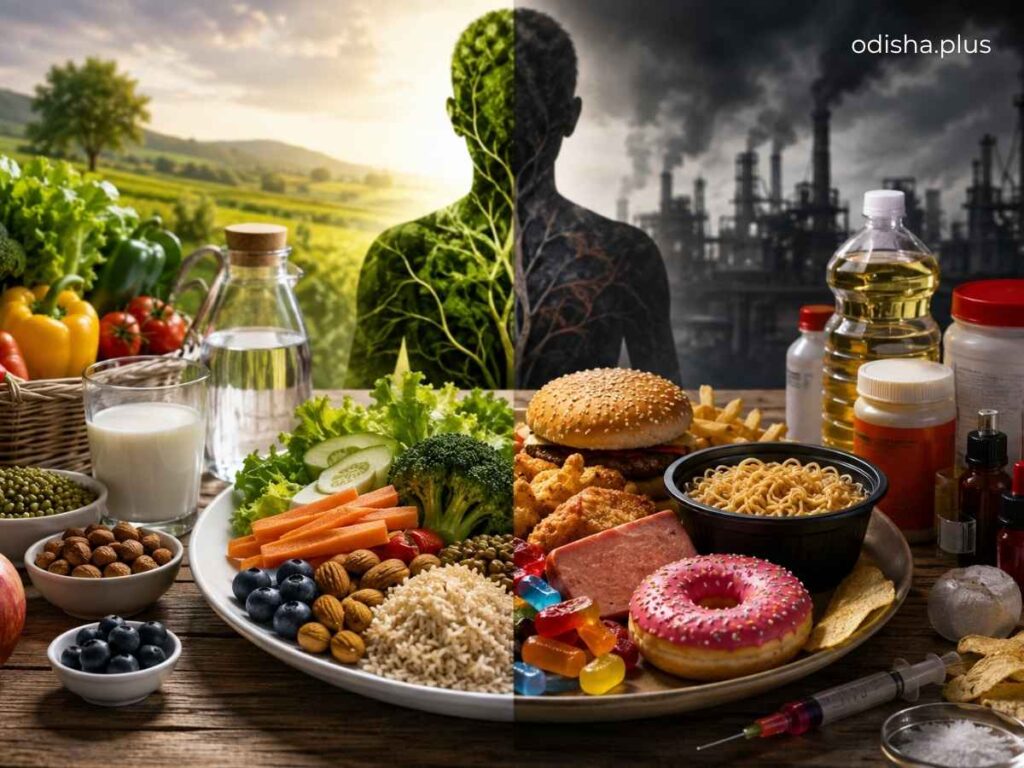
Karl Marx, the high priest of history, said, “Man must eat to live.” But what are we eating? Food or poison? Adulterated food, and the drive to unearth it and book the culprits behind it, has suddenly become a headline and a prime-time debate in India. The world has become a small place with tremendous growth in communications, travel, immigration, and trade, and hence concern about adulterated food is growing. The debate on genetically modified food grains and vegetables, the use of additives, potential chemical residues, and even the adulteration of water, milk, and everything else has been an iron piece in our soul and the cause of terminal diseases, including trouble for children. Food laws and regulations, including international regulations pertaining to food and new food laws in India (Food Safety and Standards Act, 2006), implemented in 2013, and the Prevention of Food Adulteration Act, 1954, have lost their relevance in the wake of the mushrooming of fast-food shops across India, with scant respect for regulations or safety standards, as there is nothing more precious than human life. The government’s failure to enforce strict regulations is an incentive for adulterers who are interested in making quick money at the cost of human life. This is the height of insensitivity.
With words like food additives and GMOs, things are becoming murkier. Certainly, there has been a massive food revolution in the world. We need to be selective in our food choices and food hygiene and take care of safety standards. The food industry needs to understand the complex issues and mechanisms, and chemical additives should conform to food standards and permissible limits. Research is going on into how to avoid cross-contamination by pathogens, the proper use of antimicrobial coatings and sprays, and the cleaning of fresh products, including the utensils used for them. Even fruit juices, nuts, meat, and dairy products are some of the ready-to-eat food products, and they are not free from food contamination.
For example, all vegetables are coloured to keep them shining and attract consumers, even by using chemicals, so that the food looks fresh. The farmer injects hormones into small chicks so that they grow in less time to have better turnover, sales, and profit. The needy consumer eats that and suffers in the long run. Today, in the market, all fruits like bananas, mangoes, papayas, etc., are exposed to chemicals, and they ripen before fully maturing, and we are eating poison in the form of chemicals. Even apples are polished, giving them a dazzling look, but what we eat is wax that spoils our health. In our craze for fresh fish, chemicals are added to fish that ultimately affect our health. The list is endless.
Food adulteration is rampant. The adulterers purposely or intentionally adulterate food for ulterior motives to earn profit. The Centre for Science and Environment examined Maggi and found that it was not hygienic for children. The share market price of Maggi fell immediately, and there was a huge reputational loss for the company. In a sense, conscious and literate people suddenly reacted as they were worried about their children’s health. CSE also exposed major honey adulteration, where modified sugar syrup was a part of it. Indians are increasingly using honey, prepared by bees from the nectar of flowers, which is nature’s gift, but sample tests showed that only 3 out of 13 brands passed Nuclear Magnetic Resonance Spectroscopy. Milk contains arsenic, lead, and plant products, and milk contains plastic; cold drinks contain excess urea; water contains chemicals, with a higher percentage of urea. Even a YouTube video shows how cashews are produced artificially. Even milk powder is adulterated. It was said by the CSE director that the business of adulteration has become so usual that adulterers try to pass the sample quickly through the regulators to avoid any finding of residual chemicals.
With a huge population to feed, we need more food as well as a variety of food. A recent investigation by the Maharashtra FDA administrator has stirred the conscience of the nation. Accordingly, in other states like Odisha, raids have been conducted, and cheese and other sweet foods have been confiscated/destroyed. This has created a complicated future for all of us. We all know it, but no one raises a voice. There is a big market for adulteration, and there are skilled workers in the area of adulteration, including some commonly used food brands. Consuming synthetic dyes, industrial chemicals, and toxic preservatives has become a way of life. Biological adulteration, including the proliferation of pathogens, fungi, or bacteria due to poor sanitation and ventilation, is creating havoc. Even spurious liquor is distributed in not-so-rich families, and hooch tragedies cost the poor and gullible their lives. Tiny amounts of chemicals are added to what we eat to make it palatable and increase the shelf life of convenience foods. They use/package them just to protect expired food items, including medicines, as well.
The long-term cumulative effects of additives are dangerous for health. They are quick fixes. There are 17 types of additives. Nitrates and nitrites are preservatives used in meat products. Nitrates and nitrites are preservatives that can create skin problems. Mineral hydrocarbons are used as glazing agents to seal and give a glossy look to fresh citrus fruits. Some of the permitted colours may cause cancer and other health hazards like rashes, blurred vision, and hyperacidity, so the only solution remains to avoid additives by opting for simple, nature-based, organic food. Common adulterants are water, detergent, starch, urea, and palm oil added to milk and paneer, and synthetic paneer is available in the market, including synthetic eggs. Lead, chromate, brick powder, and synthetic dyes are added to spices; dried papaya seeds are added to black pepper; and mineral oil and vanaspati are added to oil and ghee.
The health and economic impact are huge. It causes food poisoning; long-term use leads to organ failure; contaminated food causes death. It also drives US$40 billion, as per an estimate, in economic losses each year. There are detection tests to detect adulteration, such as tests for water in milk, chalk in sugar, and dyes in green vegetables, and if someone takes a little care, they can find adulteration. The biggest challenge comes from stale food, which adversely affects our health. The reasons for food adulteration are the desire for higher food margins, population growth necessitating fast-food requirements, the high cost of genuine ingredients, poor business ethics, and lack of consumer awareness. The fast-food business and roadside small shops use colour, sell stale food, and serve food in unclean and unhealthy containers.
The FSSAI, which administers food safety laws, under Section 51 has made provision for a fine of up to ₹5 lakh, and under other sections, penalties are up to ₹10 lakh. Similarly, there are punishments for food offences under Section 59, including penalties and imprisonment depending upon injury or loss to the counterparty. Despite the provision of a well-carved-out law, monitoring and implementation are loose. Corruption in adjusting safety standards is baffling. Who will bell the cat? We are the world’s most populous country. Citizens, students, newspapers, social media, and television have to work as watchdogs. We need to be conscious citizens to check this advancing cancer of adulteration, as ultimately it is our life and our country’s public health.
(The writer is a former General Manager of Bank of India. Views expressed are personal.)