




















India exceeded expectations at the Glasgow Commonwealth Games 2026, winning 39 medals and showcasing its growing strength across athletics, boxing, judo and more
Satish Sharma
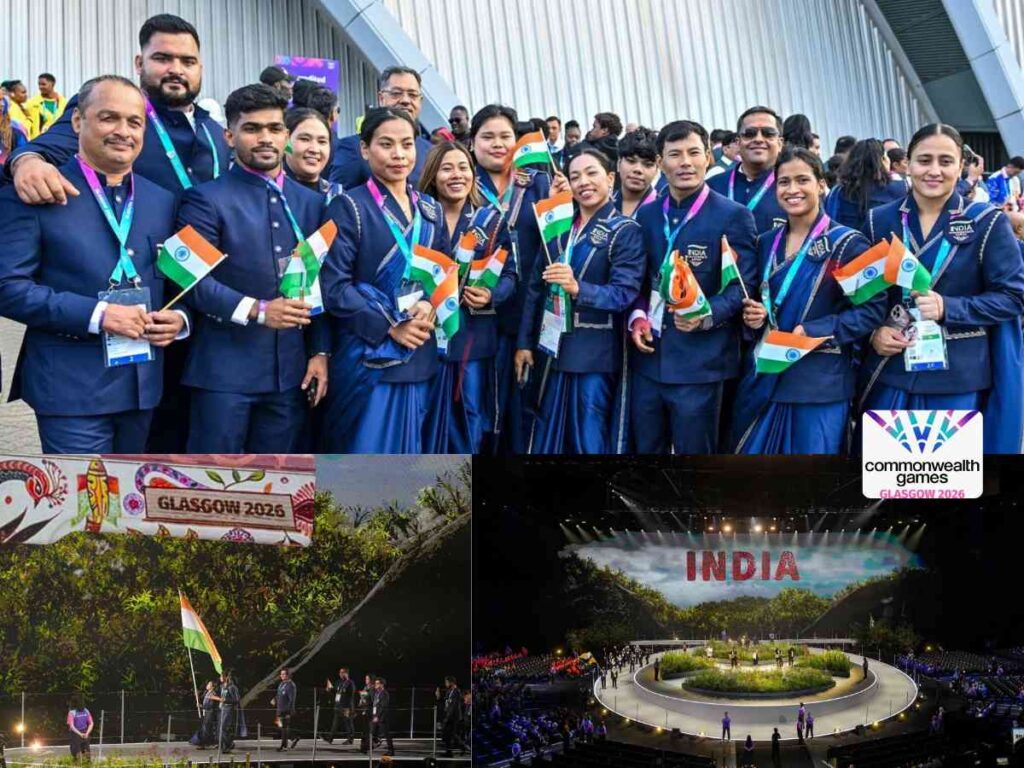
The Glasgow Commonwealth Games 2026 were not merely a story of India’s medal haul; they also reflected the country’s changing sporting landscape, growing confidence, and expanding sporting culture. Ahead of the Games, most experts predicted a modest performance from the Indian contingent because traditional medal-winning disciplines such as wrestling, badminton, hockey, and shooting were not included in the competition programme. Many even forecast that India would finish with around 30 medals and remain outside the top five in the overall standings.
The Indian athletes, however, proved all those predictions wrong. The 126-member contingent delivered an outstanding performance, winning 39 medals—13 gold, 17 silver, and 9 bronze—to finish fourth in the medal table. The achievement becomes even more remarkable considering that India accomplished it without several of its strongest medal-producing sports.
The biggest takeaway from these Games was that India’s success was no longer confined to a handful of traditional disciplines. Indian athletes won medals in sports where the country had never been considered a dominant force, signalling that the nation’s sporting base is expanding rapidly. Historic gold medals in judo, the best-ever performance in boxing, and a record-breaking campaign in athletics together highlighted this transformation.
A Golden Chapter in Athletics
The Glasgow Commonwealth Games proved to be historic for Indian athletics. Combining track and field with para-athletics, India won a record 16 medals—two gold, seven silver, and seven bronze—its best-ever athletics performance at the Commonwealth Games. At Birmingham 2022, India had won eight athletics medals; this time, the tally doubled.
Gulveer Singh emerged as India’s biggest athletics star, winning silver in the 10,000 metres and bronze in the 5,000 metres. He became the first Indian athlete to win two track medals at a single edition of the Commonwealth Games.
India also dominated the men’s javelin throw. Olympic champion Neeraj Chopra claimed the silver medal, while Yash Veer Singh secured bronze, with both Indians sharing the podium—another indication of the country’s growing strength in the event.
Tejaswin Shankar created history by winning bronze in the decathlon, becoming the first Indian track and field athlete to win medals in two different individual events at the Commonwealth Games. In the triple jump, Praveen Chithravel won silver and Selva Prabhu Thirumaran took bronze, while Murali Sreeshankar became the first Indian long jumper to win medals at two consecutive Commonwealth Games.
However, India’s sprinters Gurindervir Singh and Animesh Kujur disappointed with below-par performances.
Indian para-athletes also delivered a performance far beyond expectations. Displaying remarkable courage, relentless hard work, and unwavering self-belief, they won a total of seven medals, bringing immense pride to the nation.
India achieved a historic milestone by winning its first gold medal in para athletics after its introduction in 2002 games Sharmila Dhankhar struck gold in the Women’s Shot Put F57 event. Dilip Mahadu Gavit won the gold medal in the Men’s 100m T47 event, while Mohammad Basil Morasinganakath secured the silver medal in the same race. In the Men’s Shot Put F57 event, Soman Rana claimed the gold medal, while Shubham Juyal added a silver. Shilpa Shayala earned the bronze medal in the Women’s Shot Put F57 competition. Jhandu Kumar also made the nation proud by winning the bronze medal in the Men’s Heavyweight Para Powerlifting event, taking India’s overall para medal tally to seven.
Boxing Delivers Best-Ever Commonwealth Performance
Indian boxers produced their finest-ever performance in Commonwealth Games history, winning a total of 10 medals, including seven gold and three silver. Preeti Pawar, Jaismine Lamboria, Arundhati Choudhary, Priya Ghanghas, Sachin Siwach, Ankush Panghal and Sakshi Choudhary captured gold medals, underlining India’s growing dominance in the sport. Jadumani Singh, Lovlina Borgohain and Narendra Berwal added silver medals to complete a memorable campaign.
Weightlifting Keeps Medal Tradition Alive
Weightlifting once again proved to be one of India’s strongest disciplines. The Indian lifters secured eight medals—one gold, six silver and one bronze. Olympic medallist Mirabai Chanu continued her remarkable consistency by winning the gold medal. Harjinder Kaur, Valluri Ajay Babu, Rishikant Singh, Raja Muthupandi, Gyaneshwari Yadav and Lovepreet Singh claimed silver medals, while Bindyarani Devi added a bronze.
Historic Breakthrough in Judo
Indian judokas scripted history in Glasgow. Tripura’s Asmita Dey became the first Indian judoka to win a Commonwealth Games gold medal after triumphing in the women’s 48kg category. Harsh Singh won gold in the men’s 60kg division, while Yamini Maurya secured silver and Unnati Sharma claimed bronze, making it India’s most successful Commonwealth Games campaign in judo.
Experience Blends Perfectly with Youth
One of the defining features of India’s campaign was the perfect blend of experienced champions and emerging talent. While stalwarts such as Mirabai Chanu and Neeraj Chopra once again demonstrated their consistency on the international stage, several young athletes announced their arrival by winning medals in their maiden Commonwealth Games. Their performances have strengthened hopes for an even brighter future for Indian sport.
A Promising Road Ahead
The Glasgow Commonwealth Games 2026 have made it clear that India is no longer dependent solely on its traditional medal-winning sports. The country’s sporting ecosystem is widening steadily, with new disciplines producing international-level performers.
At the same time, there remains considerable scope for improvement. Greater investment in scientific coaching, modern sports infrastructure, regular international exposure and systematic talent identification at the grassroots level will be essential if India is to sustain this upward trajectory.
The Glasgow Games have signalled the beginning of a new era for Indian sport. India is no longer participating merely to compete; it is emerging as a genuine sporting power capable of challenging the world’s leading nations at every major multi-sport event.
The achievement carries added significance as India prepares to host the 2030 Commonwealth Games in Ahmedabad. The Glasgow performance has not only raised expectations but also laid a strong foundation for the country’s ambitions as both a successful host and a global sporting powerhouse.
(The author is a Senior Sports Journalist. Views expressed are personal.)