























Odisha plans long-term flood management across eight river basins with IIT-Roorkee’s technical support to strengthen infrastructure and reduce flood risks
OdishaPlus Bureau
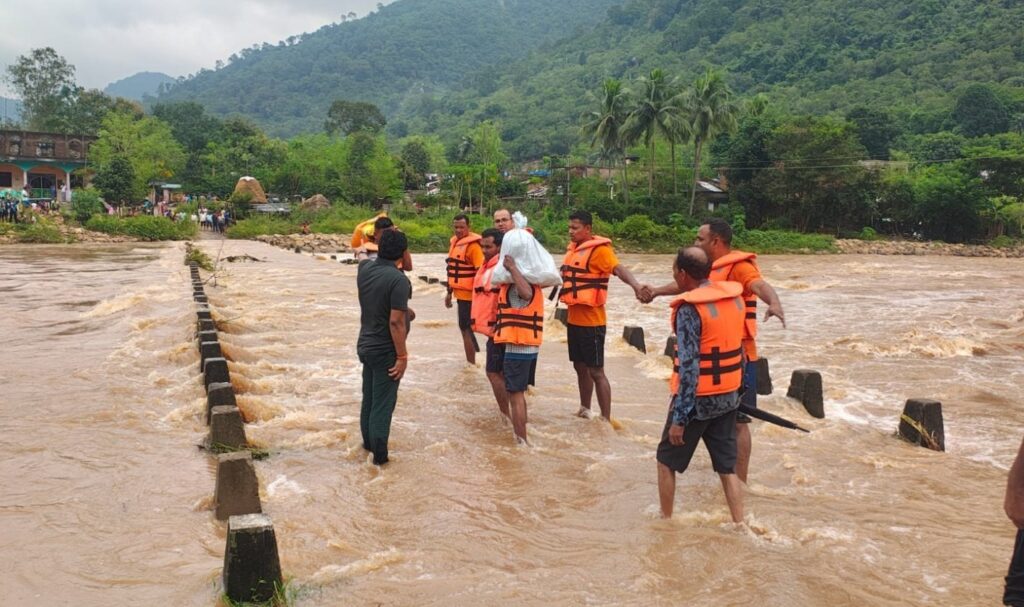
In the wake of successive floods in southern Odisha, particularly in Ganjam district, following back-to-back cyclonic disturbances over the Bay of Bengal, the state government has decided to formulate a comprehensive long-term strategy to tackle recurring floods and minimise damage to life, property and agriculture.
Revenue and Disaster Management Minister Suresh Pujari on Saturday said the government would prepare a detailed roadmap for flood management, focusing on infrastructure development across eight river basins that remain vulnerable to recurrent flooding.
Detailed project reports (DPRs) for the proposed interventions will be prepared with technical assistance from IIT-Roorkee, he said.
Odisha has 11 major river basins spread across a geographical area of 1,51,976 square kilometres. These river systems are crucial to the state’s water resources, agriculture, irrigation and livelihoods. However, comprehensive flood management measures are currently in place only in the Mahanadi and Brahmani River basins, leaving several other regions exposed to recurring floods.
The government now intends to extend systematic flood management infrastructure to the remaining eight basins through a comprehensive development programme.
The proposed strategy is expected to focus on strengthening embankments, improving drainage systems, managing river channels and developing other infrastructure to regulate floodwater and reduce the vulnerability of habitations and agricultural land.
The initiative assumes significance following the extensive damage caused by recent floods in Ganjam and neighbouring districts. Successive spells of intense rainfall associated with cyclonic weather systems have inundated villages, damaged roads and public infrastructure, and destroyed standing crops, highlighting the vulnerability of southern Odisha’s river systems.
The government had earlier, in April this year, approved a Rs 2,781-crore Comprehensive Flood Management Scheme to be implemented over five years with state government funding.
The proposed eight-basin strategy is expected to provide a broader framework for addressing the state’s long-term flood management requirements.
With climate variability and episodes of intense rainfall posing increasing challenges, the emphasis will have to shift from post-disaster relief to preventive infrastructure, scientific river basin management and improved forecasting.
The involvement of IIT-Roorkee in preparing the DPRs is expected to provide technical inputs for identifying vulnerable stretches and prioritising investments.
The success of the initiative, however, will depend on the timely preparation of projects, adequate funding, coordination among departments and sustained maintenance of flood-control infrastructure.