
























An analytical look at Ravenshaw University’s ongoing leadership and governance crisis, examining the urgent need to restore academic integrity in Odisha
Dr Vikram Kesari Jena
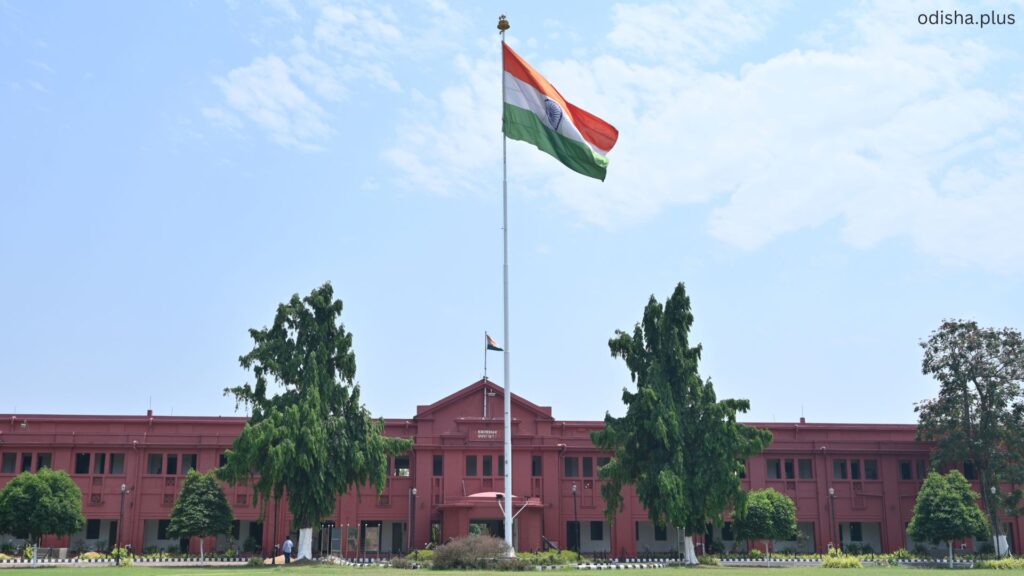
Some institutions are merely buildings, some are merely universities, and some become part of the intellectual memory of a civilisation. Ravenshaw University belongs to the last category. For generations of Odias, Ravenshaw has never been simply a place where degrees were obtained. It has been a place where minds were shaped, arguments were born, public leaders emerged and Odisha’s intellectual character was continuously renewed. Its classrooms, libraries, hostels and corridors have produced scholars, administrators, politicians, scientists, journalists, judges, writers and public intellectuals who have contributed enormously to the making of modern Odisha.
That is why the present crisis surrounding Ravenshaw should concern not merely its students, teachers and alumni, but the entire state. A university with an A++ accreditation cannot afford an atmosphere in which academic confidence is weakened, administrative uncertainty becomes normal and institutional leadership fails to inspire. An A++ grade is an achievement, but it is not a permanent certificate of institutional health. Accreditation measures several dimensions of performance at a particular point in time. Institutional reputation, however, is accumulated over decades and can be damaged much faster than it is built.
Ravenshaw is facing a deeper question than whether it has adequate infrastructure, rankings or administrative compliance. The question is whether the university still possesses the intellectual leadership necessary to remain Ravenshaw. The difference is fundamental. Universities become great not because they have impressive buildings or certificates on their walls, but because they create an academic climate where teachers teach with conviction, students question without fear, research is encouraged, debate is respected and intellectual excellence is rewarded.
The present debate about leadership therefore deserves to be taken seriously. The appointment and functioning of a Vice Chancellor are not routine administrative matters at a historic institution like Ravenshaw. The Vice Chancellor is expected to be the custodian of academic culture, institutional credibility and intellectual direction. A university can survive a bad semester. It can survive financial difficulties. It can even recover from temporary administrative mistakes. What is much harder to repair is the erosion of trust between leadership, faculty, students and alumni.
The controversy becomes particularly significant when leadership appears disconnected from the distinctive history and academic temperament of the institution. Ravenshaw cannot be governed as an ordinary bureaucratic establishment. Its history demands a different imagination of leadership. The university requires a Vice Chancellor who understands scholarship as well as administration, who can engage with professors and students, who understands Odisha’s intellectual history and who can build bridges between traditional disciplines and emerging areas of knowledge.
There is also a larger institutional problem that cannot be hidden behind individual personalities. Like many public universities, Ravenshaw faces questions concerning faculty performance, accountability, research productivity, academic renewal and administrative efficiency. It would be unfair to declare that every teacher is responsible for institutional decline. Ravenshaw has many dedicated and brilliant faculty members. Yet an institution cannot remain excellent if its culture permits persistent underperformance to continue without meaningful academic accountability. The issue is not the number of inefficient teachers. The issue is whether the university possesses the courage and systems necessary to distinguish excellence from indifference. The tragedy would be to allow an extraordinary academic inheritance to become merely ceremonial history.
Ravenshaw has produced some of Odisha’s finest minds. Its alumni have occupied positions of national and international significance. They have entered universities, civil services, courts, legislatures, laboratories, newsrooms and cultural institutions. Many became intellectual ambassadors of Odisha. The Ravenshaw identity travelled with them. In that sense, the university created something more valuable than graduates. It created a tradition.
That tradition is now under pressure. The brand Ravenshaw cannot be protected through nostalgia alone. Nostalgia remembers what Ravenshaw was. Leadership must decide what Ravenshaw will become. The university needs an academic renewal programme that is measurable, transparent and ambitious. Faculty development must be linked with research and teaching outcomes. Departments should be encouraged to establish national and international academic collaborations. Students should have greater opportunities for interdisciplinary research, internships, policy engagement, entrepreneurship and global academic exchange. The library, laboratories and digital academic resources must be continuously modernised. Alumni should not be invited merely for ceremonial functions. They should become active partners in rebuilding the university.
Most importantly, Ravenshaw requires intellectual freedom. A university loses its soul when teachers become afraid to speak, students become reluctant to question and administrators become more concerned with files than ideas. Academic disagreement should not be interpreted as institutional indiscipline. Criticism should not be treated as hostility. A healthy university is one in which the Vice Chancellor can listen to uncomfortable questions without feeling threatened by them.
Odisha itself cannot afford the weakening of Ravenshaw. The state has historically depended on a relatively small number of institutions for the production of its intellectual leadership. If Ravenshaw declines, the consequences will extend beyond Kataka. Odisha will lose one of its most important platforms for producing public thinkers, researchers, administrators and socially conscious professionals.
This is therefore not an argument against one individual. It is an argument against institutional complacency. If the present leadership is unable to restore confidence, the appropriate authorities must have the courage to undertake an objective assessment of academic governance, administrative functioning, faculty performance and student satisfaction. Such an assessment should not be political. It should be institutional, evidence-based and transparent. The university deserves nothing less.
Ravenshaw has survived empires, political transformations, educational reforms and generations of institutional change. It should not be allowed to lose its stature because of temporary failures of leadership or governance.
The real danger is not that Ravenshaw will suddenly disappear. The greater danger is that it will continue to exist physically while slowly losing the intellectual authority that made its name synonymous with excellence.
That is why Odisha must speak about Ravenshaw now. A great university cannot live permanently on the achievements of its alumni. The alumni can provide the inheritance, but every generation must renew it. Ravenshaw’s next generation must be given a university worthy of its history.
The question before Odisha is therefore simple but profound: Do we want Ravenshaw to be remembered as a great university of the past, or do we have the leadership and courage to make it one of the great universities of India’s future?
The answer will determine whether the Ravenshaw brand merely survives or once again becomes a symbol of intellectual excellence, institutional integrity and the finest traditions of Odisha.
(The author is the Director of the Center for Adivasi Research and Development (CARD). Views expressed are personal.)