

















Remembering Sachidananda Mohanty (1953–2026), the literary scholar whose research shaped the study of Odisha’s cultural history, women’s writing and colonial modernity
Bhaskar Parichha
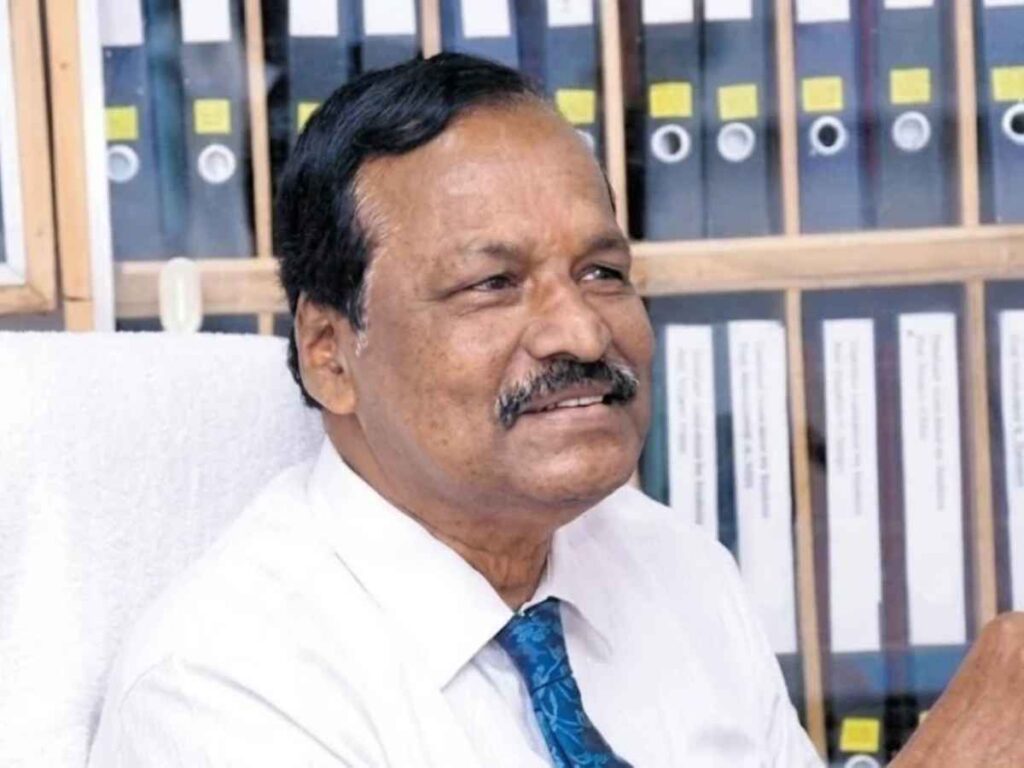
The passing of Professor Sachidananda Mohanty is a profound loss to Indian academia and Odisha’s intellectual life. A distinguished literary scholar, cultural historian and public intellectual, he devoted his life to exploring the intersections of literature, history, gender, colonialism and modernity, bringing to light neglected narratives that enriched our understanding of Odisha and India.
A native of Bhadrak district, Mohanty was the son of the late Panchanan Mohanty, a former Financial Advisor to the Government of Odisha, and the renowned Odia poet Bidyut Prabha Devi. His intellectual journey took him through leading institutions in India and abroad, culminating in an academic career distinguished by scholarship, institutional leadership and international engagement.
Mohanty served as Vice-Chancellor of the Central University of Odisha and as Professor and Head of the Department of English at the University of Hyderabad. He was also a National Fellow at the Indian Institute of Advanced Study, Shimla, a member of the University Grants Commission and a former Sri Aurobindo Chair Professor at Panjab University.
His scholarship was distinguished by its breadth and originality. Through books such as Early Women’s Writing in Orissa, 1898–1950: A Lost Tradition, Gender and Cultural Identity in Colonial Orissa and Periodical Press and Colonial Modernity: Odisha, 1866–1936, he illuminated dimensions of Odisha’s cultural past that had gone underexplored. His studies of Sarala Devi, Sailabala Das and women’s intellectual traditions challenged conventional accounts of literary history and restored visibility to pioneering women writers.
Mohanty made significant contributions to the study of colonial Odisha, women’s writing, gender and cultural identity, literary history and postcolonial thought. His scholarship brought renewed attention to neglected literary traditions and historical voices, enriching our understanding of Odisha’s intellectual and cultural heritage.
His engagement with Sri Aurobindo, postcolonial thought, cosmopolitanism and the history of ideas extended his scholarship beyond regional boundaries. With nearly three decades of books and more than a hundred research articles, he established a significant presence in national and international intellectual discourse.
Yet one of his most enduring contributions was his insistence that Odisha’s history must be understood through a wider cultural and intellectual framework. He demonstrated how periodicals, women’s writing and encounters with colonial modernity shaped the emergence of a modern Odia consciousness. His work was not purely an exercise in recovering the past; it was an attempt to understand how societies remember, interpret and redefine themselves.
Mohanty also brought scholarship into public life through essays and commentary in leading newspapers and journals. He combined academic rigour with a commitment to making complex ideas accessible to a wider readership.
His passing leaves a significant void in Odisha’s intellectual community. His books, however, will continue to inspire researchers, students and readers seeking a deeper understanding of the region’s literary and cultural heritage. In recovering forgotten voices and interrogating received histories, Sachidananda Mohanty helped expand the horizons of Indian literary scholarship.
Mohanty’s intellectual legacy will continue to stimulate generations of scholars.
(The author is a senior journalist and columnist. Views expressed are personal.)