





















An evocative personal essay reflecting on global culinary journeys, European bakeries, and deep-rooted nostalgic love for Odia cuisine like Pakhala
Monalisha Das Dwivedy
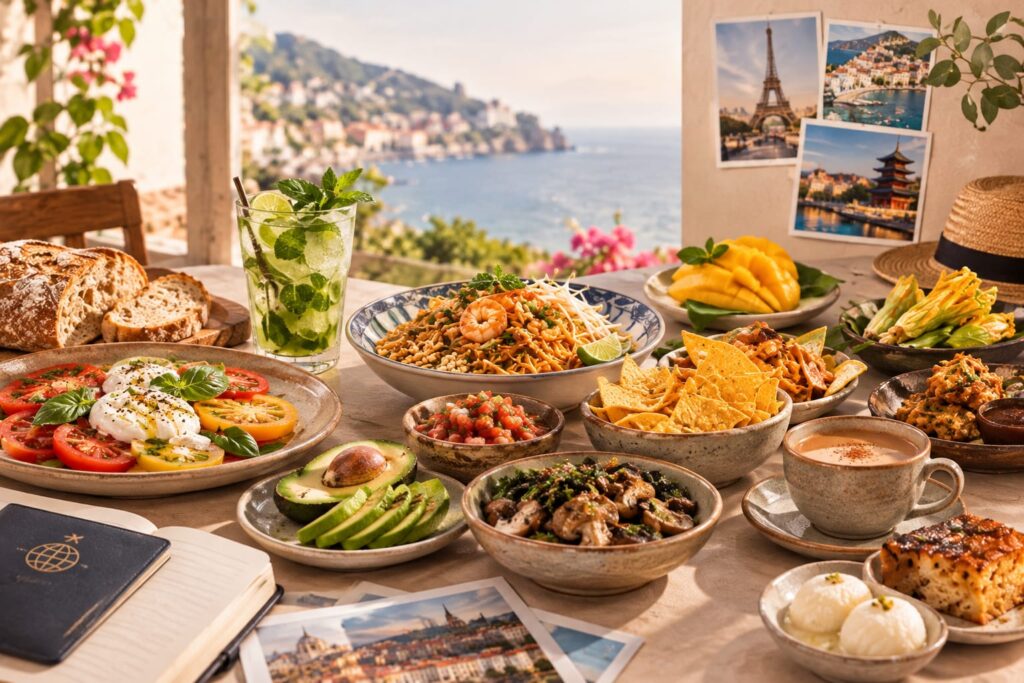
I remain almost Spanish in my love for tomatoes, unapologetically Mediterranean in my devotion to cheese, and Mexican at heart whenever crispy nachos meet a generous bowl of salsa. My soul turns delightfully Thai at the mere thought of Pad Thai, while mangoes awaken the tropical dreamer in me. Mojitos bring out my playful side, reminding me that life deserves to be celebrated with a little mint, lime, laughter, and mischief. I am tenderly enchanted by pumpkin flowers, hopelessly attracted to avocados, and forever fascinated by mushrooms in all their earthy, mysterious glory.
But to describe my relationship with food through a handful of international favourites would be to tell only half the story. My appetite has no passport restrictions, my curiosity knows no culinary borders, and my heart has room for flavours from every corner of the world. Food, to me, is not merely nourishment. It is memory, culture, comfort, adventure, nostalgia, and sometimes, pure, unadulterated bliss.
Europe has a special place in my culinary imagination. Its bakeries, with their irresistible aromas of freshly baked bread, buttery croissants, flaky pastries, rustic loaves, and delicate desserts, can make an ordinary morning feel like a scene from a beautiful film. There is something wonderfully romantic about walking past a European bakery, pausing at the window, and surrendering to the temptation of one more golden, buttery indulgence.
Give me good cheese, crusty bread, a perfectly ripe tomato, and perhaps a little olive oil, and I can create a feast out of simplicity itself. I love how European food often celebrates the character of individual ingredients rather than hiding them beneath layers of complexity. A good piece of cheese can tell a story of its own; a ripe tomato can taste like sunshine; and a warm pastry can make the world feel a little kinder.
Perhaps that is what I love about food cultures everywhere: they remind me that pleasure does not always have to be elaborate. Sometimes, happiness arrives wrapped in paper from a neighbourhood bakery.
My love for food does not stop at Europe’s borders. A plate of Pad Thai can transport me into the beautiful balance of Thai cuisine, where sweet, sour, salty, savoury, and spicy flavours dance together in delightful harmony. Mangoes are sunshine made edible, carrying the sweetness of tropical summers in every bite. Avocados bring their creamy elegance, mushrooms offer their deep, earthy character, and pumpkin flowers remind me that even the most delicate ingredients can create soul-stirring culinary experiences.
Then there are nachos and salsa, a combination that turns ordinary gatherings into celebrations. The crunch, the freshness, the tang, and the occasional fiery kick make it almost impossible to stop at one bite. And when the occasion calls for a mojito, with its refreshing mint and lime, life seems to acquire its own festive soundtrack.
I suspect that my taste buds are permanent travellers. They collect experiences instead of souvenirs, remember flavours instead of directions, and measure happiness in moments rather than miles.
Yet, no matter how far my palate travels, there are flavours that feel like home.
A hot pakoda on a rainy afternoon has a special kind of emotional intelligence. It understands the weather, the mood, and the moment without requiring a single word. Add a tangy tamarind sauce, with its delicious combination of sweetness and sourness, and the experience becomes even more irresistible.
And then there is masala tea. For me, chai is more than a beverage. It is a pause button in a world that rarely stops moving. It belongs to conversations that stretch longer than planned, friendships that need no occasion, quiet moments of reflection, and those familiar afternoons when the aroma of tea fills a home with warmth. The fragrance of spices rising from a steaming cup has a way of making even a distant place feel familiar.
Some people seek comfort in grand luxuries. I can find mine in a cup of masala tea, a plate of pakodas, and a conversation that flows without looking at the clock.
For all my international culinary adventures, there is a part of me that will always belong to Odisha.
How can I speak of my love for food without celebrating PAKHALA? This beautiful, humble, cooling dish is more than a meal; it is a childhood memory, a connection to the soil, and a reminder of a way of life that understands the wisdom of simplicity. Paired with the right accompaniments, perhaps a little mashed potato, fried leafy greens (saaga), or a favourite traditional side dish, pakhala becomes an experience that no elaborate restaurant menu can quite replicate.
There is something profoundly beautiful about a cuisine that can turn everyday ingredients into comfort and identity. Pakhala carries the spirit of Odisha: grounded, generous, resilient, and quietly extraordinary.
And then come the sweets that can make even the most disciplined person reconsider their promises. Rasagola, with its delicate sweetness and soft, spongy texture, is a celebration in itself. Chhena poda, Odisha’s beloved caramelised cottage-cheese dessert, is an entirely different kind of magic. Its beautifully browned exterior, soft interior, and distinctive caramel notes make it unforgettable. It is proof that extraordinary things can emerge from humble beginnings, given patience, skill, and a little fire.
Rasagola delights me; chhena poda captivates me. One is a sweet embrace, the other a delicious work of art. Together, they remind me that my roots are not something I carry only in language, memories, or traditions. I carry them in the flavours that make me feel at home, wherever in the world I happen to be.
And naturally, my love for Odia food does not end there. From traditional pithas and dalma to saaga, comforting rice dishes, and the many regional preparations that make Odia cuisine so distinctive, there is always another flavour waiting to bring back a memory or create a new one.
I also have a soft spot for matcha, with its earthy character and its quiet, contemplative charm. There is something fascinating about a flavour that does not immediately try to please everyone. Matcha invites you to slow down, pay attention, and discover its nuances.
Perhaps that is why I enjoy so many different foods. I am drawn not only to sweetness but also to bitterness and sourness; not only to comfort but also to surprise. I can appreciate the sophistication of a European pastry and the uncomplicated pleasure of a pakoda. I can enjoy the refreshing character of an avocado, the intensity of tamarind, the tropical joy of a mango, and the soothing familiarity of masala chai.
I do not believe that a person must choose between being traditional and being adventurous. We can cherish our roots while embracing the world. We can love the food of our childhood and remain curious about flavours we have only just discovered. Our identities, like our palates, can hold many things at once.
Perhaps my relationship with food reveals something about the way I approach life itself.
I like variety. I appreciate authenticity. I am curious about what lies beyond the familiar, but I have no desire to abandon the things that made me who I am. I find joy in contrasts: the sharpness of tamarind against sweetness, the richness of cheese against the freshness of tomatoes, the earthy depth of mushrooms against the brightness of lime, and the sophisticated charm of international cuisine alongside the reassuring simplicity of traditional Odia food.
I believe that life becomes richer when we remain open to experiences. Every cuisine is an invitation to understand another culture, every traditional dish is a window into someone’s history, and every shared meal is an opportunity to build a connection.
Food also teaches us to be present. A ripe mango will not be sweeter because we are worrying about tomorrow. A cup of tea cannot be enjoyed fully if our minds are always racing ahead. A beautiful meal deserves our attention, just as a beautiful life deserves our participation.
So I choose to savour. I choose to explore. I choose to celebrate the ordinary pleasures that make extraordinary memories.
If you ask me where I belong in the world of food, I might struggle to give you a single answer.
I am Spanish in my affection for tomatoes, Mediterranean in my love for cheese, Mexican when the nachos and salsa arrive, Thai when Pad Thai calls my name, and tropical whenever mangoes are in season. I am European in my admiration for beautiful baked goods, Japanese-inspired in my appreciation of matcha, and unmistakably Indian when the aroma of masala chai, pakodas, and tamarind sauce fills the air.
But I am also, deeply and proudly, Odia—in my love for pakhala, rasagola, chhena poda, and the traditional flavours that connect me to home.
Perhaps the best description is that I am a citizen of the world with an Odia heart and an adventurous palate.
My culinary passport is always open. My table has room for tradition and experimentation, familiar comfort and delightful surprises. I can be equally happy discovering a new flavour in a distant European town or enjoying a beloved dish that reminds me of home.
Because, in the end, food is not simply about what we eat. It is about how we experience the world, how we remember where we came from, and how we welcome what is yet to be discovered.
And if happiness can be measured in flavours, then I intend to live a wonderfully colourful, deliciously unpredictable, and gloriously well-seasoned life.
After all, the world is far too beautiful—and the menu far too tempting—to eat from just one corner of it.
I remain unapologetically global in my appetite, proudly Odia in my soul, and forever in love with the delicious art of living.
(The author is an IT Consultant living in Toronto. Views expressed are personal.)