





















From abandoning privilege to empowering rural women through solar technology, Bunker Roy built Barefoot College into a global model of grassroots innovation, self-reliance and community-led development
Pradeep Biswal
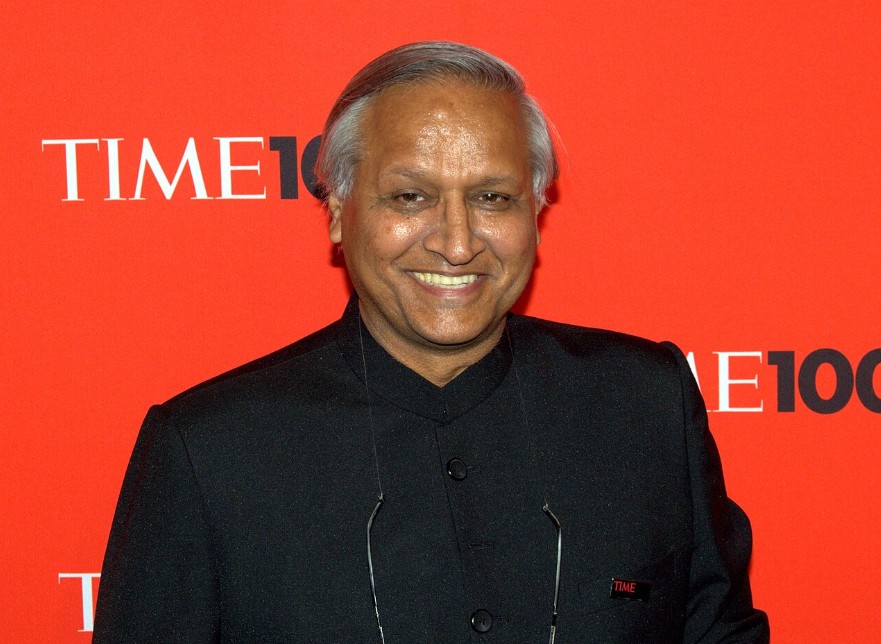
Sanjit ‘Bunker’ Roy passed away at the age of 81 on November 10, 2026, at his home in Tilonia, Rajasthan. Born into an affluent Bengali family in 1945 in Burnpur, West Bengal, with an enviable family background, an excellent education, three national squash championships to his credit, and a lucrative career awaiting him, Bunker Roy had everything going for him. But a visit to famine-affected villages in Bihar in 1966 changed the course of his life. Confronted with rural poverty and deprivation, he began questioning the privileges he enjoyed. He eventually abandoned the conventional career path and, inspired by Gandhian philosophy, founded the Social Work and Research Centre in a remote village called Tilonia in Rajasthan in 1972. The institution later became globally known as Barefoot College.
Barefoot College was conceived as an institution to train marginalised rural communities, often people without formal education, to become self-reliant in areas such as solar energy, water conservation, healthcare and education. One of its most celebrated initiatives is the ‘Solar Mamas’ programme, which brings grandmothers and rural women from India and different parts of the world to Tilonia for hands-on training. Using colour-coded equipment and practical methods, they learn to assemble, install and maintain solar power systems before returning to electrify their own villages. It is difficult to explain the depth and expansiveness of his contribution in a few words. His passing marks the end of an extraordinary chapter in the story of grassroots development in India and the departure of one of those rare individuals who dared to think differently about life and development.
One may be curious to know why his name was Bunker. It was simply because his brother’s nickname was Shankar, and he was named Bunker to rhyme with it. One can almost smell a quintessential Bengali family tradition in this delightful anecdote. Educated at Doon School and St. Stephen’s College, Delhi, and a three-time national squash champion, he was ideally placed for a conventional career, possibly even in the civil services. But he chose a different path. He dedicated his life to the empowerment of rural communities. He was married to Aruna Roy, who left the Indian Administrative Service in 1975 to join him in Tilonia and subsequently emerged as one of the leading figures of India’s Right to Information movement.
The village of Tilonia has since become a destination for civil servants, social workers, researchers and development practitioners from across the world. It offers an unusual model of self-reliance and grassroots innovation. For years, the village enjoyed solar-powered electricity even before conventional grid connectivity became available. The Barefoot College campus has rainwater harvesting facilities, a solar kitchen, healthcare services, a meeting hall, training workshops for solar engineers and a unit producing affordable sanitary napkins, among other initiatives.
One of the most remarkable aspects of Barefoot College is its rejection of conventional educational hierarchies. No formal certificates are issued for its training programmes, and academic degrees are not considered a prerequisite for acquiring technical skills. The emphasis is on practical knowledge, experience and the ability to perform a task. The institution’s approach challenges the assumption that expertise can only come from formal education. Its solar engineering programme has demonstrated that women with little or no schooling can master sophisticated technical skills and become agents of change in their communities.
At Barefoot College, the atmosphere itself reflects its philosophy. Shoes are not allowed inside certain spaces, and visitors are welcome to sit on the floor, with no elaborate arrangements of chairs or tables. Meals are served in a self-service manner, and everyone is expected to wash their own dishes. The emphasis is on simplicity and equality rather than status or hierarchy. Bunker Roy was usually available to greet visitors and interact freely with them. No wonder the institution acquired an international reputation. Its Solar Mamas initiative alone has reached women in 96 countries, bringing solar technology to communities that would otherwise have remained beyond the reach of conventional electrification programmes.
Roy received the Padma Shri in 1986 in recognition of his contribution to rural development. He also received several national and international honours, including the Jamnalal Bajaj Award in 1985, the Tyler Prize for Environmental Achievement in 2004 and the Skoll Award for Social Entrepreneurship in 2005. In 2010, TIME magazine named him among the world’s 100 most influential people. The institution he founded went on to become an internationally recognised model of community-led development.
I had the opportunity to visit Barefoot College in 2015 and meet its architect, Bunker Roy. During our conversation, when he learnt that I was from Odisha, he recalled his association with Naveen Patnaik during their years at Doon School, where they had been classmates. It was a pleasant surprise for me. The conversation offered a glimpse of another facet of his life, beyond that of the celebrated social activist and institution-builder the world knew.
An era has come to an end with Bunker Roy’s passing. His life was a powerful statement against conventional notions of education, expertise, privilege and development. He believed that the poor were not merely beneficiaries of development programmes but possessed the knowledge, skills and wisdom to shape their own futures. Barefoot College was the practical expression of that conviction.
He will be remembered not merely for the institution he created or the awards he received, but for the confidence he instilled in thousands of ordinary people, particularly rural women, who discovered abilities they had never been encouraged to recognise. His greatest contribution may well have been his insistence that dignity, self-reliance and empowerment must begin with trusting people. In a world increasingly obsessed with formal qualifications, grand projects and technological sophistication, Bunker Roy demonstrated that some of the most meaningful transformations begin with simplicity, humility and faith in human potential.
(The author is a retired IAS officer, bilingual poet writing in Odia and English, and a reputed editor and translator. His poems have been widely anthologised. Views expressed are personal.)