






















OCOY’s journey reflects how Odisha’s youth climate movement has evolved from awareness to action and leadership, building a stronger, more empowered generation committed to a climate-resilient Odisha
Prasanta Kumar Dash
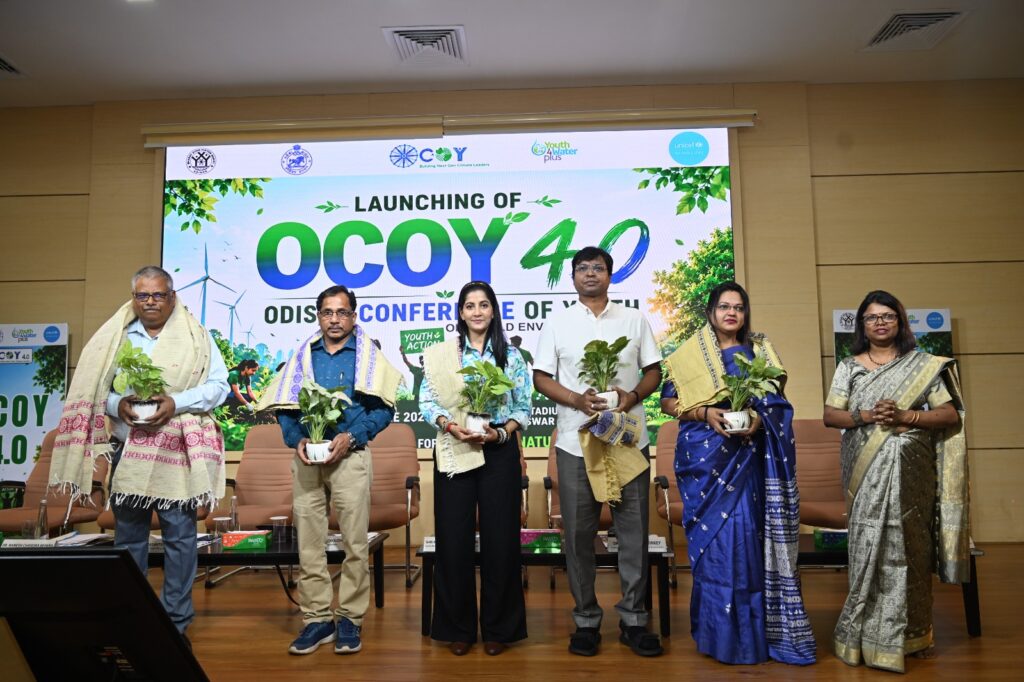
There is a particular kind of energy that fills a room when young people stop waiting to be told what to do about the climate crisis and start deciding for themselves. It is the energy of the Odisha Conference of Youth — OCOY — a platform that, over four editions, has quietly but steadily grown from a modest awareness campaign into one of Odisha’s largest youth-led climate movements. As OCOY 4.0 prepares to open its doors from 10 to 12 August 2026 in Bhubaneswar, it is worth pausing to trace the journey that brought it here — a journey that mirrors, in many ways, the arc of climate consciousness itself: from awareness, to skill, to action, to leadership. From OCOY 1.0 to 4.0, the journey has evolved from dialogue to measurable actions. More than 450 youth leaders have driven change across Odisha through plantation of 1.5 lakh saplings, 5,000 seed balls, collection of 50 tons of waste through plogging, 30 youth-led climate projects, incubation of 20 ecopreneurs, and engagement across all 30 districts through over 50 partners and the NSS network.
The Beginning: OCOY 1.0 and the Spark of Awareness
Every movement needs a starting point, and for OCOY, that point was awareness. When the first edition of the conference was conceived, Odisha’s young people — like young people everywhere — were increasingly aware that the world around them was changing. Cyclones were arriving with greater ferocity, water sources were under strain, and conversations about sustainability were entering classrooms and colleges in ways they never had before. But awareness without direction rarely translates into action.
OCOY 1.0 set out to change that. Its purpose was straightforward: introduce young people across the state to the climate challenges unfolding around them and build a shared sense of urgency and understanding. It was less about solutions at this stage and more about orientation — helping students, volunteers, and first-time changemakers understand what was at stake, why it mattered to Odisha specifically, and why their voices belonged in the conversation. It was, in effect, the ignition points for everything that followed.
Building the Toolkit: OCOY 2.0 and the Skills Era
Awareness, once sparked, needs to be shaped into capability. That was the task OCOY 2.0 took up. If the first edition asked, “Why does this matter to us,” the second asked “what can we actually do about it.” The focus shifted decisively toward skill-building: leadership training that helped young participants find their voice in public and policy spaces; climate advocacy sessions that taught the language and strategy of pushing for change; and community engagement exercises that grounded lofty climate rhetoric in the everyday realities of Odisha’s villages, towns, and coastal belts.
This was the stage where OCOY began to look less like a one-off event and more like a pipeline — a place where young people didn’t just hear about climate leadership but began practicing it. Participants who walked in as curious students began walking out with vocabulary, confidence, and networks of budding advocates.
From Talk to Action: OCOY 3.0 Takes the Leap
If OCOY 1.0 was about waking up to the problem and OCOY 2.0 was about learning the tools, OCOY 3.0 was about picking those tools up and using them. This edition marked a decisive shift from dialogue to demonstration. Youth-led projects began emerging from the conference rather than merely being discussed at it. Policy discussions moved from theoretical exercises to genuine engagement with decision-makers. And, notably, OCOY’s ambitions began to extend beyond Odisha’s borders, with participants gaining exposure to national and international platforms — a signal that the conference was no longer just a state-level gathering, but a launchpad for young Odias to engage with climate action on a wider stage.
It was during this period that OCOY’s credibility as a serious, action-oriented platform solidified. The conference stopped being just a space to talk about climate change and became a space where climate change was actively being addressed — by the very generation that will inherit its consequences.
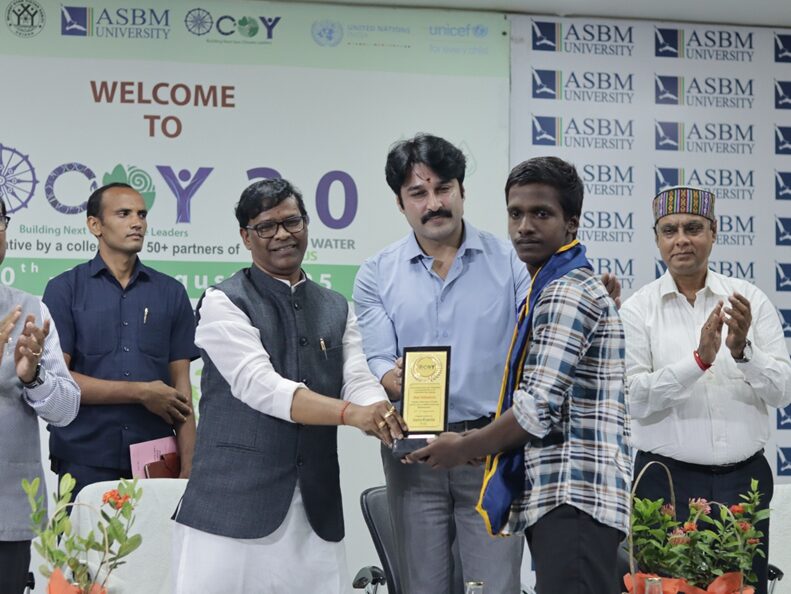
OCOY 4.0: Building the Next Generation of Climate Leaders
Which brings us to now- OCOY 4.0, which represents the most ambitious chapter yet in this journey — a synthesis of everything the previous three editions built, now channeled into five clear focus areas: climate leadership and capacity building, community-based solutions, partnerships for impact, youth innovation and entrepreneurship, and sustainability and stewardship.
The scale reflects the growth. Powered by Youth4Water Plus and supported by UNICEF Odisha, OCOY 4.0 will bring together more than 150 young climate leaders and over 50 partner organizations, showcase 20-plus innovative community projects, and anchor itself around a single unifying goal: a climate-resilient Odisha. Hosted at XIM University, Bhubaneswar — a Jesuit institution built on Ignatian values of excellence, ethics, compassion, and service, and home to the Xavier School of Sustainability — the conference will unfold over three thematically distinct days.
Day One — Connect, Learn, Lead — opens with keynotes and ceremony before diving into a Climate Leadership Challenge, a Youth Climate Negotiators Workshop, and a session on Climate Stories & Youth Voices, culminating in a cultural evening celebrating indigenous knowledge and climate resilience.
Day Two — Explore, Create, Express — takes participants beyond the conference hall with field visits to WASH & climate-resilient sites, collaborative peer exchange, digital storytelling, a creative climate communication lab, and even a Climate Fashion Walk and Climate Band Show — a reminder that climate advocacy need not be dour to be serious.
Day Three — Innovate, Influence, Act — is where ambition meets accountability. An Eco Tank session will spotlight green entrepreneurship and climate innovation, echoing the format of investor pitch competitions but for sustainability ventures. This is followed by a Mock Tribunal for Environmental Justice and the presentation of a Youth Statement — a document intended to carry the collective voice of Odisha’s young climate leaders into policy corridors — before the conference closes with reflections on the way forward.
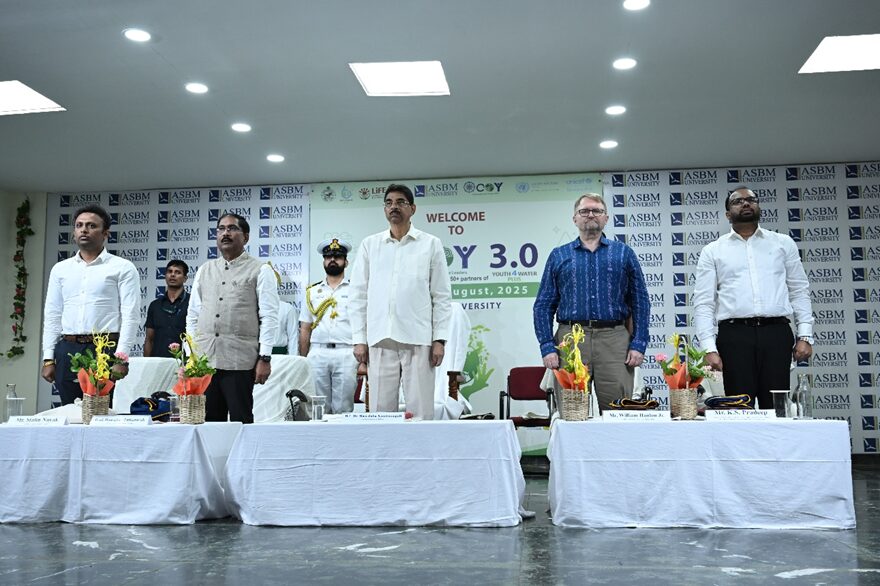
Why This Journey Matters
It would be easy to read OCOY’s trajectory — awareness, skills, action, leadership — as a neat, almost inevitable progression. But movements rarely grow in straight lines, and the fact that OCOY has managed this arc, edition after edition, reflects deliberate, patient institution-building rather than accident. Each stage required different things: OCOY 1.0 needed reach and relatability; OCOY 2.0 needed structured training and mentorship; OCOY 3.0 needed the courage to let young people lead projects with real stakes; and OCOY 4.0 needs the infrastructure — partnerships, platforms, and policy access — to let that leadership translate into lasting impact.
This is also, fundamentally, a story about trust. Trusting young people not merely to attend a conference but to negotiate, to pitch ventures, to consult on zonal priorities, and to author a statement meant for policymakers’ desks is not a small thing. It reflects a belief — shared by Youth4Water Plus, UNICEF Odisha, and the more than 50 partner organizations lending their support — that Odisha’s climate resilience will not be built by expert committees alone, but by a generation empowered early enough, and seriously enough, to shape it themselves.
Looking Ahead
As the curtains prepare to rise on OCOY 4.0, the conference carries with it the accumulated weight and momentum of three prior editions — each one a rehearsal, in its own way, for what is now becoming a genuine movement. The line that anchors this year’s conference “Youth today, solutions tomorrow, a sustainable Odisha forever” — is not just a tagline. It is, in many ways, a summary of the last several years: young people showing up, learning, acting, and now, finally, leading.
Whether OCOY 4.0 delivers on the scale of its ambition will be tested over three days in August. But its history suggests it is not starting from scratch — it is building on a foundation laid, brick by brick, since its very first edition. For Odisha’s youth, and for the state’s climate future, that continuity may be the conference’s most significant achievement.
OCOY 4.0 will be held from 10–12 August 2026 at XIM University, Bhubaneswar, Odisha. The conference is powered by Youth4Water Plus and supported by UNICEF Odisha, along with over 50 partner organizations.
(The author is the Chief of UNICEF’s Odisha Field Office and a seasoned development professional with over three decades of experience advancing child rights and strengthening public systems across India and Uganda, including 13 years with UNICEF. Views expressed are personal.)