
















Explore Hamid Dalwai’s seminal work ‘Muslim Politics in India’, examining minority discourse, secularism, and reform
Satya Narayan Misra
In a riveting address recently, Javed Akhtar, the poet & scriptwriter, asked Muslims not to be despondent in India, riven by polarisation by the present political dispensation, recalling how Aurangzeb could not destroy the cultural fabric of India despite his despotic rule and religious bigotry for fifty years. Most importantly, he recalled Gandhi’s assassination in 1948 as an attempt to annihilate an idea which was based on non-violence, religious harmony and robust secularism, which he believes will not succeed in India. Predicting the downfall of the present political dispensation, he pleads with the alternative political dispensation not to indulge in ‘minority appeasement ‘.
Such an assessment is sharply different from Ghazala Wahab’s book’ Born A Muslim’ (2021), ‘where she believes that ‘identity, security, and education have been scarred by structured discrimination and social prejudices against the Muslims’. On the other hand, Salman Kurshid, in his book poignantly titled “Visible Muslim & Invisible Citizen” (2019), believes that ‘it’s too early to read the future in store for India’, while admitting that ’ smog has descended on India’s plurality’, and hopes for the resurgence of Gandhi & Nehru’s idea of India. Between such conflicting narratives of hope, despondency and limpid optimism, it is refreshing to read Hamid Dalwai’s seminal book ‘Muslim Politics in India ‘, written two decades after Gandhi’s assassination, and ruminate over its continued salience not only for Muslims but for all right-thinking citizens of India.
Jinnah & Gandhi
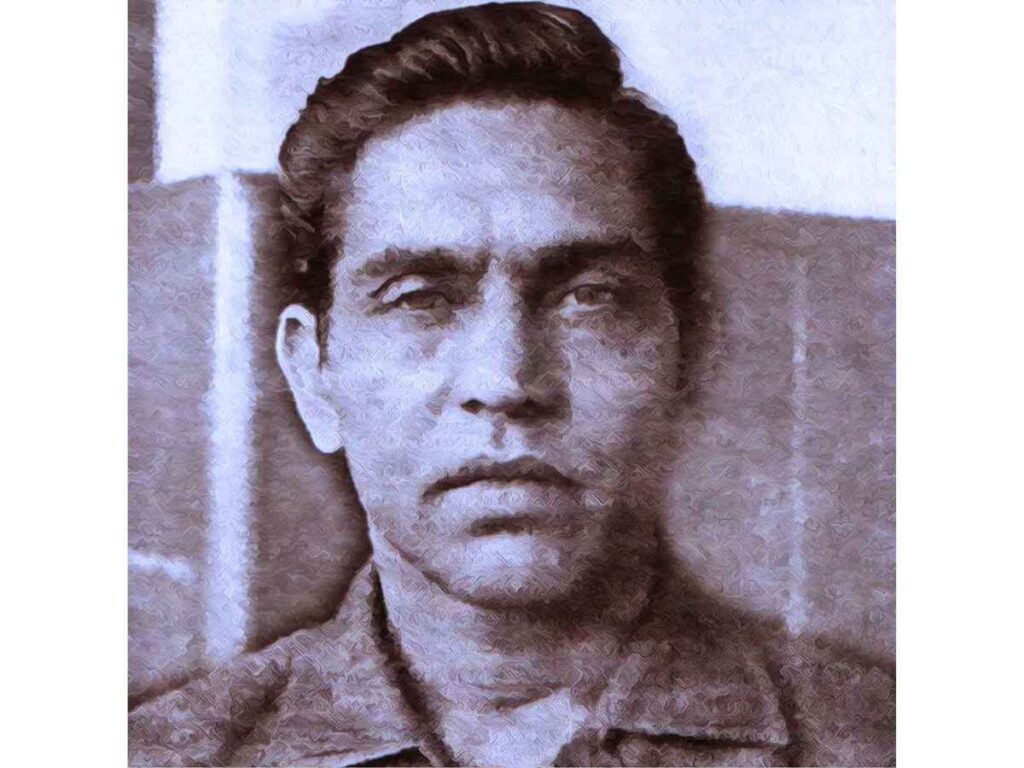
Hamid Dalwai was possibly the most courageous thinker to come from the ranks of Indian Muslims. With fine stories and superb essays on Muslim politics in India, Dalwai excoriates both Muslim fundamentalists & Muslim obscurantists, and calls for liberals of all shades and faiths to come together on a common platform to build a secular, plural & modern India. Dalwai debunks the idea that Jinnah was a secular-minded liberal who was forced by the intransigence of Gandhi and Nehru to advocate a separate Muslim state of Pakistan.
He also demolishes the hypothesis that Gandhi was a revivalist & Jinnah was a modernist. India has a secular constitution, while Jinnah created a Pakistan that has moved in an anti-secular and anti-democratic manner. Within 2 months of its creation, 50% of Hindus were forced to leave. The division of Pakistan happened because of the suppression of Bengalis & language, whereas multiple languages have flourished in India. Such an assessment is sharply different from the assessment of Stanley Wolpert, the historian, who in his biography of Jinnah, viewed him as ‘envisaging a modern & democratic home for Muslims rather than a rigid theocracy’.
Muslim Satyasodhak Mandal
Taking a leaf out of Jyotirao Phule, the great social reformer who set up Satya Sodhak Samaj in 1873 to fight and focus on the rights of depressed groups like women, the Sudras, and the Dalits, Hamid Dalwai set up the Muslim Satya Sodhak Mandal in 1970 to eschew regressive practices like triple talaq, embrace secular values, promote modern education, and encourage rational thinking. He took out a rally of Muslim women to demand a uniform civil code. He was ostracised & abused by his coreligionists, whom he implored to shed their separatist mentality.
Dalwai predated debates like inheritance rights of women in the Shah Bano Case. For him, issues affecting women were a matter of justice, not merely faith. His voice found resonance in the Supreme Court verdict in the Shah Bano Case (1985), when CJI Chandrachud reiterated the cardinal principle of equality before the law and the need for promulgating a uniform civil code . Dalwai believed in linguistic integration, urging Muslims to adapt the language of their region for education and livelihood, while learning Urdu & Arabic for cultural knowledge.
The Contrarian Take
Rama Chandra Guha, the historian and ardent admirer of Dalwai, wrote in 2018 that the Muslim community’s marginalisation lies in the ‘absence of a liberal elite that could lead the community out of the medievalist ghetto .’ Unless a Muslim liberal intellectual class emerges, Indian Muslims will continue to cling to obscurantist medieval mentality & will eventually perish socially and culturally. This is indeed a very harsh assessment. In a stinging riposte, Ali Engineer writes that the present predicament of the Muslim community does not lie in the absence of Muslim liberalism but in the RSS’s unceasing efforts to bring out Hindu revivalism and the ruling dispensation’s coming to power on the ‘Rath of Hinduism’ and continued propagation of Hindu religion and fomenting religious polarisation. He writes: ” The Hindu liberals should not be expected to walk on the crutches of Muslim liberals .” Ambassador Talmiz Ahmed rationalizes Muslim separateness, saying that organisations like RSS & Arya Samaj advocated a Hindu separatist agenda. Similarly, Wahab believes that violence faced by Muslims has forced them to rely on their numbers for security, which has given birth to ghettos that limit their accommodation, education, and professional choices.
The Voice Beyond the Muslims
It would be foolhardy to conclude that the RSS & the BJP have the sole IPR in fomenting communal carnage. The inhuman flattening of slums between Turkman Gate and Jama Masjid & the death of Muslims ordered by Sanjay Gandhi in 1976 & complicity of Congress leaders in the pogrom against Sikhs in 1986 after Indira’s assassination have the same resonance as the mayhem in Gujarat under Modi’s watch in 2002.
The Sachar Committee report in 2006 underlined the basic fault lines, like a literacy rate below the national average, poor representation in Civil services, with the condition of Muslims being similar to or worse than that of SC/ST. Ghazab Uzzala brought out in 2021 how only 2.6% of Muslims are in senior-level jobs, and only a small number have achieved reasonable upward mobility. Prof Hassan Suroor, however, writes in his book “Indian Muslim Spring” that the young Muslims are more secular and forward-looking than the older generation. He calls them’harbingers of Muslim Spring. The recent Jantar massive student protest manifested this alchemy in ample measure when the protest transcended gender, class and religious divide.
The seething frustration of students about their education & employability & scant concern of successive governments to provide quality education & conduct examinations efficiently lent a common voice to the spirit of brotherhood that Hamid Dalwai had tried to kindle by ’erasing the community markers in pursuance of community citizenship for all in India.’
(Satya Misra teaches Constitutional Law & is deeply involved in Development Studies. Views expressed are personal.)