




















Union Health Minister JP Nadda urges lawmakers from Odisha and Jharkhand to intensify grassroots efforts and public engagement to eliminate tuberculosis
OdishaPlus Bureau
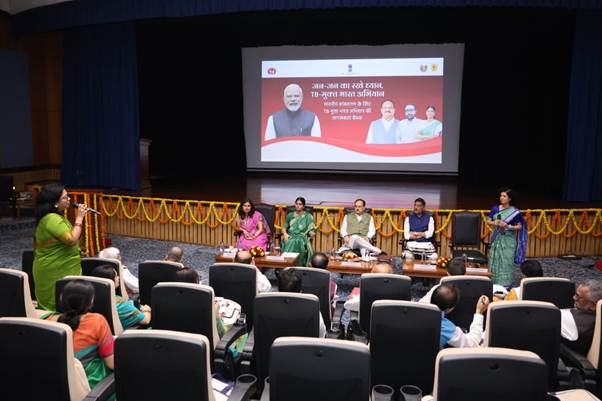
Union Health Minister J P Nadda on Wednesday urged parliamentarians from Odisha and Jharkhand to intensify efforts at the constituency and district levels to accelerate the Centre’s campaign to eliminate tuberculosis (TB), calling for greater political engagement, community mobilisation and closer monitoring of healthcare services.
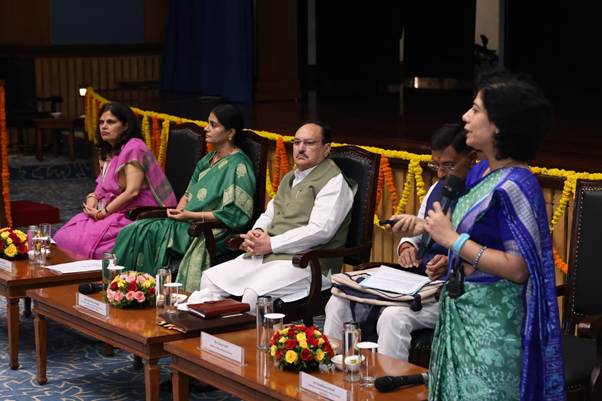
Nadda appealed while interacting with Lok Sabha and Rajya Sabha MPs from the two States on the sidelines of the Monsoon Session of Parliament. The interaction, held under the theme ‘Parliamentarians Championing a TB Mukt Bharat’, focused on strengthening collective efforts towards achieving a TB-free India.
Union Minister of State for Health and Family Welfare Anupriya Patel and Union Minister of State for Defence Sanjay Seth also participated in the meeting.
Nadda highlighted innovative case finding, early diagnosis, patient-centric treatment and community participation as key pillars of India’s intensified TB elimination strategy.
He called upon MPs to work closely with district collectors and health facilities in their constituencies, regularly review the availability and quality of TB services and facilitate early diagnosis and treatment of patients.
The Union minister also stressed the importance of sustained public engagement and social mobilisation, saying the campaign against TB must evolve into a people’s movement or ‘Jan Andolan’.
The meeting reviewed the progress made under the recently concluded 100-Day TB Mukt Bharat Abhiyaan, which was implemented in two phases to intensify screening, diagnosis and treatment.
The second phase, launched on March 24, covered nearly 1.58 lakh high-risk villages and urban wards across the country and concluded in July. During the campaign, more than 2.2 crore vulnerable people were screened, resulting in the detection of over seven lakh new TB cases, including 1.97 lakh asymptomatic cases.
The Union Health Ministry said the intensified case-finding strategy demonstrated the importance of proactive screening, particularly among vulnerable and high-risk populations.
According to the WHO Global TB Report 2025, India recorded a 21 per cent decline in TB incidence between 2015 and 2024, nearly twice the global rate of decline, while achieving a treatment success rate of 92 per cent.
Odisha and Jharkhand remain important focus States because of several TB risk factors, including mining and industrial activities, occupational exposure to dust, migrant and tribal populations, malnutrition, urban slums, comorbidities and tobacco and alcohol consumption.
During the 100-day campaign, Jharkhand notified 16,754 TB patients, including 4,574 asymptomatic cases, while Odisha reported 15,268 patients, including 3,514 asymptomatic cases.
The two States adopted targeted strategies to take screening and treatment closer to vulnerable communities through Ayushman Arogya Shivirs in urban slums, construction sites, migrant settlements and mining areas.
Technology has also emerged as an important component of the national TB elimination programme. Molecular testing capacity has expanded from a few hundred machines a decade ago to more than 9,000 machines, while nearly 3,000 AI-enabled handheld X-ray units are being used for field-level screening.
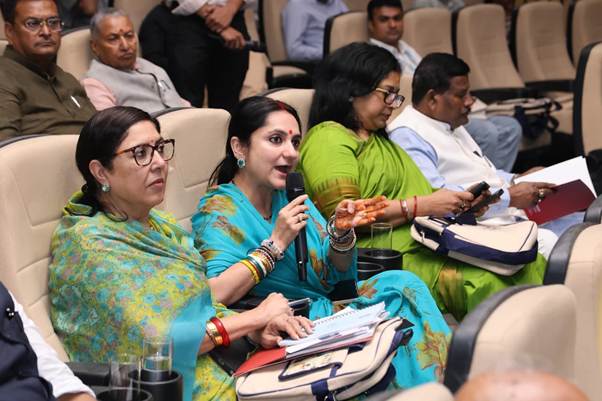
MPs from Odisha and Jharkhand reaffirmed their commitment to intensifying awareness and stigma-reduction campaigns, promoting Ni-kshay Shivirs for early detection and strengthening supervision of TB services at district and block levels.
They also pledged to mobilise community organisations and other stakeholders to provide nutritional, psychosocial and livelihood support to people affected by TB, reinforcing a patient-centric approach to treatment and rehabilitation.
The consultation is part of a series of meetings being held by Nadda with parliamentarians from different States to build collective ownership and promote a whole-of-government approach towards achieving a TB Mukt Bharat.