






















Explore an exclusive book excerpt detailing Ayodhya’s massive infrastructure overhaul, spiritual tourism surge, and master plan execution following the Ram Temple inauguration
OdishaPlus Bureau
Following the inauguration of the Ram Temple in January 2024, Ayodhya overtook even Varanasi to become the most visited religious destination in Uttar Pradesh (UP). According to state government estimates, the sacred city attracted twenty-three crore visitors in the first half of 2025 alone—a number that reportedly is expected to touch 50 crore by the year-end. This staggering footfall positions Ayodhya not just among India’s top pilgrimage sites, but among the foremost spiritual destinations in the world.
The city has been undergoing a comprehensive urban transformation to establish itself as a premier hub for heritage and spiritual tourism. Both the state government and the local administration are upgrading the city’s infrastructure to accommodate a significant influx of tourists. The Ayodhya Master Plan 2031, unveiled in December 2022 by Uttar Pradesh Chief Minister Yogi Adityanath seeks to modernise the city while preserving its cultural heritage. Three leading national firms were roped in to help create the vision plan and its implementation strategy. The master plan envisions a comprehensive regeneration of Ayodhya over a decade, with a projected investment of `85,000 crore. While several projects have been completed in recent years, many others remain underway.
Development projects worth `32,000 crore by both the central and state governments are underway to transform Ayodhya into a gorgeous modern temple town. The first phase of the Maharishi Valmiki International Airport is already operational and has been receiving millions of visitors from major cities since it was inaugurated in December 2023. The opening of the airport, the redevelopment of the railway station and the bus station have boosted the city’s connectivity to the rest of the country.
The city’s four main roads—Ram Path, Dharma Path, Sri Ram Janmabhoomi Path, and Bhakti Path—once narrow and congested, have been widened and beautified. Inspired by the four Vedas, the pathways are a blend of tradition and modernity and feature solar street lights, murals, wall paintings and stone sculptures. Three circular roads (parikrama marg) are also being developed. An ambitious 210-km highway, Ram Van Gaman Path, linking Ayodhya to Chitrakoot in Madhya Pradesh, is also underway.
Underground electricity and telephone lines are being laid, and drainage systems are being overhauled to improve the infrastructure. Efforts have also been made to introduce sustainable waste-management systems, expand solar-power generation and introduce green public transportation.
The master plan also lays emphasis on the creation of vibrant public spaces for people. Many of these initiatives are nearing completion. The Saryu Riverfront Development is progressing rapidly, with the ghats along the river undergoing structural upgrades and renovations. The Ayodhya Haat, developed on the banks of the Sarayu, is already attracting visitors with its handicraft stalls, eateries and boat rides.
Land has been allocated to Tata Sons to develop a world-class museum ‘to showcase the development of different styles of architecture in ancient Indian temples. Ayodhya is also going to have the world’s tallest statue of Lord Ram on the banks of Sarayu River. This 251-metre bronze statue is being sculpted by renowned sculptor Naresh Kumar Kumawat.
New hotels are being constructed to accommodate the surge of visitors. Efforts are on to develop an exclusive hotel street offering affordable to luxury accommodation options.
As a part of the Navya (new) Ayodhya initiative, the Green Field Township, spread over 1,407 acres, is being developed to decongest the old city. A significant portion of this new township is dedicated to religious mutts and spiritual organisations, alongside a designated zone for state bhawans, similar to those in New Delhi.
K.V. Raju, economic advisor to Uttar Pradesh Chief Minister Yogi Adityanath and a member of the Economic Advisory Council to the Prime Minister, says: Redevelopment of Ayodhya as a modern holy town is based on best practices in other states and countries. Global bidding and public-private partnership in all projects have reaped fabulous results. While most work in old Ayodhya is complete, projects in new Ayodhya will take three to four years to finish. Efforts are on to transform Ayodhya into a completely environmentally sustainable city—from solar power generation projects to massive deployment of electric autos and buses to waste management systems. It is poised to become India’s first solar city. Uttar Pradesh is already the largest user of electric auto rickshaws in the country. Before the consecration ceremony of Ram Lalla, around 200 electric buses were deployed in Ayodhya in 2024.
K. V. Raju further adds: ‘Ayodhya will look completely different in the next two to three decades, while retaining its heritage and culture. Meticulous planning and effective execution are the key. Varanasi and Prayagraj are also being redeveloped on similar lines.’
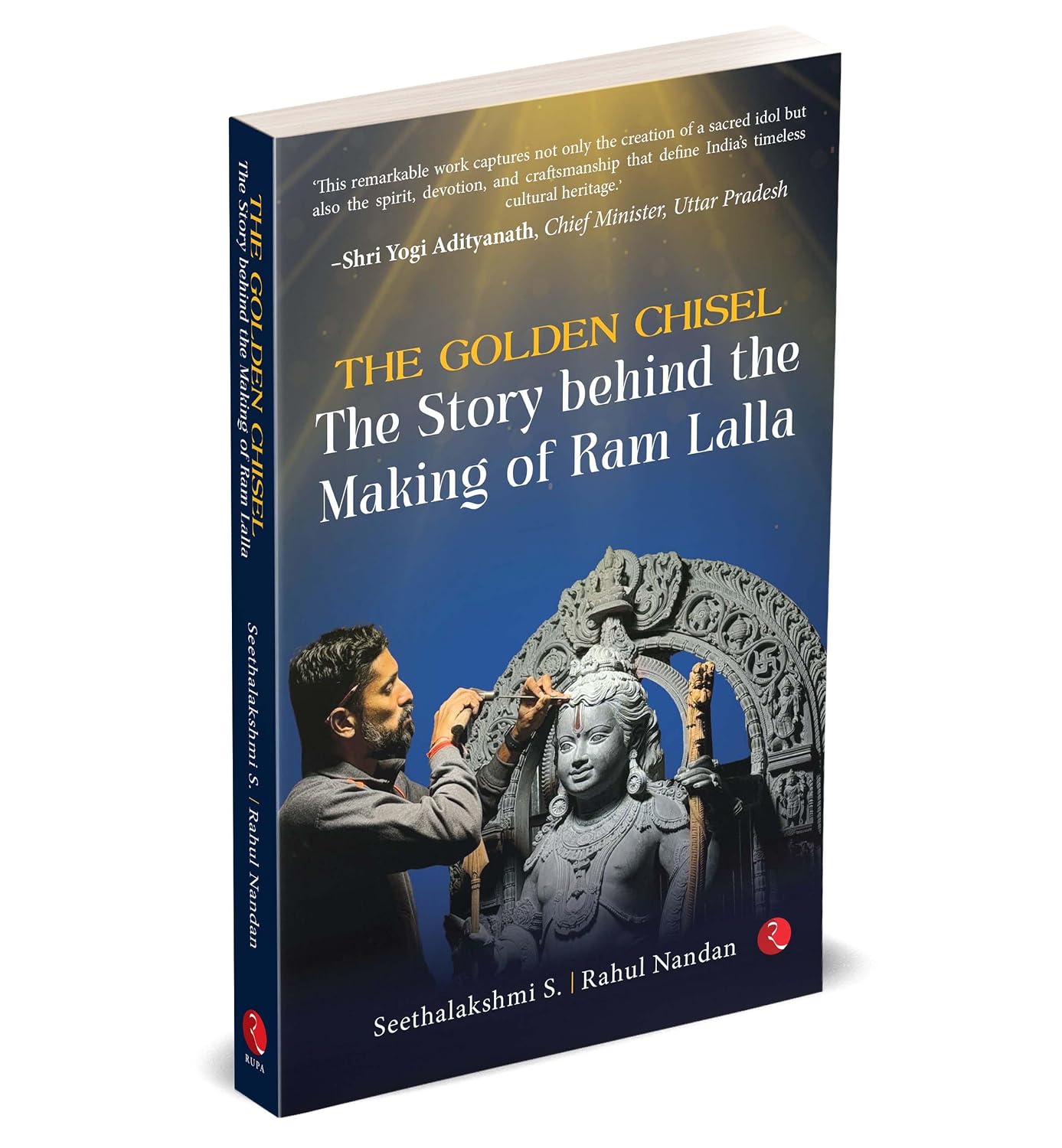
The construction of the Ram Mandir has acted as a catalyst for this comprehensive urban overhaul. For Arun Yogiraj, the physical, cultural and economic revival of Ayodhya embodies the return of Lord Ram to his birthplace in a spiritual and cultural sense: ‘I see the people there leading a better life. It has become a city of hope. With a slew of transformational projects and millions of people visiting the holy city, Ayodhya seems to have taken a rebirth. A new Ayodhya is rising with the Lord’s return.’
(Excerpts from the book ‘The Golden Chisel: The Story Behind the Making of Ram Lalla’ by Seethalakshmi S. and Rahul Nandan, with permission from the publishers, Rupa Publications, New Delhi.)