















The Odisha government constitutes a dedicated commission under retired Justice Pramath Patnaik to assess SEBC political representation ahead of local body polls
OdishaPlus Bureau
The Odisha government has constituted a commission to examine the population, political representation and extent of political backwardness of Socially and Educationally Backward Classes (SEBCs) in rural and urban local self-government institutions, a move that could pave the way for restoring reservation for the community in local body elections.
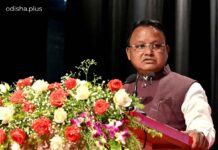
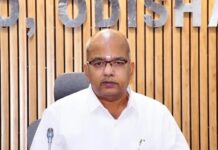
The commission, constituted following a decision of Chief Minister Mohan Charan Majhi, will be headed by retired Orissa High Court judge Justice Pramath Patnaik. Retired IAS officer Bijay Kumar Prusti has been appointed a member, while Special Secretary in the ST & SC Development, Minorities and Backward Classes Welfare Department, Sujata Mishra, will be the member-secretary.
According to the government notification, the commission will assess the proportion of SEBCs in various rural and urban local self-government institutions in relation to the total population of the respective areas. It will also examine their existing political representation and the nature, extent and implications of their political backwardness.
The findings are expected to provide a basis for the government to formulate measures for ensuring adequate representation of SEBCs in panchayati raj institutions and urban local bodies.
The move comes nearly four years after Odisha had to withdraw reservation for backward classes in local body elections following judicial intervention. The issue assumes significance with panchayat and urban local body elections due in 2027.
In December 2021, the Orissa High Court directed the State Election Commission to conduct the panchayat elections without reservation for backward classes after observing that the state had not furnished the empirical data required to justify such reservation. Consequently, the 2022 panchayat elections were held without SEBC reservation, with seats earlier earmarked for the category treated as unreserved.
The withdrawal followed the Supreme Court-mandated “triple test” for reservation of backward classes in local bodies. Under the framework, states are required to constitute a dedicated commission to conduct an empirical inquiry into the nature and extent of backwardness of backward classes in local bodies, determine the quantum of reservation based on its findings, and ensure that the aggregate reservation for SCs, STs and backward classes does not exceed 50 per cent.
Odisha had constituted the Odisha State Commission for Backward Classes in February 2020, but the required empirical exercise on political backwardness and representation in local bodies had not been completed at the time.
The state subsequently amended the Orissa Grama Panchayat Act, 1964, the Orissa Panchayat Samiti Act, 1959, and the Orissa Zilla Parishad Act, 1991, in 2021 following judicial directions on reservation in local bodies.
The latest commission is also part of a series of measures concerning SEBCs taken by the state government. Earlier this year, the government introduced 11.25 per cent reservation for SEBC students in professional higher educational institutions, including engineering and medical colleges.
The new commission’s assessment of SEBC representation in local institutions will be particularly relevant to the government’s decision on the quantum and manner of reservation in the forthcoming local body elections.