





















The Odisha Government has partnered with J-PAL South Asia for three years to promote research-driven policymaking, support the Barnali programme and advance Odisha Vision 2036 and 2047
OdishaPlus Bureau
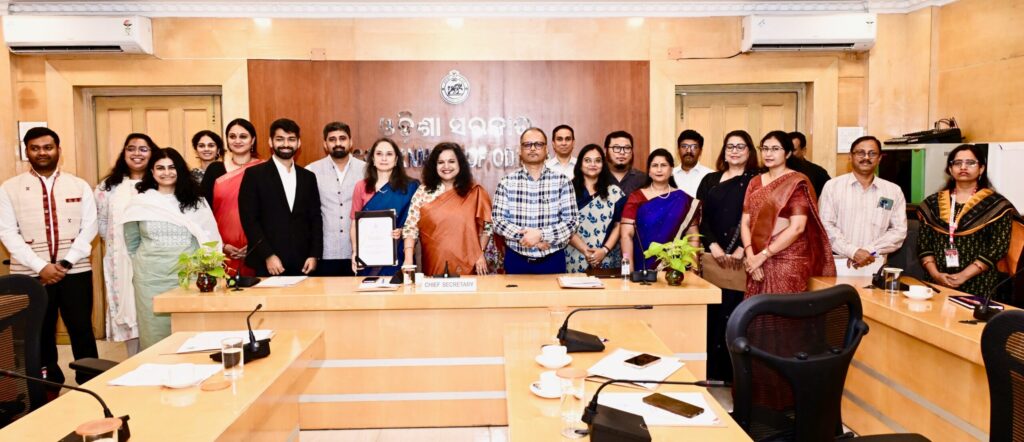
The Odisha government has entered into a three-year partnership with Abdul Latif Jameel Poverty Action Lab (J-PAL) South Asia to strengthen evidence-based policymaking and accelerate the state’s development agenda under Odisha Vision 2036 and 2047.
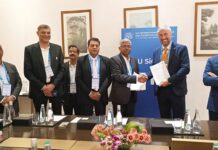
The Memorandum of Understanding (MoU), signed on Wednesday, will enable J-PAL South Asia to work with various government departments to identify priority policy challenges, generate rigorous research-based evidence and translate findings into practical policy recommendations.
The agreement was signed by Additional Secretary of the Planning and Convergence Department, Rashmi Kabi, and J-PAL South Asia Executive Director Shobhini Mukerji in the presence of Chief Secretary Anu Garg, Development Commissioner-cum-Additional Chief Secretary Deoranjan Kumar Singh, J-PAL South Asia Acting Associate Director (Policy) Murali Mallarajunan and senior government officials.
The partnership builds on J-PAL South Asia’s engagement with Odisha since 2006 in areas including early childhood education, foundational literacy and numeracy, governance, sanitation, agriculture and gender equality.
One of the key initiatives under the collaboration is Barnali, a gender-equity curriculum currently being implemented in around 23,000 government schools. J-PAL serves as the knowledge and research partner to the School and Mass Education Department and Breakthrough Trust for the programme.
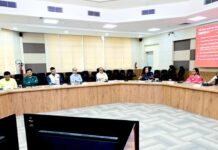
Under the new agreement, a steering committee headed by the Chief Secretary and comprising senior government officials and J-PAL representatives will oversee the partnership. The committee will meet every six months to review project proposals and assess progress.
Nodal officers from both sides will coordinate implementation, while individual projects will be developed in consultation with the concerned government departments.
Chief Secretary Anu Garg said the partnership would help the state incorporate global research evidence into its policy priorities, adapt successful approaches to local requirements and test data-driven interventions before taking them to scale.
She said the collaboration would strengthen Odisha’s efforts to achieve its ambition of becoming a developed state by 2047.
J-PAL South Asia Executive Director Shobhini Mukerji said Odisha had a strong track record of generating and using evidence in policymaking. The organisation would continue to work with the state to adapt global best practices, develop innovative programmes and expand interventions that demonstrate measurable results.
The collaboration is expected to strengthen the link between academic research and governance, enabling the state to design development programmes based on measurable outcomes rather than assumptions. It also seeks to institutionalise a culture of evaluation, learning and evidence-based decision-making across government departments.