


























The Supreme Court rules that prior consent of at least 80 per cent of affected families was mandatory, setting aside acquisition proceedings for limestone mining across three villages
OdishaPlus Bureau
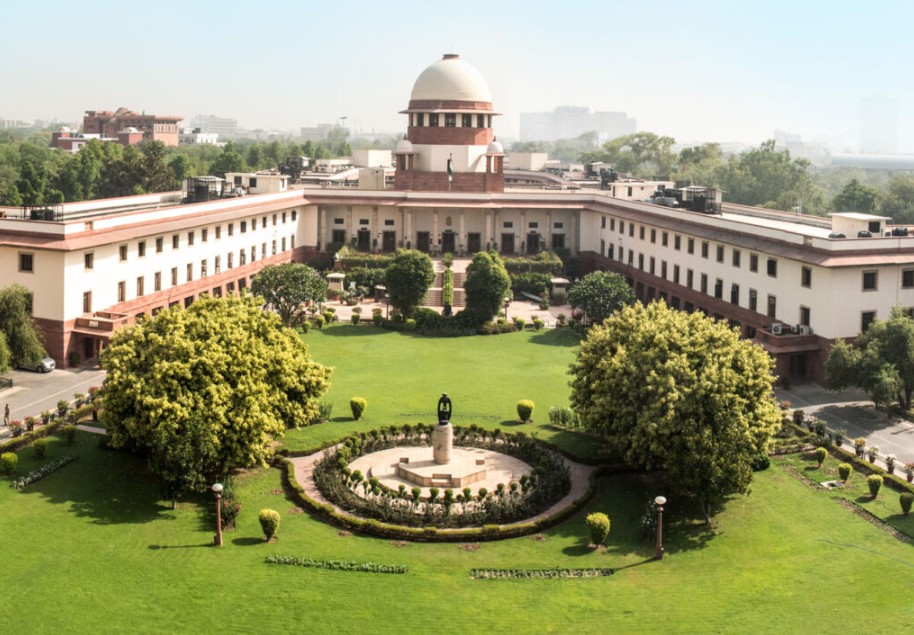
The Supreme Court has set aside the land acquisition process initiated by the Odisha government for limestone mining by Dalmia Cement Bharat Limited in Sundaragada district, holding that the prior consent of the concerned Gram Sabha was mandatory under the Right to Fair Compensation and Transparency in Land Acquisition, Rehabilitation and Resettlement Act, 2013.
A bench comprising Justices Dipankar Datta and Satish Chandra Sharma ruled that the acquisition was unsustainable as the mandatory consent requirements under the Act had not been fulfilled.
Allowing a writ petition filed by Bibol Toppo and other residents, the court set aside the land acquisition proceedings, including the relevant notifications and orders.
The petitioners, residents of Kukuda, Bihabandha and Lanjiberna villages in Sundaragada district, had challenged the state government’s acquisition of land for mining operations by Dalmia Cement Bharat Limited.
The state government had granted the company a mining lease covering 893.55 hectares, valid until February 2040. The company subsequently sought the acquisition of 273.57 hectares across the three villages to secure the surface rights required for its mining operations.
The matter had earlier been heard by the Orissa High Court, which ruled that the requirement of prior consent did not apply because the acquisition was being undertaken by the state government, which would acquire the right, title or interest in the land.
The High Court had also held that even if consent from 80 per cent of affected families was required, the process could continue through different stages of acquisition. It noted that 535 affected persons had given their consent in Form J under the Odisha rules framed under the 2013 Act.
Challenging this interpretation, the petitioners argued before the Supreme Court that prior consent was a mandatory requirement and could not be treated as a procedural formality.
They contended that the acquisition was being undertaken for a private company for a public purpose and was covered under Section 2(2)(b)(i) of the Act. Consequently, prior consent from at least 80 per cent of the affected families was necessary under Rule 21 of the Odisha rules, after updating the Record of Rights in accordance with Rule 20.
The Supreme Court accepted the significance of the timing of consent, observing that the legislation required prior consent from at least 80 per cent of affected families and that it had to be obtained along with the Social Impact Assessment (SIA) study.
The court emphasised that the law had specified both the requirement of consent and the stage at which it had to be secured.
Social activist Prafulla Samantara welcomed the verdict, describing it as historic for the protection of tribal rights over land.
He said the judgment continued the line of reasoning in the Supreme Court’s 2013 Niyamgiri verdict, which upheld the authority of Gram Sabhas in deciding on proposals affecting the religious and cultural rights of tribal communities in the hills.
The ruling is significant for land acquisition in Scheduled Areas, where the consent of Gram Sabhas and the protection of the rights of tribal communities are central to the legal framework governing development and resource extraction.