


















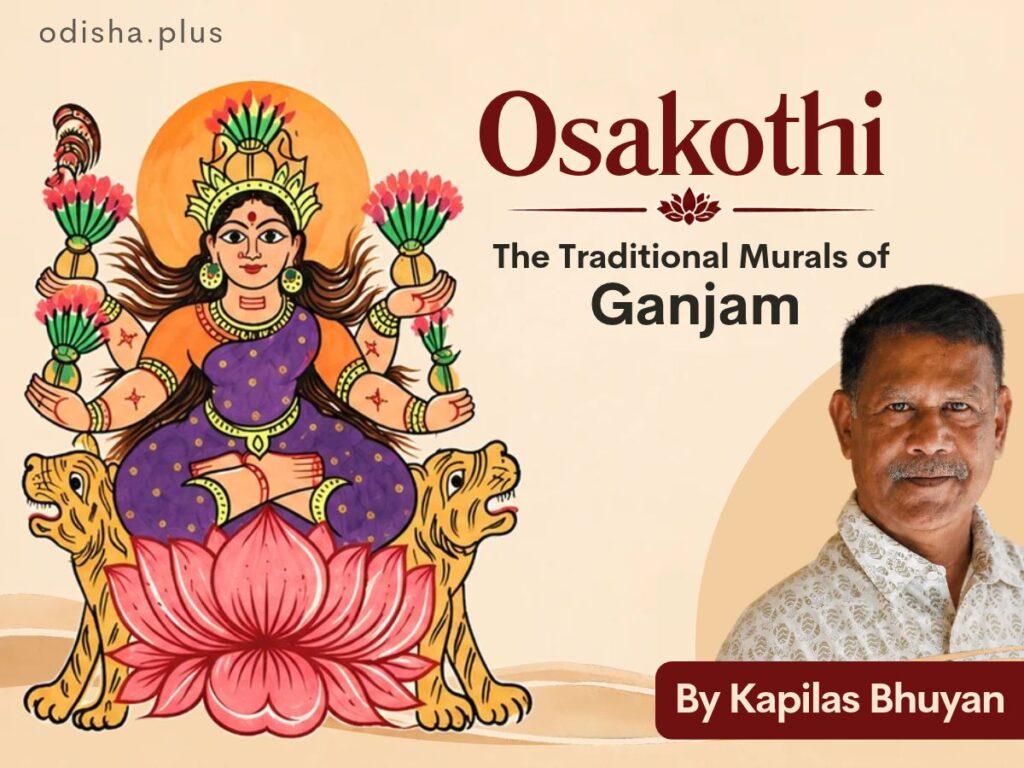
Osakothi, a unique mural-painting tradition of Ganjam, reflects Odisha’s rich cultural heritage. The article traces its ritual roots, artistic significance and efforts to document and preserve this rare art form
Kapilas Bhuyan
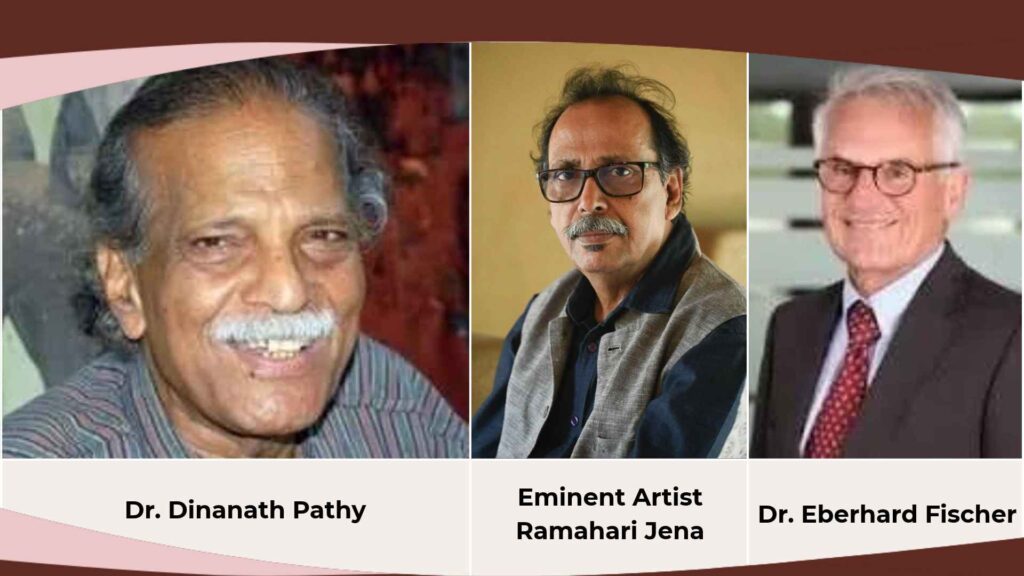
The first time I heard about Osakothi Mural Paintings was in the early 1990s, from Dr. Dinanath Pathy, the artist, art historian, art teacher, organiser, administrator and litterateur. It was most likely in 1994, when he was the then Secretary of Lalit Kala Akademi, the National Centre for Arts, New Delhi, and was quite enthusiastic about his forthcoming publication (as a co-author) by IGNCA, New Delhi. The book was the result of the hard work put into multiple field visits to Ganjam district in South Odisha during the 1980s, when he accompanied Dr. Eberhard Fischer, Director of Museum Rietberg, Zurich, Switzerland, to study and document the Osakothi ritual.
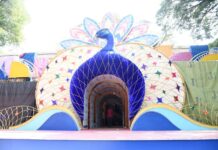
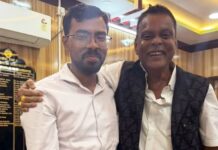
Being a subject expert on Osakothi, Dr. Pathy spoke about it with great enthusiasm every time I met him thereafter, and I always wanted to know more about it. The book, jointly authored by Dr. Fischer and Dr. Pathy, Murals for Goddesses and Gods, was finally published in 1996 and remained the only primary reference on the subject for the next three decades. The next monograph, Osakothi, the Unique Mural Painting of Odisha, was recently published by the Odisha State Museum in 2025. In between, the Regional Centre of Rashtriya Lalit Kala Kendra (RLKK), Bhubaneswar, brought out a booklet, Osakothi, Reviving and Relocating, in 2014, while installing Osakothi in its campus, sincerely following the ritualistic norms. This event was organised by eminent artist Ramahari Jena, who was then serving as Regional Secretary (I/C), RLKK, under the direct supervision of Dr. Dinanath Pathy as the subject expert. During this time, I accompanied both Dr. Pathy and Shri Jena on visits to villages in and around Aska to locate and bring together practitioners of Osakothi for its installation in Bhubaneswar.
Frankly speaking, the event held at the RLKK campus in 2014 was my first direct exposure to the Osakothi ritual practice, which subsequently caught my fascination. Meanwhile, sometime in the early decade of this century, while visiting the ancestral home of my artist friend Ramahari Jena in the village of Ghatakuri near Aska, I came across a colourful wall in the Scheduled Caste segment of the village. The wall was painted with childlike, gaudy figurative images of gods and goddesses, but the faces of the images had all been defaced. After returning to Ramahari’s home, I asked him about it. He smiled and told me that those were the murals of Osakothi and that, as an act of immersing the gods and goddesses, their faces were symbolically defaced!
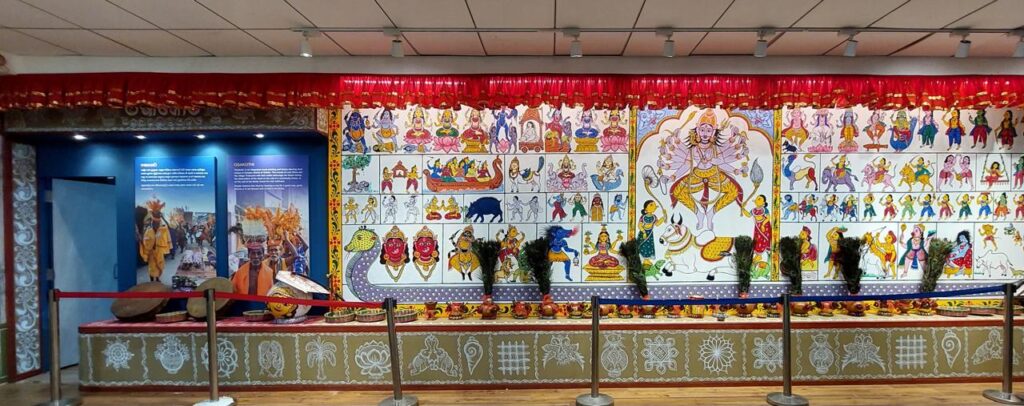
The other visual reference currently available in Bhubaneswar is an installation of Osakothi murals in the ‘Intangible Heritage Gallery’ at the Odisha State Museum, mounted by the renowned artist Ramahari Jena. In fact, since he belongs to the Aska region of Ganjam district, he had accompanied Dr. Fischer and Dr. Pathy during their primary field study in the 1980s and is currently the only living expert in the state on the subject. As mentioned earlier, he was also instrumental in setting up the Osakothi installation at the Regional Centre, RLKK campus, in 2014, which I had witnessed.
I have been visiting the Odisha State Museum frequently to see the Osakothi installation in the ‘Intangible Heritage Gallery’, and I recommend that everyone interested in the subject visit this gallery to experience it.
Read Part 1: Osakothi: An Agrarian Ritual of Ganjam
(The author is a senior journalist and national award-winning filmmaker based in Bhubaneswar. This story is part of a series of write-ups derived from his Senior Fellowship research under the aegis of the Ministry of Culture/CCRT, Government of India, New Delhi. The views expressed are personal.)