











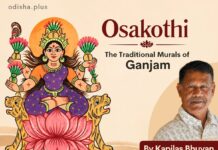







Osakothi is a unique folk tradition of rural Ganjam, blending murals, music, trance dancing and rituals rooted in faith, nature and community beliefs. Despite changing times and practices, these traditions continue to reflect the region’s cultural heritage and deep-rooted spiritual connection
Kapilas Bhuyan
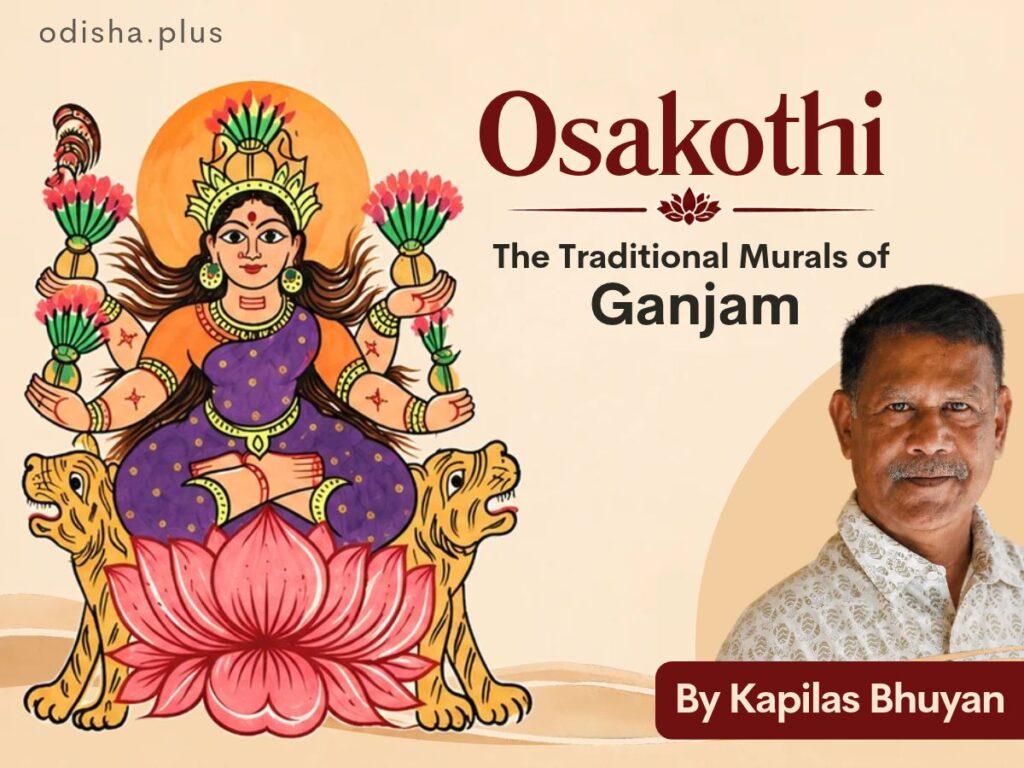
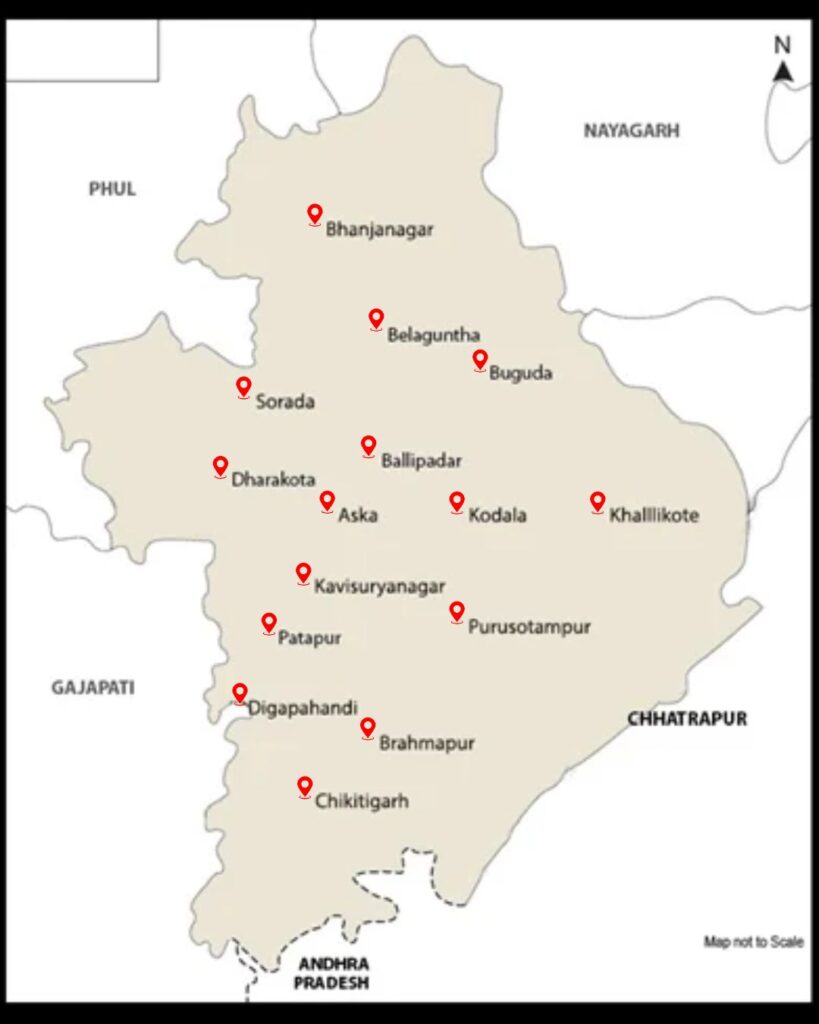
I have already mentioned, Osakothi is a fascinating and smoothblendingh of murals, music, trance dancing, riddle solving ritualtypical to the rural world of Ganjam, particularly in the river basin of Aska town.
Located on the banks of Rushikulya river, the economic makeup of the region is largely agricultural. A good agricultural yield is what local people expect every year for their prosperity and happiness. But an unexpected natural calamity can spoil all human efforts. Therefore, with the primeval human behavioral system, people turn to worship nature and God for seeking their wellbeing. Osakothi ritual of Ganjam by all likelihood has emerged from such primal belief.
Similarly, good health is what one needs to enjoy the prosperity. Without good health there is no happiness. In the earlier time when medical science was still developing and unable to address many fatal diseases like smallpox and diarrhea, etc., there was no other way out for the rural folks but turning to the blessings of easily accessible village deities. Although the time has changed now and medical science has developed a lot, due to lack of access to the facilities at some remote points and for a strong belief system people still believe in the unseen power for getting cured.
Inheritance of the accumulated wealth is a major issue in rural area. People work hard through their lifetime and accumulate land, house and such other tangible material possessions. If there is not an offspring to take over the rightful inheritance, it leads to a lot of heartbreaks, firstly the continuity of bloodline will be ceased and secondly, there will be no one to look after and enjoy the accumulated wealth. So, wishing for a child, particularly a son is an age-old practice in the rural societies. Turning to the goddesses or gods for wish fulfillment is a natural outcome.
Osakothi ritual of Ganjam comes in handy as a belief system for the rural folks to provide an assurance to surpass the human limits, and continues to be a recourse to live a peaceful life over centuries.
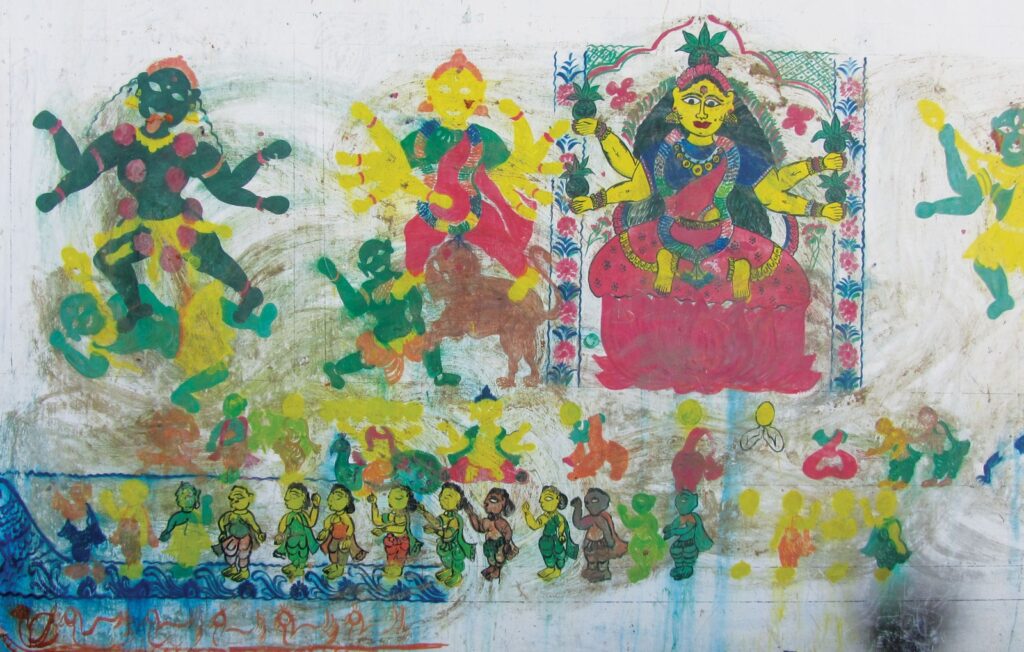
In recent tims, I accompanied artist Ramahari Jena to visit his ancestral village at Ghatakuri, located on the outskirt of Aska town in April, 2025 for meeting people and interacting with them. I also visited Babanpur, another village in the vicinity which is a major venue of Osakothi ritual practice. In both Ghatakuri and Babanpur I could witness the remnants of the murals drawn last year during the ritual observation, but with effaced figures with cow dungpaste to signify their immersion at the end of the event.
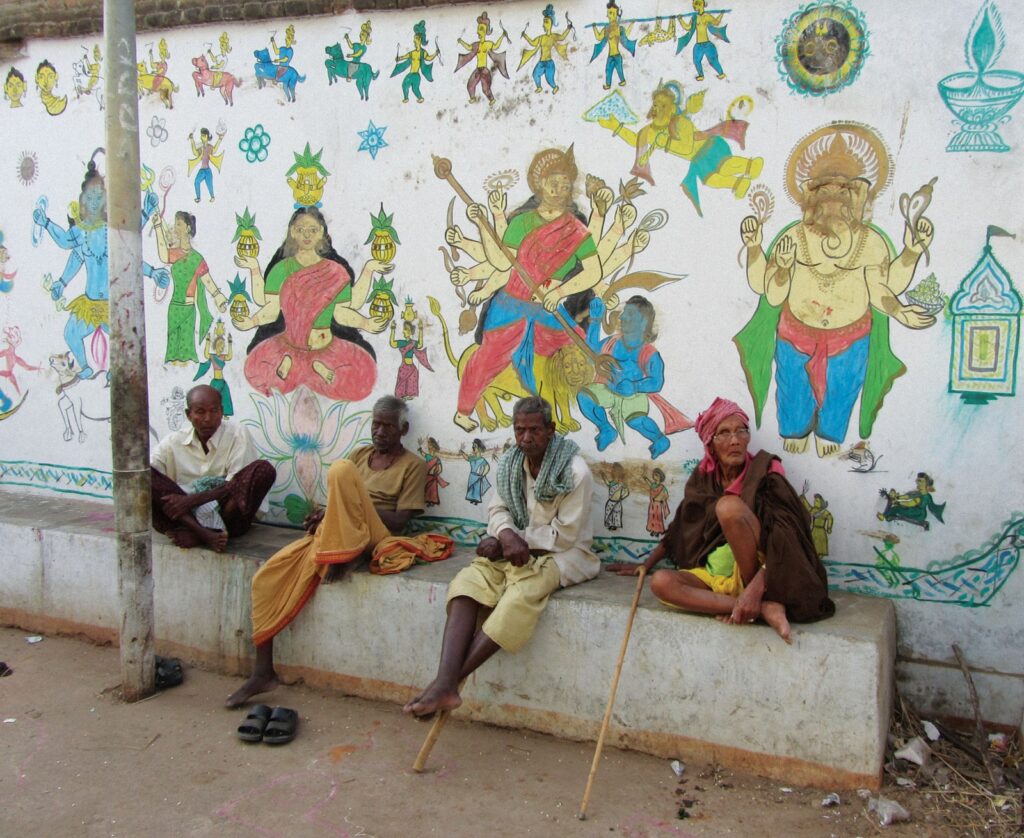
Due to wide spreading urbanization and increasing cost of conducting the event at many venues people have stopped employing rural painters to paint the deities every year, instead they invested on digital printing of the deities on flex sheets which will last many years. So, they don’t immerse the deities, but keep worshiping them round the year.
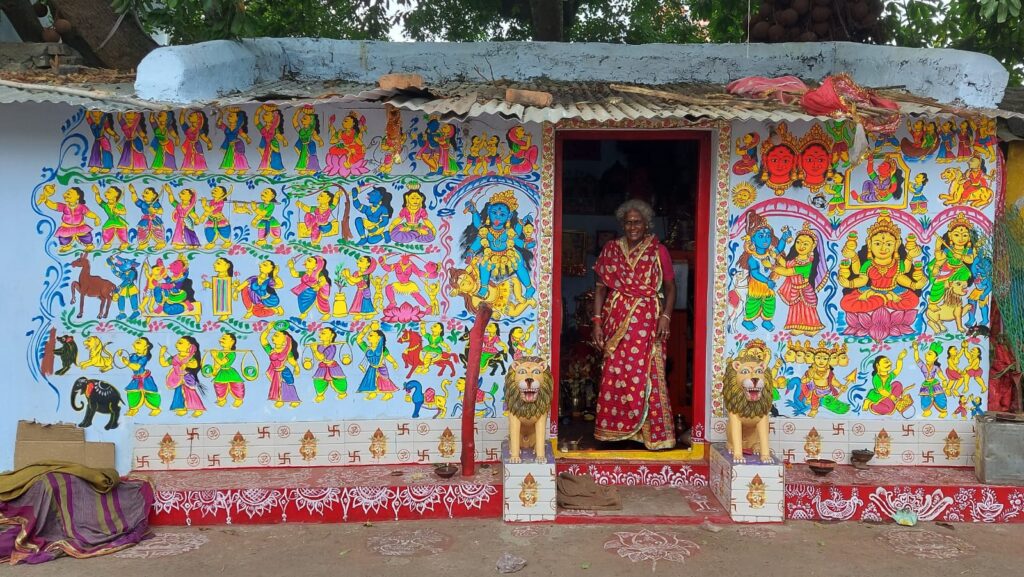
On the way back, in Berhampur city I witnessed an old lady having painted her thatch-roofed home with the image of the deities and turning the space as permanent Kothishala, and worshipping every day. It appears like a personal stride for devoting herself in appeasing the goddesses and gods to avail their blessings, and transforming her home to a shrine for the devotees.
Read Part 1: Osakothi: An Agrarian Ritual of Ganjam
Read Part 2: My Encounter with Osakothi Murals Over the Years!
(The author is a senior journalist, writer, critic and national award-winning filmmaker based in Bhubaneswar. The current story is part of a series of write-ups derived from his Senior Fellowship research under the aegis of CCRT/Dept. of Culture, Govt. of India, New Delhi. The views expressed are personal.)