























Honoring Prof. J.P. Das, Odisha-born psychologist and PASS theory pioneer, whose global work reshaped cognitive learning and education
OdishaPlus Bureau
The world of educational psychology has lost one of its gems. Professor Jagannath Prasad Das, a pioneering figure in the field of cognitive psychology and educational science, passed away on Monday in Edmonton, Canada. He was among the most influential psychologists, whose research revolutionised the global understanding of human intelligence.
Born and educated in Odisha, Prof. Das pursued advanced studies in the United Kingdom before joining the University of Alberta, where he made his name with an illustrious academic career spanning several decades. He served as the founding director of the Centre for Developmental and Learning Disabilities and later as Emeritus Professor, mentoring generations of psychologists, educators, and researchers worldwide.
A distinguished scholar, Prof. Das is known world over for his groundbreaking PASS theory of intelligence, which redefined how intelligence is conceptualised and nurtured in human brain through four stages — Planning, Attention, Simultaneous, and Successive cognitive processing. In collaboration with noted psychologist Jack A. Naglieri, he co-developed the Das–Naglieri Cognitive Assessment System (CAS), now used as an international assessment method to identify cognitive strengths and challenges, especially in children with learning difficulties.
Prof. Das’ enduring contribution bridged the parallels of psychology, neuroscience, and education, introducing a more humane and brain-based approach to learning. Beyond academia, he was also a devoted social change-maker. He established the J.P. Das Learning Clinic in Bhubaneswar, Odisha, to give new ray of life to children with developmental and learning disabilities — a living testament to his belief and commitment that “science must serve humanity.”
An author of numerous books and research papers, Prof. Das’ literary contributions focused on studies in cognitive psychology, developmental learning, and educational intervention. This earned him wide recognition, including his election as a Fellow of the Royal Society of Canada and the prestigious Order of Canada, one of the nation’s highest civilian honours.
The Order of Canada citation described him as “an internationally recognized scholar in cognitive psychology, noted for developing a new theory of intelligence.” Prof. Das is widely credited with introducing one of the first “brain-based” models of intelligence, which focuses on cognitive processing and diagnosis of learning difficulties, offering a transformative alternative to traditional IQ testing.
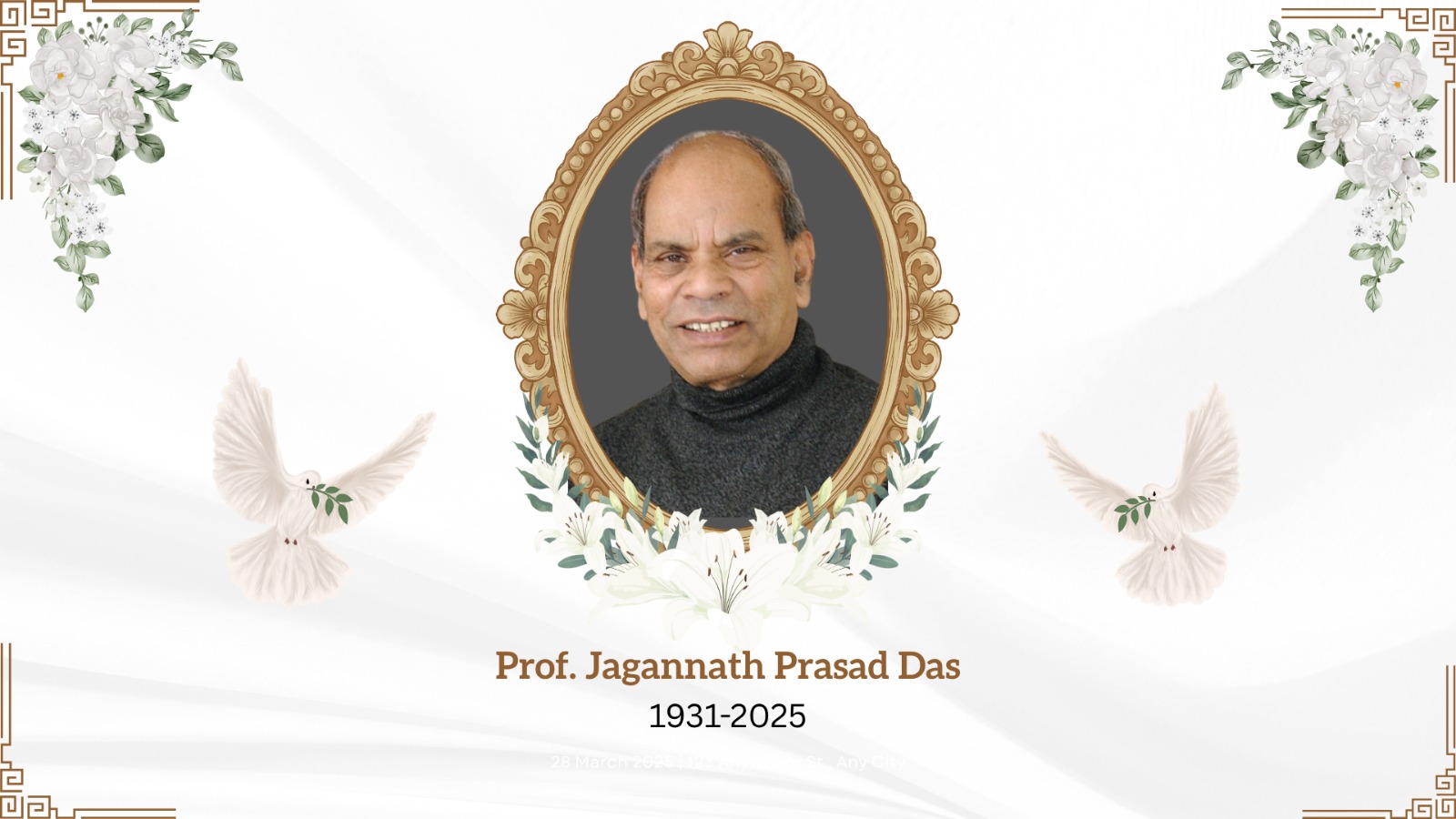
Prof. Das is remembered not only for his intellectual brilliance but also for his warmth, humility, and dedication with which he always strove to improve human potential. His legacy, that leaves an indelible mark on global understanding of human cognition, continues through his research, students, and institutions shaped by his vision.