
























JP Das transformed his administrative experience into literature, offering profound insights into governance, inequality, and the human impact of public policy
Bhaskar Parichha
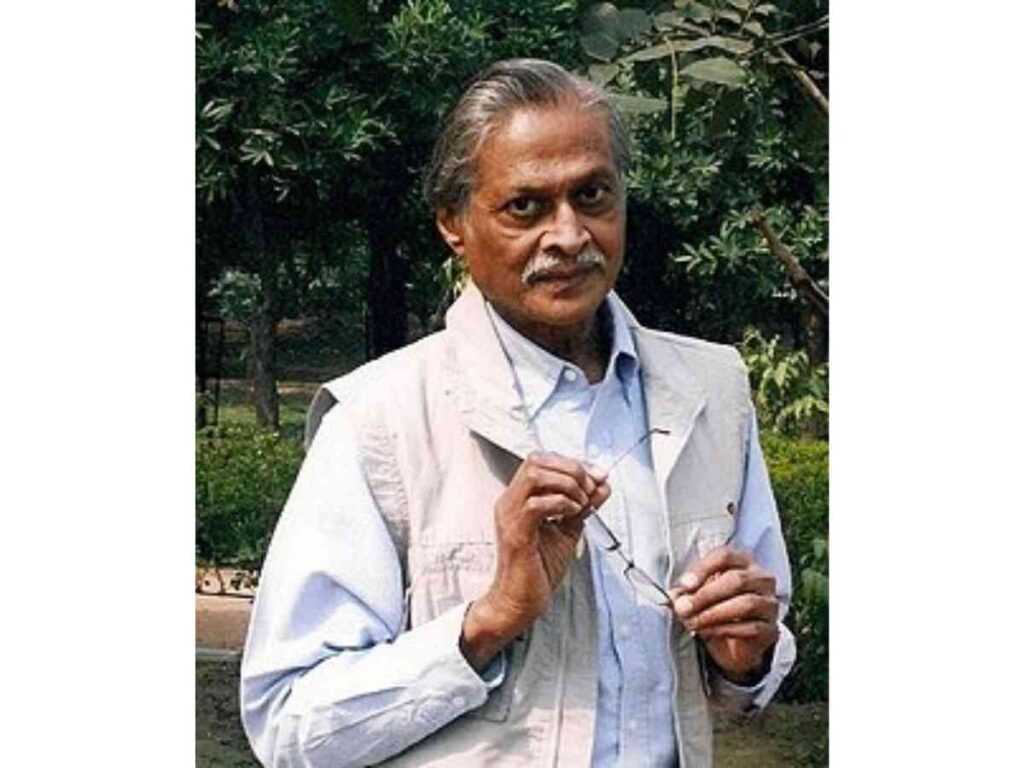
JP Das (1936 – 2026) occupies a distinctive place in modern Odia literature and public life. Although his civil service career provided him with first-hand exposure to governance, administration, and social realities, his most enduring contribution to political discourse emerged not through political essays, ideological writings, or activism, but through literature.
As a poet, novelist, playwright, and scholar, he transformed administrative experience into creative expression, offering profound insights into power, inequality, and the human consequences of public policy.
His legacy in modern Odia political writing is therefore indirect yet significant. Rather than participating in political movements or legislative debates, Das used literature as a vehicle for social and political reflection, expanding the possibilities of literary engagement with public affairs.
One of the most important aspects of his legacy is his role as a pioneering administrator-writer. Few members of the Indian Administrative Service have successfully made the transition from bureaucracy to full-time literary life. Das not only achieved this rare transformation but also demonstrated how administrative experience could deepen literary understanding.
His years in government service exposed him to the realities of power, governance, poverty, and institutional failure. These experiences enriched his creative work, allowing him to portray society with unusual authenticity and insight.
Unlike conventional political writers who focus on ideology or policy, Das approached public issues through narrative, symbolism, and human experience. He showed that literature could serve as a powerful medium for political commentary without becoming overtly partisan or doctrinaire. His writings invited readers to reflect on the structures of authority that shape individual lives and collective destinies.
This approach is particularly evident in his celebrated historical novel Desha Kala Patra. Through historical fiction, Das explored themes of colonial and postcolonial governance, bureaucratic power, and social transformation. Rather than presenting political arguments directly, he examined how institutions affect ordinary people across time. His treatment of history became a means of questioning contemporary realities, enabling readers to draw connections between the past and the present.
The novel exemplifies his belief that literature can illuminate political truths more effectively than manifestos or polemics. By weaving together history, memory, and social observation, he expanded the scope of political discourse within Odia literature.
Another defining influence on his work came from his experience as Collector of Kalahandi during the devastating drought and famine conditions of the mid-1960s. Witnessing widespread hunger and deprivation left a lasting impression on him. Kalahandi later emerged as a powerful symbol in his literary imagination, representing not only poverty but also the failures of governance and development.
His poems and reflections on Kalahandi transformed a regional tragedy into a broader moral and political question. Through literature, he drew attention to the human costs of administrative inadequacy and social neglect. In doing so, he helped shape the way subsequent generations of Odia writers approached issues of regional imbalance, rural distress, and development. Kalahandi became not merely a geographical location but a metaphor for the contradictions of modern governance.
Das’s civil service experience also reinforced his socialist and humanist worldview. Throughout his literary career, he maintained that poetry and literature should engage with social, moral, and political concerns rather than exist solely as aesthetic exercises. His writings consistently reflected empathy for the marginalized and skepticism toward structures of domination and privilege.
This orientation influenced many younger Odia writers who sought to combine artistic innovation with social commitment. While Das was not a political ideologue, his work encouraged literature that remained attentive to questions of justice, inequality, and public responsibility. His influence thus extended beyond individual texts to broader debates about the role of literature in society.
Besides literary modernism, historical fiction, poetry, and cultural scholarship, his principal achievements lie elsewhere. He devoted substantial attention to the study of Odisha’s artistic traditions, particularly Pattachitra, and became one of the state’s most respected cultural intellectuals. Consequently, his legacy belongs as much to literature and art history as to political thought.
Yet his life remains inspiring for contemporary civil servants and professionals interested in creative pursuits. His decision to leave the IAS and dedicate himself to literature demonstrated a rare commitment to intellectual and artistic freedom. The recognition he later received, including the prestigious Saraswati Samman, affirmed the significance of that choice. Equally notable was his refusal to accept the Sahitya Akademi Award in 1991, a gesture that reflected his fiercely independent and non-conformist temperament.
Today, JP Das’s relevance endures because he showed how literature can function as a subtle but powerful form of political engagement. His writings on famine, poverty, governance, and social inequality continue to resonate in discussions about Odisha’s developmental challenges. By transforming administrative experience into artistic expression, he created a body of work that remains both aesthetically significant and socially meaningful.
JP Das’s legacy in modern Odia political writing is less about direct political intervention and more about the moral imagination. He demonstrated that literature can question authority, expose injustice, and deepen public understanding without sacrificing artistic integrity.
In that sense, his contribution transcends conventional political writing, occupying a unique space where governance, history, and human experience converge.
(The author is a senior journalist and columnist. Views expressed are personal.)