




















Can developing nations achieve growth without compromising the planet? Explore the necessity of inclusive climate action and green economic policies
Anjali PK and Shamna TC

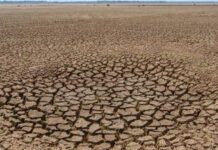
Every year, the World Environment Day reminds us of humanity’s responsibility towards the planet. Yet World Environment Day 2026 feels different. Climate change is no longer something discussed only in scientific conferences or international summits. It is visible in flooded towns, prolonged droughts, rising food prices, disappearing biodiversity and unbearable summer temperatures. Across the world, environmental disruption is increasingly shaping the way people live, work, migrate and survive.
The United Nations has warned that the world is moving dangerously close to breaching the 1.5°C warming threshold. While climate targets continue to dominate global discussions, the everyday realities faced by ordinary people reveal a troubling gap between promises and implementation. Climate action today cannot remain limited to declarations, annual observances or long-term commitments extending to 2050. The urgency of the crisis demands immediate and practical interventions.
At the same time, the climate debate has become deeply complex, especially for developing countries such as India. On one side lies the undeniable need for economic growth, employment generation, industrial expansion and poverty reduction. On the other hand, lies the environmental cost of unsustainable growth models. For decades, economic success was measured by rising production, consumption and infrastructure development, often without regard for ecological damage. Environmental economists describe these damages as “negative externalities”, costs imposed on society through pollution, deforestation and climate instability that are rarely reflected in market prices. However, expecting developing economies to abruptly slow growth in the name of sustainability is neither realistic nor equitable. Industrialized countries achieved prosperity through decades of carbon-intensive development. Developing countries now face the difficult challenge of balancing growth aspirations with environmental responsibility. This tension explains why climate negotiations often remain politically sensitive.
Yet the answer cannot be climate inaction. Delaying action will ultimately impose greater economic and social costs. Climate disasters are already affecting agriculture, labour productivity, water availability and public health. Farmers struggle with erratic rainfall and crop failures, while vulnerable communities bear the brunt of floods, heat waves and displacement. Environmental degradation is no longer separate from economic development; it directly threatens development itself. This is where the idea of green growth becomes important. Economic progress and environmental sustainability need not be mutually exclusive. Investments in renewable energy, sustainable agriculture, climate-resilient infrastructure, and clean technology can generate employment while reducing environmental risks. India’s expansion of solar energy and electric mobility demonstrates that sustainable transition is possible when supported by long-term policy vision.

However, climate policy must remain socially inclusive. Environmental reforms that ignore inequality risk creating public resistance. Workers dependent on fossil-fuel industries, small farmers and low-income households require institutional support during green transitions. Climate action cannot become another burden placed disproportionately on vulnerable populations. Equally important is the issue of climate finance. Developing countries require greater technological and financial assistance to adapt to climate impacts. International climate commitments must move beyond diplomatic rhetoric and translate into meaningful support for vulnerable economies. Without equitable financing, the burden of adaptation will continue to fall on countries least responsible for the crisis.
From a policy perspective, climate concerns must become central to development planning rather than remain confined to environmental ministries. Agriculture, transport, industry, energy, education and public health policies must integrate sustainability principles. Universities and research institutions also have an important responsibility in generating evidence-based climate solutions suited to local realities. World Environment Day 2026, therefore, should not be treated as a mere symbolic occasion. It must become a reminder that climate action is fundamentally about protecting human well-being, economic stability and future generations. The debate today is no longer whether climate change is real, but whether governments and societies are willing to act before environmental damage becomes irreversible.
Climate action cannot wait for perfect political consensus or ideal economic conditions. The cost of delay is already visible around us. The future will depend not only on technological innovation or international agreements, but on whether societies are prepared to redefine development in a way that values both economic progress and ecological survival.
(The authors are academicians serving as Assistant Professors at the Department of Economics, Christ University, Bengaluru. Views expressed are personal.)