
























Sugar prices in Odisha reportedly touch ₹70 per kg as ethanol demand adds pressure on sugarcane supplies amid changing market conditions
OdishaPlus Bureau
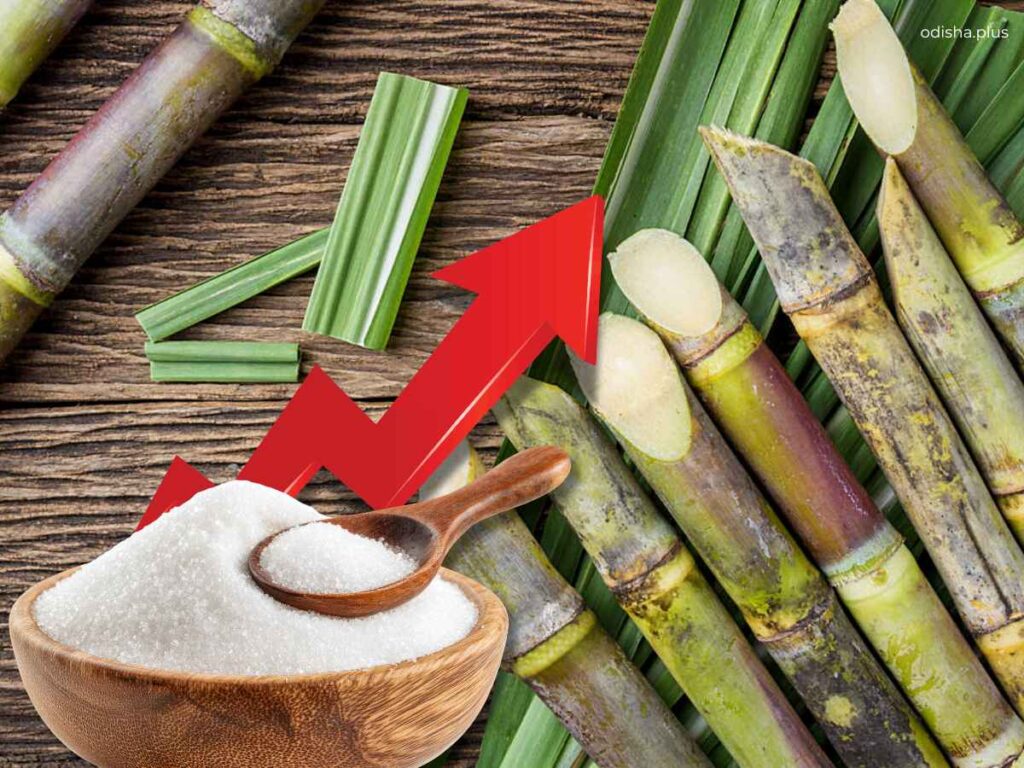
Sugar prices have risen sharply across Odisha, with retail rates reportedly touching Rs 70 per kg, increasing the burden on households and businesses that use sugar in large quantities.
The price rise comes amid growing demand for sugarcane from both the sugar and ethanol industries. With ethanol emerging as an important component of India’s fuel programme, sugar mills are increasingly using sugarcane and its by-products for ethanol production alongside conventional sugar manufacturing.
Ethanol provides mills with an additional source of revenue, allowing them to diversify beyond sugar sales. The expansion of the ethanol programme has also encouraged investment in distilleries and related processing facilities, strengthening the link between the sugarcane economy and the energy sector.
However, greater diversion of sugarcane towards ethanol can influence the quantity of cane available for sugar production. When supplies tighten amid steady consumer demand, retail prices can come under pressure.
Industry experts, however, point out that ethanol production is only one of several factors influencing sugar prices. Domestic cane production, rainfall, water availability, crop yields, existing stocks, transportation costs, government policies and market demand also play important roles.
The increase is being felt particularly by businesses such as bakeries, sweet shops, restaurants and tea stalls, which consume substantial quantities of sugar. If elevated input costs persist, some businesses may pass the additional burden on to consumers through higher prices for food and beverages.
For sugarcane farmers, the expansion of ethanol production could provide stronger and more diversified demand for their produce. Improved financial health of sugar mills could also contribute to more stable operations and timely payments to farmers.
The challenge for policymakers, however, is to maintain a balance between the competing demands of the sugar and ethanol sectors. Ensuring adequate domestic sugar availability while promoting ethanol production will require careful management of cane supplies and sugar stocks.
Improved crop yields, more efficient use of water, modernisation of processing facilities and stronger supply chains could help reduce pressure on both producers and consumers.
The latest price rise in Odisha underlines the changing economic role of sugarcane in India. A crop traditionally associated with sugar is increasingly becoming an important source of fuel as well, making the balance between food and energy requirements increasingly significant for both policymakers and consumers.