





















Read Krushna Kumar Mohanty’s review of Amrita Dash’s novel ‘Mriya: A Lost Soul in Ghats,’ exploring themes of love, loss, womanhood, and spiritual journeys
Krushna Kumar Mohanty
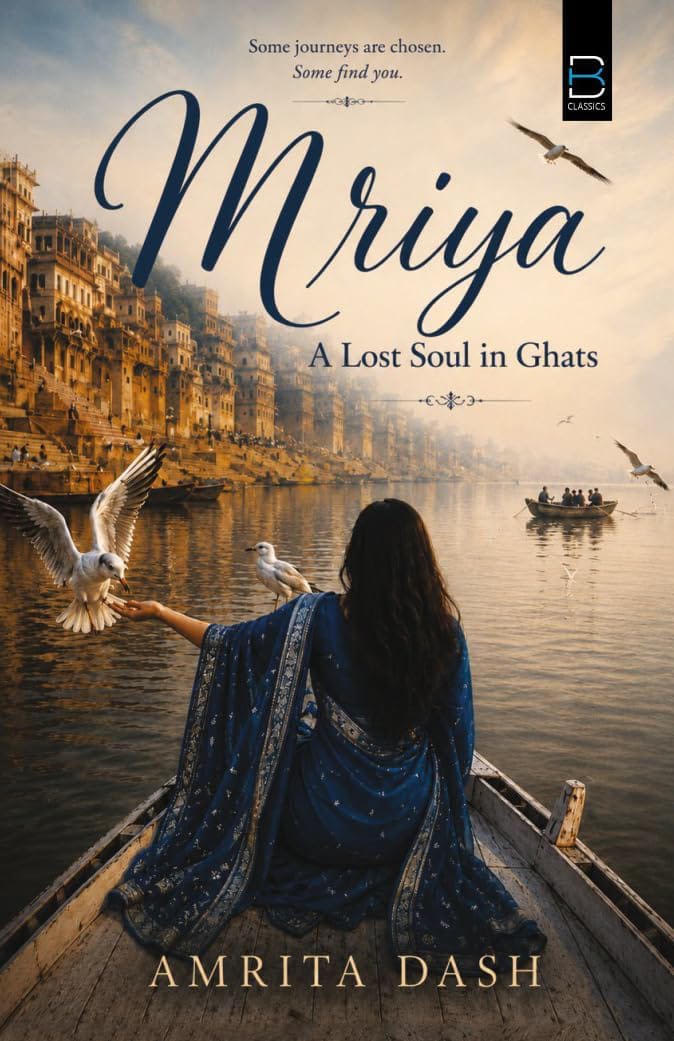
Title: Mriya: A Lost Soul in Ghats
Author: Amrita Dash
Publisher: B K Publications Private Limited
Some novels are read for their stories, while others are experienced for the emotions they awaken. ‘Mriya: A Lost Soul in Ghats’ by Amrita Dash belongs to the second category. It is an emotionally charged novel that traverses the landscapes of Bhubaneswar and Banaras while exploring the timeless questions of love, sacrifice, identity, and destiny. Rich in poetic expression and spiritual symbolism, the novel invites readers to reflect on the invisible journeys of the human heart.
The story revolves around Mriya, a woman who appears outwardly settled but inwardly carries the weight of emotional emptiness, unfulfilled dreams, and unanswered questions. Her unexpected meeting with Aman gradually transforms into an intense emotional bond that challenges the boundaries of duty, marriage, morality, and personal happiness. Their relationship unfolds through conversations, shared silences, poetry, and memories rather than dramatic confrontations, making the narrative intimate and deeply reflective. The novel successfully portrays how human connections often emerge unexpectedly and become powerful enough to redefine one’s understanding of life itself.
One of the most remarkable features of the novel is its evocative setting. Bhubaneswar is portrayed as the city of beginnings, where history, culture, and spirituality nurture life, while Benaras emerges as the city of endings, liberation, and eternal truth. These two sacred cities function not merely as geographical locations but as powerful metaphors representing life’s journey from attachment to acceptance. The ghats, rivers, temples, rain, tea stalls, and monsoon mornings become living characters that silently influence the emotional rhythm of the narrative.
Amrita Dash writes with the sensitivity of a poet. Her prose is lyrical without becoming excessively ornamental. Several passages read like extended prose poems, enriched with vivid imagery and philosophical reflections. The recurring motifs of rain, chai, silence, letters, and poetry lend a gentle musicality to the novel. The inclusion of poems and shayari enhances the emotional atmosphere and reinforces the inner conflicts of the protagonists. Readers who appreciate literary fiction with poetic undertones will find much to admire in these pages.
Beyond romance, Mriya is also a thoughtful exploration of womanhood and resilience. Through Mriya’s personal history, the author highlights the struggles of women compelled to sacrifice education, ambition, and emotional fulfilment under the pressures of family and society. Her determination to continue her studies, achieve financial independence, and preserve her individuality despite enormous personal challenges gives the novel an empowering dimension. These sections are among the most compelling and emotionally authentic in the book.
The emotional authenticity of the characters is another notable strength. Mriya and Aman are not idealised heroes but vulnerable individuals shaped by their pasts, responsibilities, and fears. Their conversations frequently move beyond romance into reflections on trust, commitment, identity, and the meaning of companionship. The novel suggests that love is not merely about possession but about understanding another person’s pain and standing beside them with compassion.
Nevertheless, the novel is not without shortcomings. At several places, the narrative becomes repetitive, particularly in the conversations between the protagonists. Certain emotional situations are explained repeatedly instead of allowing readers to interpret them independently. A tighter editorial approach could have reduced redundancy and improved narrative momentum. The English language, though expressive, occasionally reveals grammatical inconsistencies and awkward sentence constructions that distract from an otherwise engaging reading experience. Careful language editing would have significantly strengthened the book’s literary polish.
Despite these limitations, ‘Mriya: A Lost Soul in Ghats’ succeeds because of its sincerity. It never attempts to sensationalise emotions or rely on artificial twists. Instead, it celebrates the quiet complexities of ordinary lives, reminding readers that love often survives in memories, sacrifices, and silent companionship rather than dramatic declarations. The novel gently argues that true liberation begins when individuals find the courage to confront their own emotional truths.
With this novel, Amrita Dash demonstrates considerable promise as a storyteller capable of blending romance, philosophy, and social realities into an engaging narrative. ‘Mriya: A Lost Soul in Ghats’ is a heartfelt and thought-provoking work that will resonate with readers who enjoy emotionally layered fiction, reflective storytelling, and narratives where the journey of the soul is as important as the destination.
(Krushna Kumar Mohanty is an author, editor, and literary critic. Views expressed are personal.)