





















The NEET controversy has reignited debates on examination integrity, institutional accountability, and the urgent need for transparent education reforms in India
Bhaskar Parichha
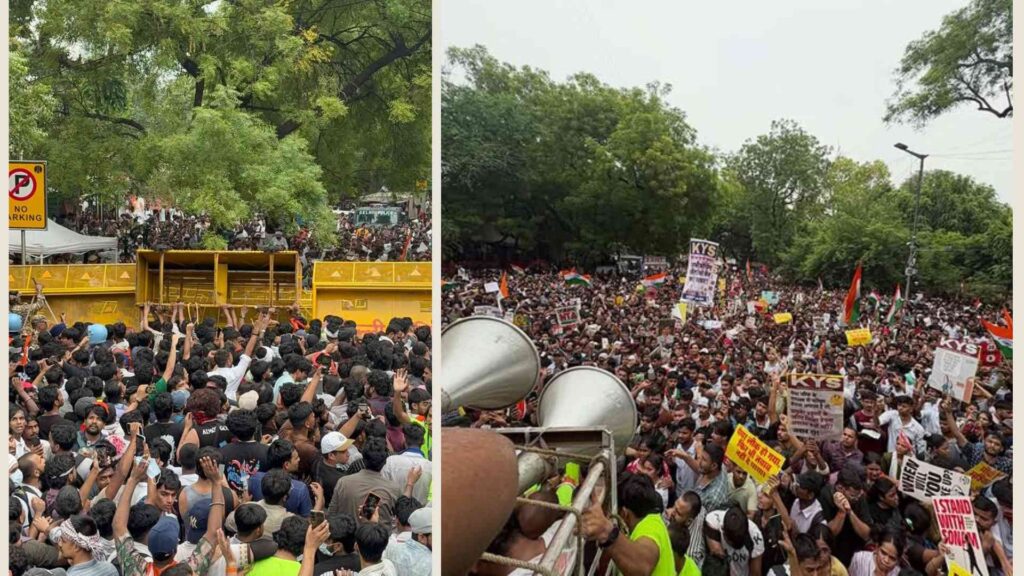
The controversy surrounding alleged irregularities in the National Eligibility cum Entrance Test (NEET) has moved far beyond the boundaries of an examination dispute. It has become a larger question of public trust in institutions, accountability in governance, and the future of millions of young Indians whose aspirations depend on a fair and transparent system.
The growing demand for the resignation of Union Education Minister Dharmendra Pradhan, echoed both inside and outside Parliament, reflects the depth of public concern. While the government has agreed to discuss the issue in Parliament, the Opposition has insisted that the debate must be accompanied by political accountability.
The matter has gained further traction following the police action against protesters in New Delhi, which has transformed an issue of examination integrity into a wider debate about democratic dissent and the government’s response to public grievances.
The support extended to the agitation by activist Sonam Wangchuk has added another dimension to the protests, drawing national attention to the concerns of students and parents. Yet, beyond political contestation and street demonstrations lies the core issue: the credibility of India’s examination system.
For millions of students, NEET is not merely a test; it is the culmination of years of hard work, sacrifice and significant financial investment. Any allegation of paper leaks, malpractice or administrative lapses strikes at the very foundation of meritocracy. It erodes confidence among students and parents, and weakens faith in institutions entrusted with conducting high-stakes examinations.
The government, therefore, has a responsibility that extends beyond managing an immediate controversy. It must ensure a transparent and time-bound investigation, bring those responsible to justice, and communicate clearly with the public.
More importantly, this moment should be treated as an opportunity to undertake comprehensive reforms in the examination system. Strengthening digital security, enhancing institutional accountability, introducing independent oversight mechanisms, and ensuring greater transparency in the conduct of examinations are reforms that can no longer be postponed.
At the same time, protests and public mobilisations must remain peaceful and constructive. Democracies thrive when governments listen and citizens engage responsibly. Confrontation alone cannot resolve issues that demand institutional reform and consensus-building.
India’s education system rests on the promise that talent and hard work will be rewarded fairly. That promise must not be allowed to weaken. The NEET controversy is not merely about one examination or one ministry; it is about preserving faith in the institutions that shape the aspirations of an entire generation. Restoring that trust should now become a national priority.
(The author is a senior journalist and columnist. Views expressed are personal.)