





















Explore how Gen Z youth protests over exam paper leaks and employment have transformed into a powerful political force demanding transparency and reform
Bhaskar Parichha
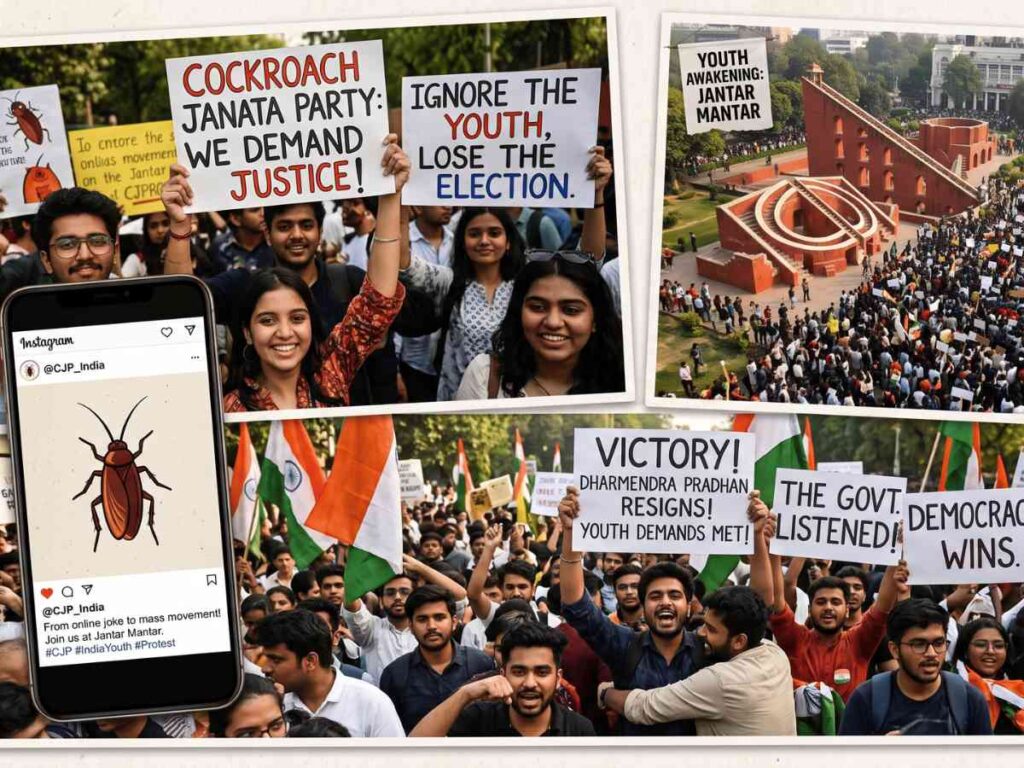
The agitation that began over the NEET paper leak has become much bigger than an education issue. It has grown into a political movement that reflects the frustrations of millions of young Indians over jobs, examinations, and the functioning of public institutions. More importantly, it has shown that Generation Z is emerging as a powerful political force.
Generation Z generally refers to people born between 1997 and 2012. In India, they number roughly 375–400 million, making them one of the world’s largest Gen Z populations. They are the first generation to grow up with smartphones, social media, and digital payments, and are entering higher education and the workforce in large numbers.
For this segment of India’s youth, competitive examinations are not just tests. They represent years of hard work and the hope of a better future. When question papers are leaked, or recruitment exams are cancelled, young people feel cheated. Their anger is not only against those responsible for the leak but also against a system that appears unable to protect merit.
What makes this movement different is the way it has been organised. Unlike earlier student protests led by political parties or student unions, this agitation has largely been driven through social media. Young people have mobilised themselves, shared information online and built a nationwide campaign without depending on traditional political structures.
The political impact has already been significant. The resignation of Union Education Minister Dharmendra Pradhan demonstrated that sustained public pressure, especially from the youth, can force political accountability. But the movement is not really about one minister. It is about restoring trust in institutions.
The message to governments is clear. India’s young voters are less interested in political slogans and more concerned about fair opportunities, transparent recruitment and efficient governance. They expect institutions to work honestly and efficiently.
The opposition, too, should not assume that youth anger will automatically translate into electoral support. Young voters are demanding solutions, not just criticism of the government. They want reforms that make examinations secure, recruitment transparent and accountability real.
India has one of the world’s youngest populations. This generation has grown up with instant access to information. It questions authority more freely and is less tied to traditional political loyalties. Performance matters more than rhetoric.
The NEET controversy may eventually fade, but the political message will remain. Generation Z has discovered its collective voice. Governments that ignore it do so at their own risk. The challenge now is not merely to prevent the next paper leak but to rebuild confidence in the institutions that shape the future of millions of young Indians.
(The author is a senior journalist and columnist. Views expressed are personal.)