





















In Dancing with Joy, Dr. Ananda Shankar Jayant transforms a life shaped by dance, public service and cancer into an intimate meditation on resilience, reinvention and finding joy
Nandita Rao
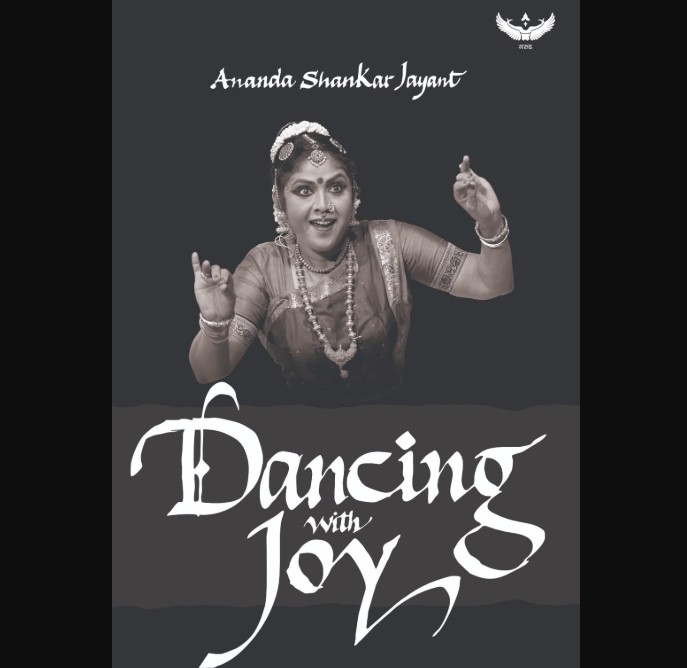
Dancing with Joy
Dr. Ananda Shankar Jayant
Garuda Publishers
For Dr. Ananda Shankar Jayant, rhythm has been a lifelong language—one that has carried her from the classical dance stage to the corridors of public service, from scholarship to entrepreneurship, and eventually through one of the most difficult chapters of her life. In Dancing with Joy, she looks back at that extraordinary journey not simply as a record of achievements, but as an intimate exploration of what it means to remain whole when life itself changes its rhythm.
Published by Garuda, it is a memoir of a woman whose life has unfolded across several seemingly different worlds. She is a celebrated Bharatanatyam and Kuchipudi dancer, choreographer and scholar, but also a former senior officer of the Indian Railway Traffic Service, an arts entrepreneur and a motivational speaker. Rather than presenting these identities as separate chapters, the book reveals how each has contributed to the person she has become.
At the centre of the memoir is her experience with cancer. But this is not a book that allows a diagnosis to become the defining feature of a life. Jayant approaches illness as one of the many challenges that demand a different kind of discipline—a challenge of the body, certainly, but also of the mind. Her observation that “cancer is a mind game” becomes one of the book’s most revealing ideas. For someone who has spent decades practising an art built on discipline, repetition, physical awareness and concentration, the principles of dance become more than performance techniques. They become tools for navigating uncertainty.
This is where the book moves beyond the familiar territory of a cancer memoir. Jayant does not simply recount an illness and its aftermath. She reflects on what adversity does to our understanding of ourselves. A diagnosis can disrupt routines, challenge assumptions about the future and make ordinary certainties suddenly feel fragile. The question then becomes not merely how to survive, but how to reclaim a sense of purpose afterwards. For Jayant, that reclamation is closely tied to art.
Dance has been a constant through the many phases of her life. It has given her discipline, expression and a vocabulary through which she can process experiences that words alone may not adequately capture. Her journey suggests that the things we devote ourselves to over a lifetime can sometimes become the very resources we draw upon when life becomes difficult.
The memoir is also interesting for the breadth of the life it documents. Jayant’s career does not follow a conventional single-track trajectory. Alongside her artistic achievements, she served in the Indian Railways, pursued scholarship, created digital initiatives and engaged with younger audiences as a speaker and mentor. She was awarded the Padma Shri in 2007 and the Sangeet Natak Akademi Award for Bharatanatyam in 2009.
Her entrepreneurial work includes Natyarambha, a Bharatanatyam practice app, and Kutty Kahani, a digital storytelling initiative for children rooted in Indic stories and art. These ventures reinforce another theme running through the memoir: tradition and innovation need not exist in opposition. That idea also gives the book contemporary relevance. Jayant’s story is ultimately not only about classical dance or cancer. It is about reinvention.
As Breast Cancer Awareness Month approaches in October, Dancing with Joy offers an especially meaningful perspective on resilience. Yet its appeal extends well beyond readers directly touched by cancer. It speaks to anyone who has experienced an unexpected disruption—a professional setback, illness, loss, ageing, uncertainty or the need to begin again.
The book’s greatest strength lies in its refusal to reduce resilience to a single dramatic moment. Resilience here is accumulated over years—in discipline, relationships, work, art and the willingness to keep moving.
And perhaps that is what the title means at its deepest level. Joy is not presented as the absence of pain. It is the choice to continue discovering meaning despite it.
Dancing with Joy is therefore less a story about overcoming one particular obstacle and more a reflection on how a person learns to keep dancing when the choreography of life changes.
(The author writes on literature, Indian classical arts and contemporary culture. Views expressed are personal.)