


















Odisha is emerging as a top textile hub. Discover how the state is balancing rapid industrial expansion with sustainable, green manufacturing practices
Dr. Sulagna Saha & Dr. Goutam Saha
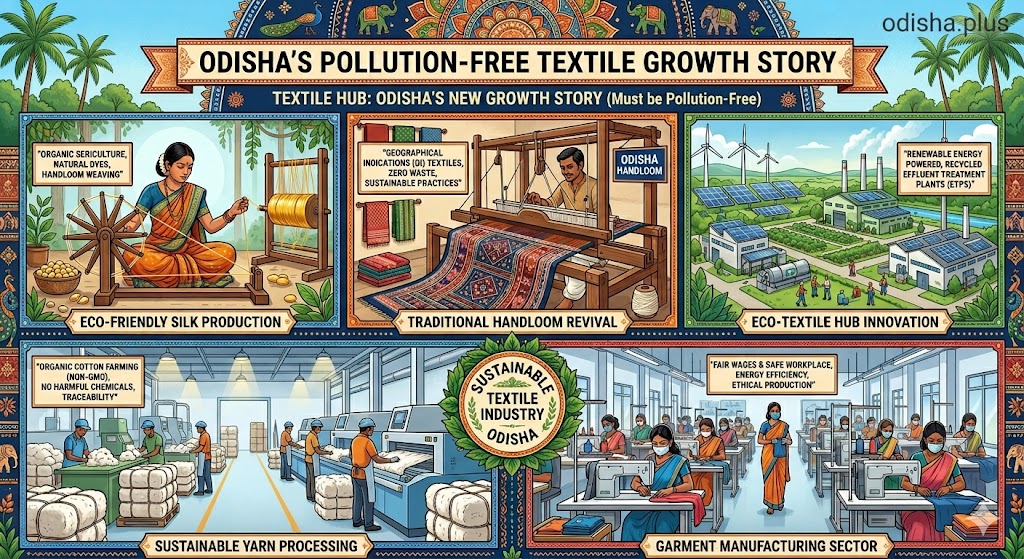
For decades, Odisha has been known as a major source of workers for India’s textile centres such as Tirupur in Tamil Nadu and Surat in Gujarat. Thousands of young men and women from the state travelled to these cities in search of jobs. Today, however, Odisha is writing a new chapter. Instead of only supplying labour, the state is rapidly emerging as a major destination for textile and apparel manufacturing. However, Odisha needs to follow an environment-friendly path of industrial growth, a steady departure from the present Indian textile sector’s growth story of Surat and Tirupur. That would be the best gift for the people of Odisha on the eve of World Environment Day.
More than ₹20,000 crore worth of investment proposals have been announced, and over 60 manufacturing units have received approvals. Several leading companies, including Aditya Birla Lifestyle Brands Ltd (ABLBL), Shahi Exports, Epic Group, SAPL and Jockey, have already started operations, while many more are preparing to enter the state. To strengthen the sector, the Odisha government is developing six industrial parks dedicated to textiles, apparel and footwear in Balangir, Jagatsinghpur, Keonjhar, Ganjam, Sambalpur and Cuttack. These projects are expected to generate thousands of jobs, particularly in rural and semi-urban areas. The state aims to create one lakh jobs in the sector by 2030. To understand why Odisha is attracting major investments, we spoke with industry leaders, including Amit Kumar Singh of Epic Group, Dharmendra Kumar of SAPL, Rahul Jindal of ABLBL and Surya Narayan Patnaik of the Odisha government.
Odisha’s Strength
Industry leaders agree that Odisha’s biggest strength is its young and educated workforce. Unlike many established textile hubs, companies here can recruit workers locally, reducing the need to bring employees from distant places. The state government has also offered strong support through incentives and subsidies for employment. Odisha has invested in building a complete textile ecosystem, from cotton and yarn production to training institutions such as NIFT, ATDC, CET, and the Odisha Silk Research Institute. These institutions help provide skilled workers and supervisors to the industry. One example often cited is ABLBL’s manufacturing unit in Odisha, which has successfully operated for eight years and has reportedly performed better in cost efficiency than a similar unit in Bangladesh. Such success stories have helped attract more investors to the state.
Focus on Sustainability
Unlike some older textile hubs that struggled with pollution, many of Odisha’s new factories are trying to grow responsibly. Epic Group has established what it describes as India’s first garment factory with net-zero carbon emissions and net-zero water consumption, powered entirely by renewable energy. ABLBL’s Bhubaneswar facility has earned recognition for generating minimal waste and has significantly reduced its water use through rainwater harvesting and community water projects. SAPL has also focused on creating greener workplaces by maintaining large open spaces and promoting clean energy use. Beyond business, companies are investing in nearby communities by supporting village development, providing digital training, installing solar facilities and creating better employment opportunities for local people.
Technology with Employment
While technology is becoming increasingly important in manufacturing, Odisha presents a unique situation. Labour costs remain competitive, making it less attractive for companies to replace workers with expensive automation. Even so, firms are adopting modern technologies to improve efficiency. Artificial intelligence is being used in areas such as warehousing, quality checks and product design. Companies are also experimenting with innovative manufacturing methods that reduce water use and waste.
Industry-Academia Partnerships
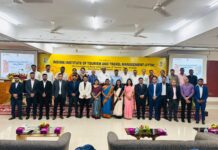
Experts believe Odisha can benefit greatly by linking factories with local educational institutions like NIFT, ATDC, CET and the Odisha Silk Research Institute. A recent example comes from National Institute of Fashion Technology, Bhubaneswar, where four students developed a system to track the life of sewing machine needles during an internship with Epic Group. The innovation was successfully adopted by the company, and the students later received job offers. Industry leaders believe similar collaborations can help drive innovation across the state’s growing textile sector.
Industry’s Requirement
Despite the positive growth, companies have highlighted areas that need attention. They have called for faster development of Paradip Port and the creation of an export processing zone to reduce transport costs. They also want a common waste management system for textile units and support for small businesses that can recycle textile waste into useful products. Another important concern is worker safety. Since a large share of factory employees are women, companies stress the need for safe and reliable transport, especially during night shifts and for last-mile travel.
Learning from Tirupur and Surat
The experience of Tirupur and Surat offers important lessons. While both cities became major textile hubs and contributed significantly to exports, rapid industrial growth also created environmental problems. Water pollution, waste disposal issues and concerns about workers’ health remain challenges in some areas. China faced similar issues years ago but addressed them through stricter regulations, common treatment facilities for industrial waste, better monitoring and government support for cleaner technologies.
Build a Better Model
Odisha now stands at a crucial moment. The state has the opportunity to combine economic growth with environmental responsibility. By learning from the experiences of other textile hubs and ensuring strong implementation of sustainability measures, Odisha can create a model that balances jobs, industry and environmental protection. If the state’s textile boom succeeds without causing serious environmental damage, Odisha could become a benchmark for sustainable industrial development in India. Alert civic society of Odisha for industrial growth and protecting the environment can be a major game-changer. Let us promise and start working together for this shared vision on the day of World Environment Day, 2026.
(Authors are the faculty members of National Institute of Fashion Technology, Bhubaneswar. Views expressed are personal.)