






















As the Tata Group continues to expand its global footprint, the cinematic portrayal of J.R.D. Tata in a recent web series highlighting the story of Titan provides vital context on the core management principles that shaped India’s premier lifestyle conglomerate
(OdishaPlus Business)
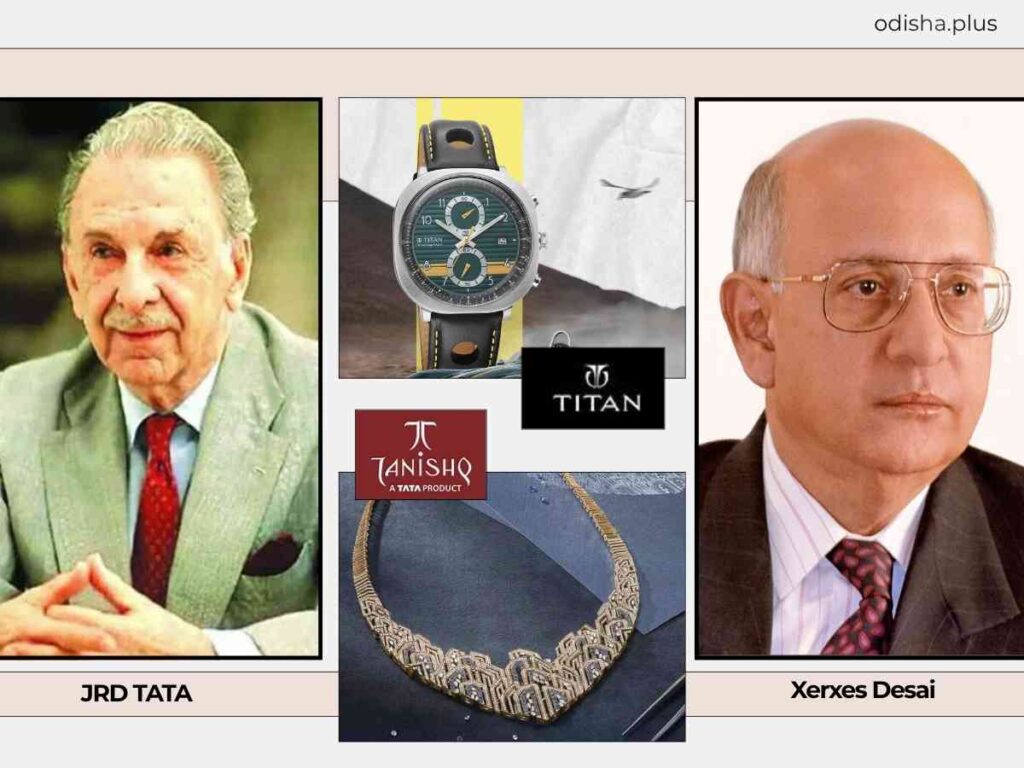
The recent media buzz surrounding Titan’s story, featuring veteran actor Naseeruddin Shah masterfully stepping into the shoes of the legendary J.R.D. Tata, has struck a deep emotional chord. The cinematic portrayal has ignited a wave of nostalgia about the origins of one of India’s most beloved consumer brands. It serves as a timely reminder that behind the glittering showrooms of Titan’s modern subsidiaries lies a profound story of corporate audacity, visionary leadership, and an uncompromising commitment to excellence.
The Idea: Challenging the Status Quo
To truly appreciate Titan’s birth, one must step back into the India of the late 1970s and early 1980s. The Indian watch market was heavily dominated by the state-owned HMT, which produced sturdy, reliable, but conventional mechanical watches. Getting a watch often meant enduring long waiting lists, and owning a sleek international timepiece required relying on the unorganized, smuggled grey market.
Enter Xerxes Desai, a brilliant, Oxford-educated Tata executive with a flair for design and a keen understanding of consumer aspirations. Desai observed a massive gap in the Indian market. While the global watchmaking industry was rapidly shifting to quartz technology—a highly accurate, battery-powered mechanism that allowed for slimmer and more elegant designs—India was severely lagging behind.
Navigating the restrictive “License Raj” of that era was no small feat and required immense institutional backing. Desai found his greatest champion in J.R.D. Tata. JRD, known for his uncanny ability to identify and nurture intrapreneurs within the Tata Group, implicitly trusted Desai’s vision and greenlit the ambitious project.
The Launch and the “Think Big” Culture
To bypass restrictive industrial licensing policies, the Tata Group formed a strategic joint venture with the Tamil Nadu Industrial Development Corporation (TIDCO) in 1984. This unique public-private partnership gave birth to “Titan” (an amalgamation of Tata and TIDCO) and established a state-of-the-art manufacturing facility in Hosur, Tamil Nadu.
A factory alone does not make a brand; it requires a team united by a shared vision. In insightful interactions across various media, former Titan Managing Director Bhaskar Bhat has provided a fascinating window into Desai’s leadership style during the company’s infancy.
Bhat, who responded to a cryptic newspaper advertisement for a “watch project” in the 1980s, recalled his first encounter with Desai. Having diligently prepared for a technical interrogation, Bhat walked into Desai’s office and was greeted by a massive board that simply read: “Think Big.”
Desai didn’t ask a single technical question. Rather, he spent the meeting painting a sweeping, grand vision of the global watch market. “He was selling the job… he was painting his vision,” Bhat recounted. For a young professional conditioned simply to secure a stable job, Desai’s entrepreneurial grandiosity was a paradigm shift. This “Think Big” philosophy became the bedrock of Titan’s corporate culture.
Breaking Monopolies and Earning Trust
When Titan launched its first collection of quartz watches in 1987, the challenges were monumental. Convincing consumers to trust a battery-operated quartz watch required extensive market education. Desai was unyielding on quality and presentation, revolutionizing the retail experience by selling timepieces in sophisticated, exclusive, well-lit showrooms. This stood in stark contrast to the cluttered, multi-brand dealer stores of the era.
The success of Titan also drew the attention of legendary market experts. Bhat fondly remembers the late billionaire investor Rakesh Jhunjhunwala, who became one of Titan’s most prominent backers. Beyond his financial acumen, Jhunjhunwala brought immense emotional capital to the brand, underscoring that Titan’s success was built on genuine relationships and affection rather than just commerce.
The Evolution into a ₹75,000 Crore Lifestyle Behemoth
As the decades progressed, Titan fully capitalized on its “Think Big” DNA, transforming from a single-product watchmaker into an undisputed lifestyle behemoth that today boasts an annual revenue of nearly ₹75,000 crore.
The playbook remained consistent: identify a massive, highly unorganized sector and disrupt it with transparency, impeccable design, and the Tata guarantee of trust.
- Tanishq: Launched in the 1990s, it revolutionized the Indian jewellery market by introducing the Karatmeter, forcing an entire unorganized industry to adopt transparent gold purity standards.
- Fastrack: Created a vibrant, irreverent youth accessories market almost from scratch.
- Titan Eye+: Brought standardized eye testing and transparent pricing to the fragmented optical sector.
- Taneira & Skinn: Expanded the group’s footprint into premium ethnic wear (sarees) and world-class fragrances, respectively.
- CaratLane: Successfully bridged the gap between digital commerce and everyday fine jewellery.
Bhaskar Bhat, who navigated Titan through its most explosive growth phases, has frequently pointed out that this sprawling ecosystem was built on a single, intangible asset.
“Titan’s journey has always been about transforming unorganized sectors by bringing in transparency, superior design, and the unwavering Tata trust,” Bhat has noted in recent media interactions reflecting on the company’s legacy. “We are not just in the business of selling watches or jewellery; we are in the business of touching people’s lives and building deep, lasting relationships with the Indian consumer.”
A Legacy Immortalized
Today, as audiences watch Naseeruddin Shah embody the quiet, empowering grace of J.R.D. Tata on screen, it is impossible not to marvel at the foresight of the men who built Titan. Xerxes Desai, the visionary founder who dared to demand global standards, and J.R.D. Tata, the steadfast patron who provided the wind beneath his wings, proved that an Indian enterprise could marry world-class engineering with impeccable aesthetics.
The story of Titan is far more than a corporate success case study for business schools. It is a living testament to the power of daring to “Think Big,” the courage to challenge established monopolies, and the profound, lasting impact of leaders who empower their teams to transform a ticking idea into a ₹75,000 crore empire.