












CRUT outlines a Rs 5,000 crore initiative to revolutionize urban mobility and electric transport across the Bhubaneswar-Cuttack-Puri-Paradeep Economic Region
OdishaPlus Bureau
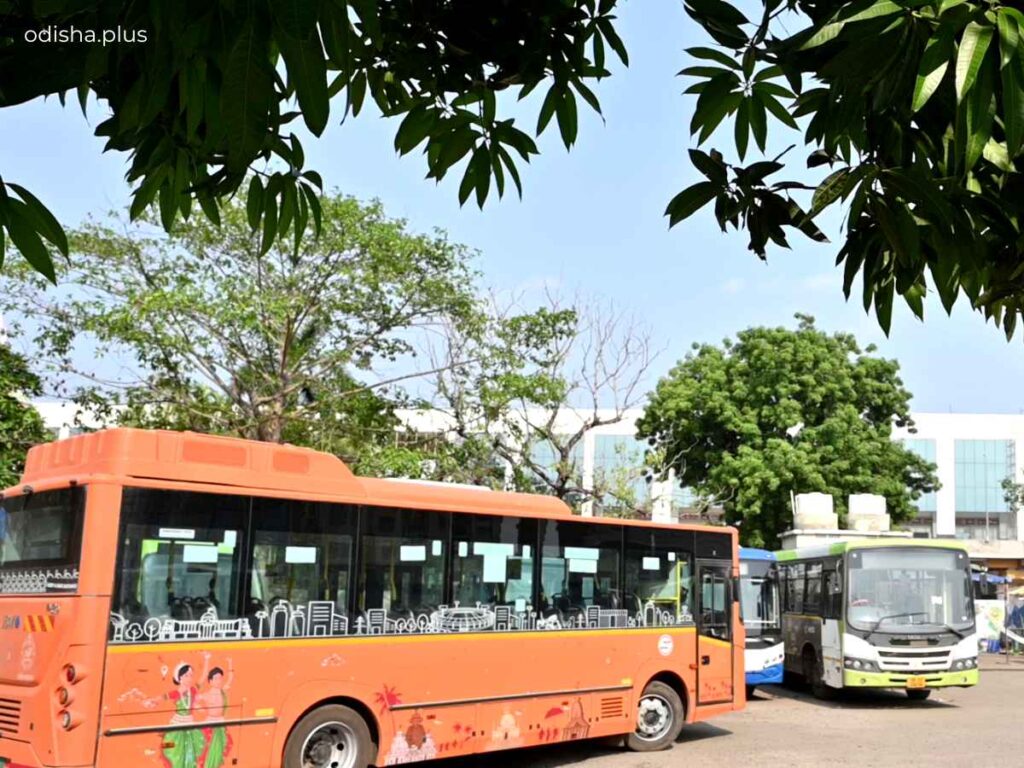
The Comprehensive Region Urban Transport (CRUT) is formulating a five-year initiative worth Rs 5,000 crore to revamp urban mobility within the Bhubaneswar-Cuttack-Puri-Paradeep Economic Region (BCPPER), with approximately Rs 2,000 crore anticipated for transport infrastructure.
This proposal arises as Odisha advances BCPPER into a cohesive growth center. The region encompasses 11,892 square kilometers across the districts of Khordha, Cuttack, Puri, and Jagatsinghpur, with a projected population of 9.24 million by 2025. In the fiscal year 2025, it contributed $22.38 billion, accounting for nearly 19 percent of Odisha’s economy, as reported in the Economic Plan for BCPPER developed by NITI Aayog in partnership with the Odisha government. The plan aims to transform BCPPER into a $500-billion economy by the year 2047.
The proposed initiative by CRUT seeks to establish a comprehensive, fully electric transport system that incorporates transit-oriented development, first- and last-mile connectivity, charging infrastructure, digital systems, and mechanisms for non-fare revenue. The goal is to diminish reliance on private vehicles, alleviate congestion on roads and in parking areas, reduce emissions, and utilize public transport as a foundation for broader urban development.
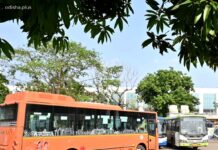
This program aligns with the BCPPER economic plan, which highlights insufficient public transport capacity as a significant challenge. It suggests the addition of 3,400 electric buses and the establishment of 34 depots by 2034, alongside the development of terminals, passenger facilities, and improved integration among various transport modes.
Land parcels identified near TOD locations may be utilized for the development of commercial complexes, offices, markets, or, where applicable, residential projects, based on demand. .
The plan also highlights the importance of first- and last-mile connectivity. This is one of the most significant challenges in urban mobility. CRUT is investigating smaller electric feeder services and is looking into public-private partnership models that could be aligned with bus operations.
This strategy aligns with BCPPER’s broader development framework. NITI Aayog’s proposal advocates for a dedicated TOD policy and encourages more compact, mixed-use, and pedestrian-friendly development surrounding major transit systems. It also aims to connect Bhubaneswar’s technology and knowledge economy, Cuttack’s commercial sector, Puri’s tourism and heritage economy, and Paradeep’s port-led industrial growth through coordinated infrastructure and regional planning.
CRUT is also contemplating the possibility of making parts of its charging infrastructure accessible to the public. Alam mentioned that new facilities could be designed to support public electric vehicle charging with relatively minimal additional investment, enabling infrastructure developed for bus operations to facilitate broader electric mobility.
Digital infrastructure is another suggested element. Currently, CRUT employs subscription-based software systems but aims to establish a more robust in-house digital framework while maintaining the ability to leverage private-sector expertise.
The comprehensive BCPPER roadmap includes over 80 proposed projects across various sectors and is part of NITI Aayog’s Growth Hub initiative, which advocates for integrated planning across urban and economic regions rather than treating individual cities in isolation. NITI Aayog has estimated that BCPPER could account for nearly one-third of Odisha’s economy by 2047.