
















Read a review of Arvind Yadav’s ‘Eternal Light’, exploring the life, exile, and global legacy of the 14th Dalai Lama
Bhaskar Parichha
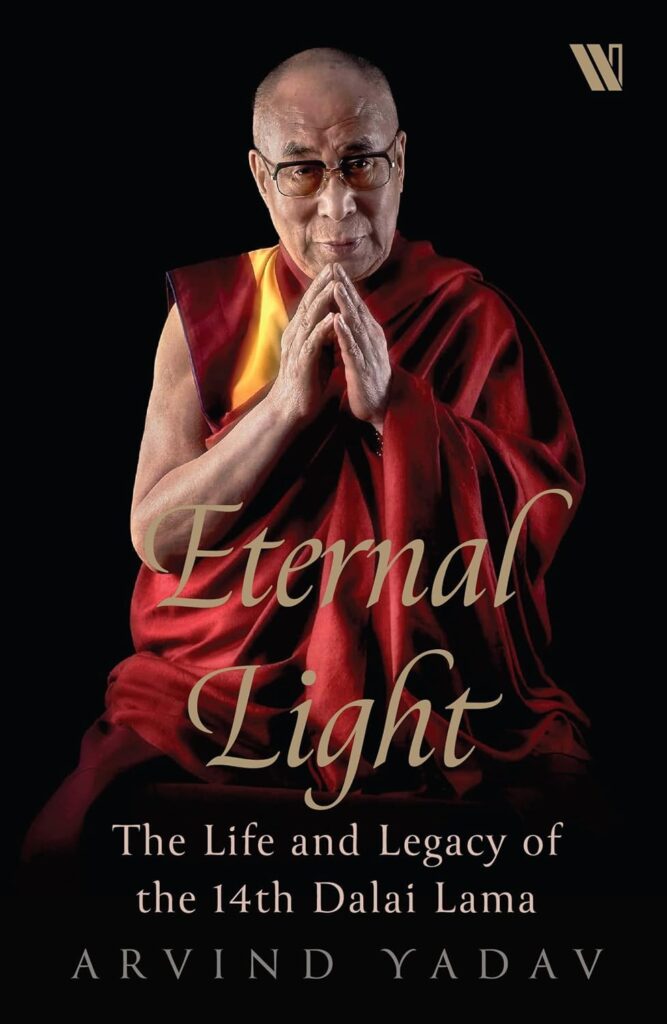
Book Name: Eternal Light: The Life and Legacy of the 14th Dalai Lama
Author: Arvind Yadav
Publisher: Westland Non-fiction
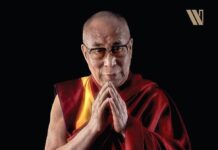
Some lives acquire historical significance because of the positions people occupy; others become significant because of how individuals respond to circumstances beyond their control. The life of the 14th Dalai Lama belongs emphatically to the latter category. In “Eternal Light: The Life and Legacy of the 14th Dalai Lama,” senior journalist and biographer Arvind Yadav attempts to capture a life that has unfolded at the intersection of spirituality, politics, exile, and global moral leadership.
Born Lhamo Thondup in a remote village in eastern Tibet in 1935, he was recognised at the age of two as the reincarnation of the 13th Dalai Lama. From that moment, his life was destined to be anything but ordinary. Yet what makes his story compelling is the transformation of a child raised within the disciplined world of Tibetan Buddhism into a political leader, an exile, and eventually one of the world’s most recognisable advocates of compassion and non-violence.
The defining crisis arrived early. At sixteen, the Dalai Lama assumed full political authority as Tibet confronted the consequences of China’s occupation. At twenty-four, following the failed uprising in Lhasa in 1959, he fled Tibet and sought asylum in India. Dharamshala subsequently became the centre of the Tibetan community in exile. What followed was not merely a political struggle for a homeland but a sustained effort to preserve a civilisation – its religion, philosophy, language, culture, and collective memory.
Yadav’s biography is strongest when it places these personal milestones within their larger historical context. The Dalai Lama’s story cannot be separated from the turbulent history of Tibet and its relationship with China, nor from India’s role in providing refuge to Tibetans. The book, therefore, becomes, in part, a history of displacement and survival.
But Eternal Light is not simply a political biography. Its central theme is the evolution of a leader whose influence eventually transcended the Tibetan cause. The Dalai Lama’s advocacy of non-violence, dialogue, compassion, and inner peace has given him an extraordinary global presence. The Nobel Peace Prize in 1989 formalised a reputation that had already extended far beyond the Buddhist world.
The book’s title is particularly apt because the Dalai Lama’s public persona has long been associated with hope in the face of adversity. His insistence that peace begins within the individual provides the moral thread running through his public life. For millions, he has become not simply a religious figure but a voice against hatred, intolerance, and violence.
At 508 pages, the biography is substantial and clearly intended as a detailed account rather than a quick introduction. Yadav promises to revisit episodes that have been misunderstood, misreported, or insufficiently documented. That ambition gives the book its particular value. Instead of presenting an uncomplicated saintly portrait, a serious biography of the Dalai Lama must engage with the difficult political circumstances surrounding Tibet, exile, and the long-running dispute with China.
Yadav’s background as a journalist is an advantage here. His career with several prominent media organisations and his earlier biographical work give him an instinct for personalities and public events. His approach appears to combine the chronology of a conventional biography with the broader sweep of political history.
The book is also significant because it arrives at a time when the question of Tibet remains unresolved, and the future of the Dalai Lama’s institution continues to attract international attention. His life is, therefore, not merely history; it remains part of an unfolding political and spiritual story.
The book is a portrait of resilience. From a village child identified as a spiritual successor to a young leader forced into exile, and from an exiled political figure to a globally respected apostle of compassion, the Dalai Lama’s journey is extraordinary.
Yadav’s detailed biography seeks to illuminate that journey without losing sight of the human being behind the institution. Its lasting message is simple but powerful: political circumstances may displace a person, but they need not extinguish hope, dignity, or the capacity for compassion.
(The author is a senior journalist and columnist. Views expressed are personal.)