















Odisha’s political landscape shifts from bureaucratic dominance under V K Pandian to questions of MLA power, administrative accountability and governance
Bhaskar Parichha
Odisha seems to be witnessing an interesting, if somewhat disturbing, transformation in the relationship between its political class and the bureaucracy. During the last years of the Naveen Patnaik government, the principal criticism was that elected representatives, including Cabinet ministers and MLAs, had become increasingly powerless in the face of an unelected bureaucratic establishment. Today, the complaint appears to be moving in the opposite direction. Some elected representatives seem to believe that government officials must function at their command.
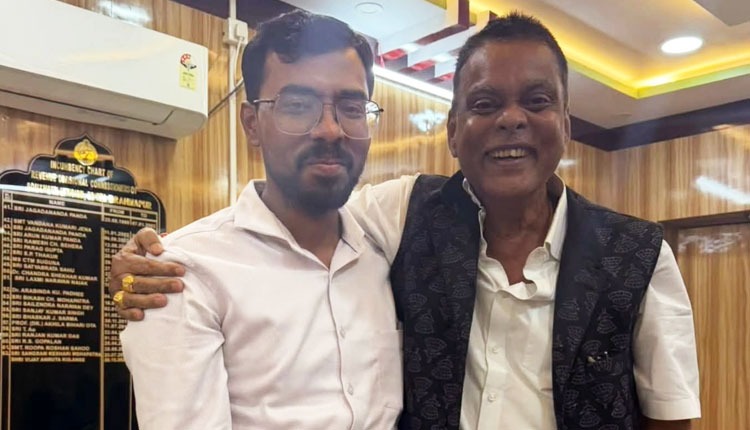
The recent controversy involving Asika BJP MLA Saroj Kumar Padhi and Ganjam Zilla Parishad Chief Development Officer Samir Kumar Jena brings this contradiction into sharp focus.
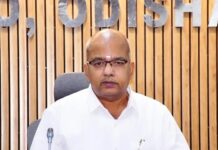
According to the complaint lodged by Jena, the MLA allegedly abused and threatened him during a disagreement over the distribution of relief materials to flood-affected people. The officer reportedly told the legislator that the relief materials had been arranged on the instructions of the Steel and Mines Minister and distributed accordingly.
The MLA allegedly responded that he was the minister in Asika and that nothing moved in his constituency without his consent. The allegations are serious, particularly because the officer was engaged in relief and rehabilitation work at a time when thousands of people were struggling with the aftermath of devastating floods.
The MLA, however, has described the episode as a misunderstanding and claimed that the differences have been resolved through mutual discussions. But the incident has brought back an important question about the limits of political authority and the independence of the administrative machinery.
The contrast with the previous government is difficult to miss. For much of Naveen Patnaik’s last decade in office, the political discourse in Odisha was dominated by the extraordinary influence allegedly exercised by V K Pandian.
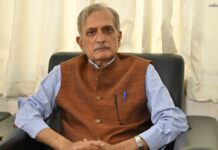
A senior IAS officer who served as the Chief Minister’s private secretary and subsequently headed the 5T initiative, Pandian gradually emerged as the most visible face of the administration. His influence extended beyond the conventional boundaries of a bureaucratic assignment.
There was a widespread perception that access to the Chief Minister was controlled by Pandian and that ministers and elected representatives had to depend on him to get their voices heard. Cabinet ministers, who were constitutionally responsible for their respective departments, were increasingly seen as secondary figures. The sight of a bureaucrat taking centre stage at public programmes and political outreach events, while elected representatives occupied the sidelines, became a subject of considerable public debate.
The Opposition called it the emergence of a parallel power centre. Even within the ruling establishment, there was a perception that the traditional political hierarchy had been altered. Whether every allegation about Pandian’s authority was justified is a separate matter. But the controversy over the concentration of power in an unelected functionary became an important feature of Odisha’s politics before the 2024 elections.
The BJP came to power partly on the promise of restoring political accountability and strengthening the authority of elected representatives. There was an expectation that ministers and MLAs would regain their legitimate place in governance and that the bureaucracy would become more responsive to public representatives.
There is nothing inherently wrong with that objective. In a parliamentary democracy, bureaucrats are accountable to the elected government. An MLA is entitled to question officials, seek explanations, demand transparency in the implementation of schemes, and ensure that constituents are not denied their legitimate entitlements. Without a doubt, during a disaster, elected representatives have an even greater responsibility to intervene and ensure that relief reaches those who need it.
But there is a difference between exercising political oversight and assuming personal control over the administration. An MLA cannot become the ultimate authority over every government transaction in his constituency. Nor can the distribution of relief materials become a matter of political patronage. Disaster assistance must reach people on the basis of need and established administrative criteria, not political proximity or personal preferences.
Equally, bureaucrats cannot hide behind procedural formalities to avoid legitimate questions from elected representatives. They must remain accessible, responsive and accountable. Administrative independence does not mean administrative superiority.
This is where the present controversy assumes significance beyond the individuals involved. Even though the friction between Padhi and Jena is reported to have been resolved, the government will have to send a clear message that political authority does not confer a licence to intimidate public servants. The fact that the officer was performing an important disaster-management responsibility makes the issue even more serious. At a time when the administration should be concentrating on relief, rehabilitation and restoration, a confrontation of this nature is an unnecessary distraction.
The BJP government also has a political responsibility here. It cannot demand accountability from bureaucrats while remaining indifferent to the conduct of its own elected representatives. Equally, it must ensure that officials do not become unresponsive simply because they enjoy the protection of the administrative hierarchy.
The larger lesson from the Pandian episode should not be lost. The problem wasn’t merely that one bureaucrat allegedly wielded disproportionate influence. It was that institutional checks and balances appeared to have weakened around an individual power centre.
Odisha needs a mature relationship between its political leadership and the civil service. Ministers must exercise authority through their departments. MLAs must act as representatives of their constituents, not as self-appointed district administrators. Bureaucrats must implement government policy without fear or favour, while remaining accountable for their decisions and conduct.
At the end of the day, the strength of a government is not measured by how much power its MLAs or bureaucrats can command. It is measured by how effectively institutions function and how fairly citizens are treated.
Odisha has experienced the controversy of an unelected power centre during one political regime. It now has to contend with the arrogance of elected individuals under another. Amusing!
(The author is a senior journalist and columnist. Views expressed are personal.)