





















Artificial Intelligence is no longer just a tool — it’s a turning point in human evolution
Suresh Chandra Sarangi
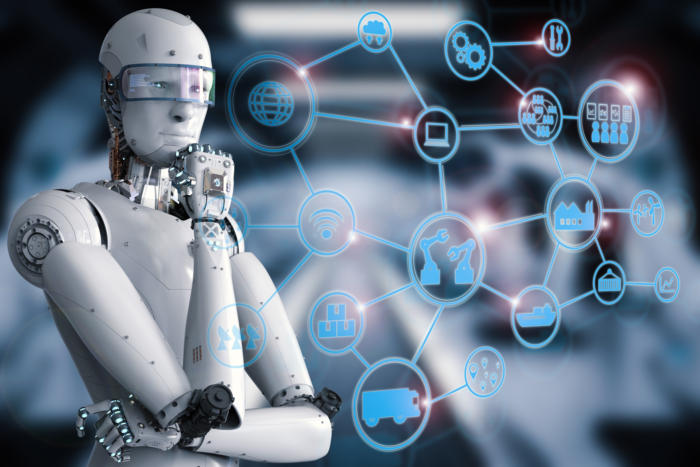
AI or Artificial Intelligence has triggered a war of words and intense debate throughout the world. The technology that seems to have been created to reinforce hope for humanity, and there is no point of return now, it seems, and appears to many to be the next Frankenstein. So much so that Yuval Noah Harari of the “homosapiens” Home Deus” fame has outrightly rejected it as not more than a technology, but as a great disruptor and a double-edged sword. The idea of machines overtaking man is as old as human civilization, and in each stage of human development and evolution, starting from the prehistoric period, the gregarious man has invented many tools and controlled them for his use.
The idea of a machine devouring its creator, in a metaphorical sense, was a prominent theme in Samuel Erewhon, where it surpasses human intelligence, as a result leading to humanity’s subjugation. Gray goo is a global catastrophic scenario involving molecular nanotechnology in which out-of-control self-replicating machines consume all biomass on Earth. technology, while multiplying and creating many more like them. The story of Frankenstein, The Time Machine by HG Wells, and The Machine by Farasha Euler, where it is machines that dominate the world, are interesting scientific fiction stories that appear to be mind-boggling. But the story of AI is different, and some even predict that human intelligence, once overpowered by machine intelligence, would lead to the sixth extinction.
Both 20th century and now in the 21st century, humans have noticed a lot of disruption. evolution of words like Quantum physics, Algorithm, ChatGPT, Meta, DeepMind, DeepShakes, Artificial Intelligence, and machine learning. Before focusing on the wrong side of AI, let us try to understand what is basically known as AI. It stands for Artificial Intelligence, and refers to computer systems that can perform tasks typically requiring human intelligence. It learns from data with a focus on performance improvement, analysis of complex problems, is endowed with the power of reasoning based on empirical data, and it can understand and interpret data with the help of images, sensors and etc.
Examples of AI-powered virtual assistants like Siri, Alexa, Google Assistant, image recognition, understanding human language, and making predictive analysis and future outcomes, as well as trends. With such infinitesimal power, speed, and accuracy is the new disruption is. The AI technology, so far, has been the most disruptive invention, and after the term COVID may be the most used or misused technology that triggers a debate of biblical proportions. It is hope vrs disaster that grips us today.
In the present context, AI has been disrupting businesses because of its power of automation, increasing customer experience, doing routine and repetitive work, and thus, it is the current buzzword. Thus, AI has immense business potential, can enhance productivity,t fosters human connections, Therefore, what is needed is optimum and constructive use of AI, which can be leveraged to free time for other activities in an Organisation, and it can think like an individual and can be used for creativity and empathy.AI is the need of the hour as it helps aging societies, and can alleviate work pressure. Today, AI-sponsored diagnostics can help find new antibiotics, which can be used against deadly superbugs, and have been instrumental in solving problems of the space programme, the automobile industry, the recreation and entertainment industry, and therefore, it is transformational.
From the above, it appears, the prospect for humanity, by using AI, is enormous. But for some, the AI opens up the floodgates of an existential risk. It is a known fact that the future of humanity is bound to be the future of science and technology, as hitherto, but all depends upon how the power of AI is being harnessed for the betterment of human society, whether in arresting climate change or controlling epidemics. AI has to be used to address our dystopian risks.
The perils and prospects are equally important, notwithstanding the age of uncertainty and political turmoil, nuclear threats, or climate change, the invention of clean energy, biotech, cyber technology, Robotics, and the emergence of human-level intelligence, otherwise known as AI, it should be a good servant and not a bad master. Are we moving with the progressive onward march of AI? Towards a post-human era. AI’s progress is almost revolutionary, and at this stage, when it is evolving at a breakneck speed, looking back is next to impossible. The way AI is progressing today, even within the next decade or so, it will disrupt working patterns, national economies,s and international relations is the game changer. Our scientists’ preeminent job would be to achieve a benign future while avoiding the dystopian downsides.
It is feared that AI would create two classes: one who can control it and the other above whose head AI would just pass on without touching them. This class divide will create division in society, and that is antithetical to the tenets of democracy. The intersectional issue and the cross-cultural negative outcome would lead to a fragmented society where conflict becomes the order of the day. There are safety concerns as well. Yuval Harari states that human intelligence has created a language. But AI’s language model may pose the risk of misinformation, bias, misuse of power, and unpredictability. Economist” brought an article, which states that AI also has the potential for drug development and climate change technology. So the rogue behaviour of AI can destabilise the world.
The executives at Microsoft and Google have warned that the dangers emanating from AI to humankind are enormous.. They warn that it should be a global priority to mitigate the risk. Otherwise, the misuse of AI can create societal risks like pandemics and nuclear war. So much so that it will substitute humans in labour, leading to joblessness, hunger, and poverty. It is gradually becoming commonplace that a human error, or bias, may lead to a global disaster.
Still, the future consequences of AI is uncertain and unpredictable, which warrants the creation of a risk mitigation framework, with strong legislation that can protect us and our future. in a fast-paced world, the media has to play a constructive and responsible role, otherwise, by believing all since created by AI, would bring doomsday on earth. It has the power to predict the voting pattern result, which may tempt the losing party to sponsor rigging and violence. Spreading lies, misinformation, and manipulating opinions would throw democracy into danger.
As X risk, which means human extinction due to wrongful AI, would be a real threat in future.AI, it is apprehended, could displace humans economically, politically, and deprive humans of resources. MIT’s database has found 700 potential risks, as it can be biased, and may pose safety and privacy concerns, whose examples one finds in social media every moment. So, the negative outcomes of AI are spinning out of control. A small oversight can create havoc. The drone may play differently, and that would be a disaster. Students are the future of a nation.AI too is like chat get provides direct answers without real learning and efforts. The students of a college, below standard were given projects to write about the ipos in India during last year. The projects were so brilliant that it outsmarted the teacher. Rogue and vulgar display of misuse of Artificial intelligence. Thus, learning becomes a causality under AI system.
The bicentennial movie, directed by Chris Columbus and based on the novel “The Bicentennial Man”, is a movie based on a robotic human, played by Robin Williams, which is an indication of things to come. The Martin family buys a new robot. The robot began to experience emotion. It desires to be more human. It loves its daughter in the family. Its behaviour is not tolerated by the members of the family, who want to destroy it.200 years have passed. Ultimately, the jury sits. The hearing says it should not be allowed to live for more than two hundred years. Did they anticipate that he might be the monster?
This was shocking for the robot. There are ethical dilemmas. The risk arising out of AI poses an ethical dilemma, and this greatest disruption, and if untamed and uncontrolled, with powerful legislation, our shared hope for prosperity may backfire. In the book. “Doing good better”, writer William Maca Skill says, when we use the principles correctly, when we apply our head and heart together, to each other and for each other, each of us has the astonishing power to do immense good.
Let AI technology be a positive disruptor, lifting millions out of the shackles of poverty and helping human beings to bring “enlightenment now” to their mind of human beings. Otherwise, the future may be Faustian, where we will sacrifice our beliefs and morals to achieve some kind of success.
(The writer is a former General Manager of Bank of India. Views expressed are personal.)