






















Odisha and ADB are developing a future-ready mobility ecosystem across the Bhubaneswar-Cuttack-Puri-Paradip Economic Region through integrated transport planning, bus service transformation, and sustainable urban mobility solutions
OdishaPlus Bureau
In a landmark move that could redefine the future of urbanisation and economic growth in Odisha, the State Government, in partnership with the Asian Development Bank (ADB), has initiated an ambitious roadmap to build an integrated, sustainable and future-ready mobility ecosystem across the Bhubaneswar-Cuttack-Puri-Paradip Economic Region (BCPPER).
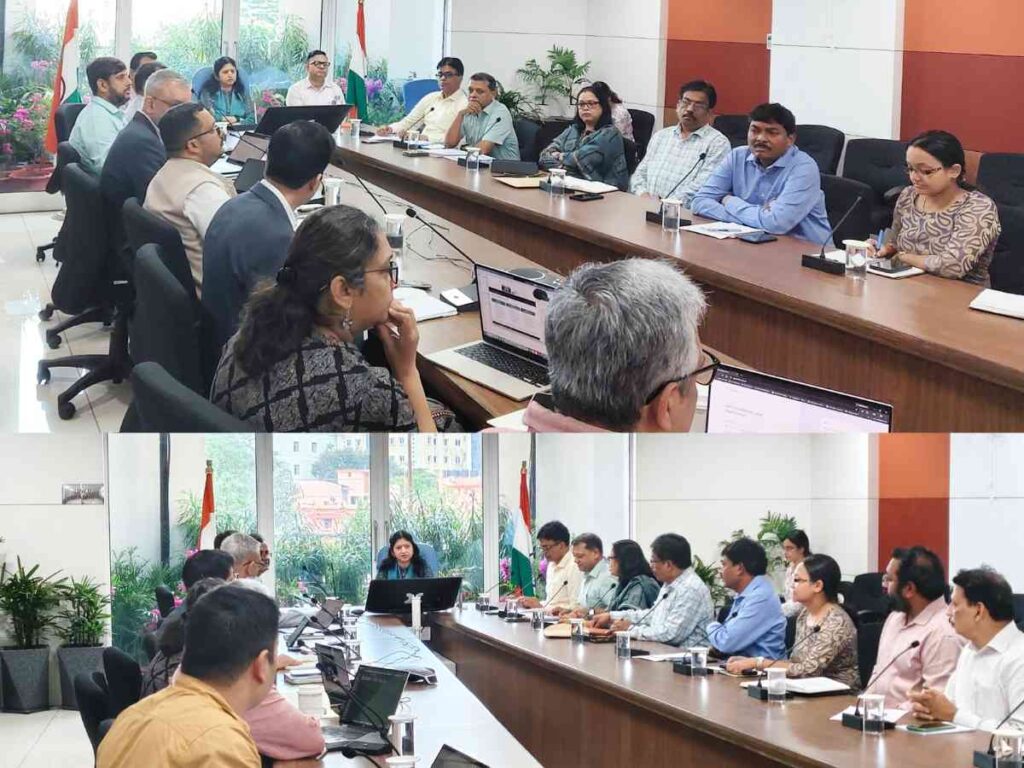
At a high-level review meeting chaired by Additional Chief Secretary, Housing & Urban Development Department, Usha Padhee, the Government assessed the progress of the ADB-supported Technical Assistance Programme aimed at preparing a Comprehensive Regional Mobility Plan (CRMP) and a State-wide Bus Service Transformation Roadmap—two initiatives expected to fundamentally reshape the way people and goods move across Odisha.
The programme, backed by ADB assistance of US$1 million and formalised in December 2025, represents one of the most significant regional mobility planning exercises undertaken in the state. Designed to align transport systems with future economic and urban growth, the initiative seeks to create seamless connectivity across cities, industrial hubs, logistics corridors and emerging growth centres.
Stretching across nearly 11,900 square kilometres, the Bhubaneswar-Cuttack-Puri-Paradip Economic Region is home to over 9.2 million people and more than 4.1 million workers. As Odisha’s most dynamic economic corridor, the region is witnessing rapid urban expansion, industrial development and increasing travel demand.
Recognising the need for a coordinated and long-term strategy, the proposed Comprehensive Regional Mobility Plan will provide a twenty-year vision for integrated transport and urban development. The plan will encompass multimodal transport networks, public transit systems, non-motorised mobility infrastructure, freight and logistics management, parking policies, transit-oriented development and climate-resilient mobility solutions.
Supported by extensive surveys, GIS-based mapping, travel demand modelling and socio-economic assessments, the CRMP aims to create a scientific and evidence-based framework for mobility planning that aligns with Odisha’s aspirations for sustainable growth.
Alongside regional mobility planning, the meeting reviewed progress on the State-wide Bus Service Transformation Roadmap being prepared for Capital Region Urban Transport (CRUT) and Odisha State Road Transport Corporation (OSRTC).
The roadmap seeks to modernise public transport through route rationalisation, fleet expansion, electrification strategies, intelligent transport systems and digital innovations. The objective is not only to strengthen urban mobility within the capital region but also to improve regional and inter-city connectivity across the state.
Officials noted that the initiative will help create a more efficient, passenger-friendly and financially sustainable public transport ecosystem while accelerating Odisha’s transition towards cleaner and greener mobility solutions.
A key focus of the discussions was the integration of transport planning with broader urban development strategies. Deliberations were held on policy frameworks relating to Transit-Oriented Development (TOD), Land Value Capture (LVC), urban redevelopment and innovative financing mechanisms to support future mobility investments.
The meeting also examined plans for operationalising a Unified Transport Authority (UTA) for the BCPPER region, a critical institutional reform aimed at enabling coordinated planning, multimodal integration and streamlined governance across transport agencies.
ADB representatives further presented the proposed City Economic Region (CER) framework for BCPPER, which seeks to integrate mobility, logistics, governance reforms, digital infrastructure and urban development under a unified regional growth strategy. The initiative is expected to unlock new investment opportunities and enhance the region’s competitiveness as a major economic hub in eastern India.
Chairing the review, Usha Padhee emphasised that mobility must serve as a catalyst for economic transformation and sustainable urbanisation. She highlighted the importance of inter-departmental coordination, data-driven planning, stakeholder engagement and timely implementation to ensure the success of the programme.
She observed that the Bhubaneswar-Cuttack-Puri-Paradip corridor possesses immense potential to emerge as a model economic region powered by efficient transport systems, integrated planning and world-class connectivity.
As Odisha continues its journey towards becoming a leading economic powerhouse, the Government’s collaboration with ADB signals a decisive shift towards building smarter cities, stronger regional linkages and a mobility ecosystem capable of supporting the aspirations of millions in the decades ahead.