






















An exploration of the paradoxes in India’s Hindi Heartland through Gazala Wahab’s lens, the timeless impact of Mughal-E-Azam at 65, and the irreverent origins of political cartoons
Mrinal Chatterjee

Hindi Heartland
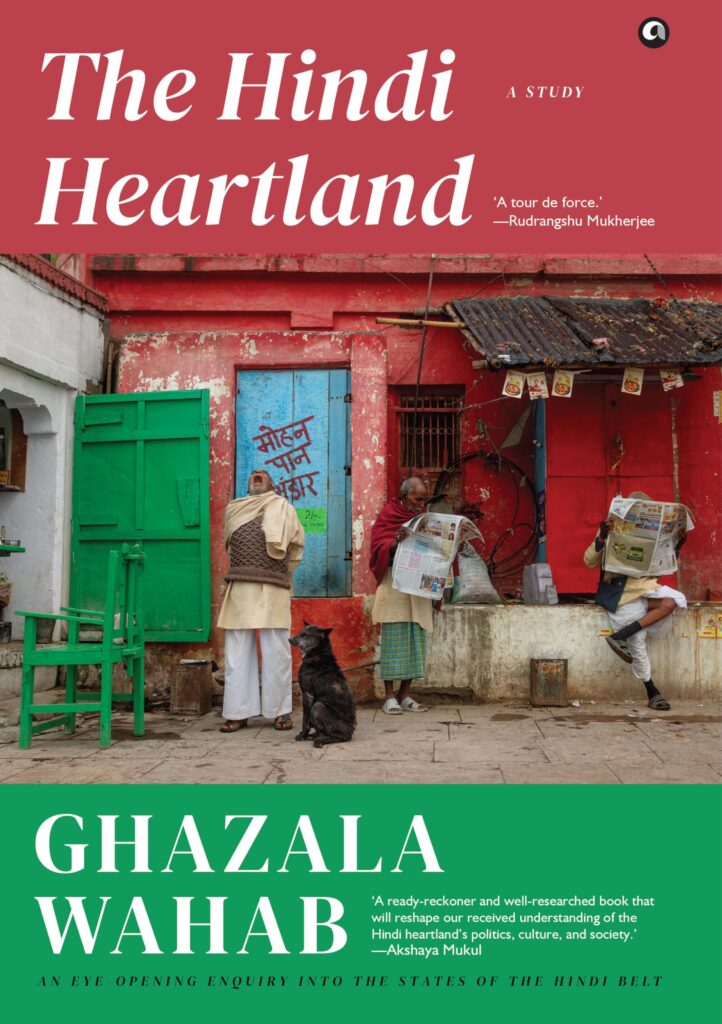
Hindi Heartland in India is an enigma and a puzzle.
Consider this: The Hindi heartland, comprising Bihar, Chhattisgarh, Jharkhand, Madhya Pradesh, Rajasthan, Uttarakhand, and Uttar Pradesh, covers nearly 38 per cent of India’s total area and is home to over 40 per cent of India’s population. It provides the country with over 40 per cent of its parliamentarians and determines the contours of national politics (out of the fifteen prime ministers India has had since 1947, eight have been from the Hindi belt). Some of the Hindi heartland states have most fertile land of the country, abundant water and minerals.
Yet, despite its political significance, human capital and natural resources the Hindi belt is among the most impoverished regions in the country. It consumes the bulk of the country’s resources, but lags behind other states on various economic and welfare indices. Bihar has the worst secondary school dropout rate: 25.6 per cent. As per the NCRB’s 2024 crime report, the state with the most reported crimes is Uttar Pradesh. The per capita crime rate of UP is 7.4 (just for perspective in Haryana and Odisha it is 3.8).
The Hindi heartland is plagued by violence, illiteracy, unemployment, corruption, poor life expectancy, and numerous other ills.
Centuries of war, conquests, invasions, political movements, and religious unrest have made the heartland a place of immense paradox. Despite its extraordinary and timeless religious heritage—some of the country’s most revered spiritual leaders were born here and it is home to innumerable shrines and places of pilgrimage—it has also witnessed some of the worst communal riots in the country and has been troubled by long-running, divisive sectarian politics. Many of India’s founders, who gave the country its secular identity, hailed from the heartland, but so too did those who have spread religious discord. And the land of Ganga–Jamuni tehzeeb routinely witnesses lynching and murder in the name of religion.
Award winning author Gazala Wahab in her latest book ‘The Hindi Heartland’ attempts to decode the enigma. She explores the geography of the region, looks at its political history, economy, caste, religion, the rural–urban divide, and several other aspects.
Read this book to understand the Hindi heartland as it is today, and how it is shaping and impacting the idea that is India.
Mughal-E-Azam@65
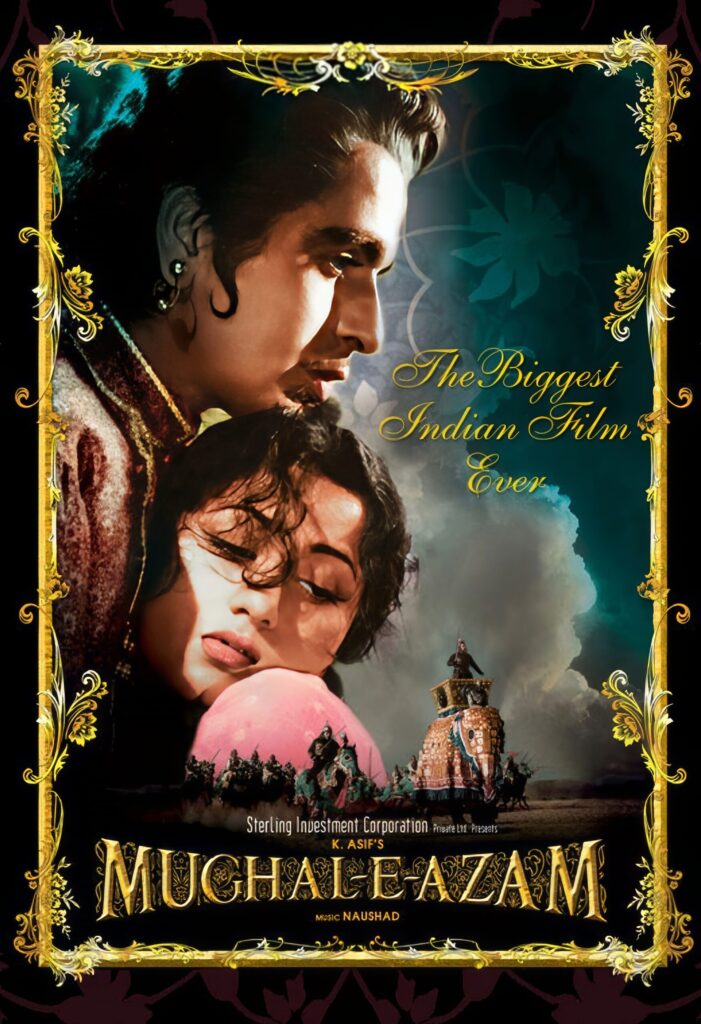
Mughal-e-Azam, the iconic Hindi film, often regarded as the timeless epic of love and majesty was released on 5 August 1960 in 150 cinema halls across the country, establishing a record in the widest release for a Hindi film till then. Directed by K. Asif, this magnum opus redefined grandeur, storytelling, and artistic ambition in Bollywood. Its legacy continues to inspire filmmakers, historians, and audiences alike, even over six decades after its release.
At its heart, Mughal-e-Azam is a tragic love story set against the opulent backdrop of the Mughal Empire. It tells the tale of Prince Salim (played by Dilip Kumar) who falls in love with the beautiful court dancer Anarkali (played by Madhubala). Their romance sparks a conflict with Salim’s father, Emperor Akbar (played by Prithviraj Kapoor), who cannot accept a commoner as the future queen. What follows is a stirring saga of passion, rebellion, sacrifice, and the inexorable clash between duty and desire.
One of the film’s most striking features is its visual splendour. K. Asif’s vision was epic in scale — from the intricately designed palaces and battle scenes to the lush costumes and elaborate sets, every frame was crafted like a painting. The use of lighting, props, and camera angles contributed to a majestic aura that was unmatched in Indian cinema at the time. Notably, most of the film was shot in black and white, but the song “Pyar Kiya To Darna Kya” was filmed in colour using Technicolor, making it a historic cinematic moment.
The performances in Mughal-e-Azam remain legendary. Dilip Kumar brought gravitas and quiet intensity to Salim, while Madhubala’s portrayal of Anarkali was both tender and defiant — a woman who loved fearlessly and paid a heavy price for it. Prithviraj Kapoor’s commanding performance as Emperor Akbar anchored the film, portraying both royal authority and paternal turmoil with equal power.
The film’s music, composed by Naushad with lyrics by Shakeel Badayuni, is still celebrated as one of the finest soundtracks in Hindi cinema. Songs like “Pyar Kiya To Darna Kya”, “Mohe Panghat Pe”, and “Bekas Pe Karam” have achieved iconic status, not just for their melody but for their emotional resonance within the narrative.
Mughal-e-Azam took over a decade to make and faced numerous production challenges, including political turbulence and financial constraints. Yet, upon its release, it became the highest-grossing Indian film of its time and won both critical and popular acclaim. It also won the National Film Award for Best Feature Film in Hindi and several Filmfare Awards.
In 2004, the film was painstakingly restored and re-released in colour, introducing a new generation to its timeless magic. The stage adaptation of Mughal-e-Azam as a musical play in recent years has further reaffirmed its cultural significance.
Irreverence
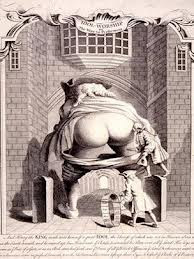
One of the earliest political cartoons in Britain was that of Robert Walpole, considered as the first British prime minister (1720 to 1742), who was represented by his exposed rear end.
The cartoon did not show his face, because everybody knew you had to kiss his bottom if you wanted a highly paid government job. Walpole’s attempts to arrest cartoonists only heightened interest in this medium. Bowing to the inevitable, he commissioned more flattering cartoons in an attempt to outflank his rivals.
The point that I am trying to make is cartoons by nature are irreverent- from the beginning of this art form.
(The author is Professor at Indian Institute of Mass Communication, IIMC Dhenkanal. Views expressed are personal.)