











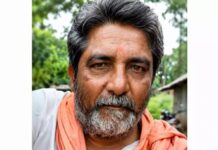

“The freedom of the press in India is no longer a right of the journalist, but a privilege of the owner,” warns veteran journalist P. Sainath
OdishaPlus Bureau
In a scathing critique of the contemporary Indian media landscape, veteran journalist and Magsaysay Award winner P. Sainath delivered a powerful keynote address at the Indie Journal Media Conclave. In his speech, he dissected the systemic issues that he argues have led to the demise of genuine journalism in the country. He asserts that the media, now largely a tool for corporate and political power, has abdicated its responsibility to the people, choosing instead to serve the interests of its owners.
Sainath’s speech, delivered to a captivated audience, drew a sharp distinction between “media” and “journalism.” “Media and journalism are distinct entities,” he declared, “with media largely comprising profit-seeking corporations, unlike journalism which is a profession.” This fundamental difference, he argued, is at the heart of the current crisis. The concentration of media ownership in the hands of a few powerful individuals has transformed the “freedom of the press” into the “freedom of the purse,” where financial power dictates the narrative.
A significant portion of Sainath’s address focused on the alarming concentration of media ownership. He pointed to the immense financial value of the Indian media and the staggering control wielded by a single individual, Mukesh Ambani, over a vast portion of it, particularly in the realm of streaming services. This corporate stranglehold, Sainath argued, has created a media ecosystem that is not only beholden to corporate interests but also actively hostile to any form of dissent or critical inquiry.
He highlighted the stark contrast between the media’s fawning coverage of the extravagant Ambani wedding and its near-total silence on the historic Kisan Andolan (farmers’ protest), the largest peaceful democratic protest in 30 years. This selective coverage, Sainath contended, is a deliberate strategy to divert public attention from pressing issues and to manufacture consent for the government’s policies. He also pointed to the media’s failure to question the government’s official COVID-19 death figures, a lapse that he described as a betrayal of the public trust.
Sainath also launched a blistering attack on the exclusionary nature of the Indian media, particularly its deep-seated casteism. He revealed that a study of major Indian newspapers had found a complete absence of Dalit individuals in leadership positions, a damning indictment of the media’s commitment to diversity and inclusion. This exclusion, he argued, is not accidental but systemic, a reflection of the larger social and political structures that perpetuate caste-based discrimination.
Sainath’s speech was not merely a critique of the present; it was also a lament for a lost legacy. He traced the history of Indian media, reminding his audience of a time when journalism was a noble calling, a tool for social change and national liberation. He spoke of the courage and idealism of early journalists and freedom fighters like Raja Ram Mohan Roy, Mahatma Gandhi, and B.R. Ambedkar, who used the press to challenge colonial rule and to build a more just and equitable society.
This legacy, Sainath argued, has been betrayed by the current generation of media owners and editors, who have traded their professional integrity for profit and political patronage. The rise of digital monopolies has further exacerbated this crisis, creating a media environment that is characterized by “brain rot” and “doomscrolling,” where sensationalism and trivia have replaced serious journalism.
Despite his grim assessment, Sainath did not end his speech on a note of despair. He issued a passionate call to action, urging his audience to support independent, people-centric journalism. He called for a return to the first principles of journalism: to cover the everyday lives of ordinary people, to give voice to the voiceless, and to hold the powerful to account.
Sainath’s speech was a powerful reminder of the vital role that a free and independent press plays in a democracy. It was a wake-up call to all those who value truth, justice, and accountability. As the Indian media stands at a crossroads, his words serve as a guiding light, a call to reclaim the soul of journalism from the clutches of corporate and political power.
You can watch the full speech here: https://youtu.be/D0BtDwtvzpU
(P Sainath is a renowned journalist, columnist, Magsaysay award winner and the Founding Editor of People’s Archive of Rural India (PARI Network). He is also known as the Father of Rural Journalism for his extensive and notable works on Rural India. Views expressed are his personal.)