















A centenary tribute to Rabi Ray, the socialist leader and former Lok Sabha Speaker whose integrity, reforms, and public service shaped India’s democratic traditions
Bhaskar Parichha

Rabi Ray (1926–2017) belonged to a rare generation of leaders for whom politics was neither a profession nor a ladder to power but a moral vocation.
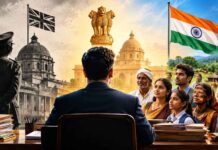
Born in the quiet village of Bhanragarh in Khurda, he grew up in India, still fighting for its freedom. By the time he entered Ravenshaw College, the Gandhian wave had already shaped his imagination. It was there, as a young student, that Ray tasted both rebellion and responsibility: in 1946–47 he led a group of students who brought down the Union Jack and hoisted the Tricolour, an audacious act that earned him arrest—and set him firmly on the path to public life.
After graduating and briefly studying law, Ray chose the road of activism over legal practice. The socialist vision of Ram Manohar Lohia captivated him, and in 1948, he entered the Socialist Party with the fervour of a convert.
Over the next decade, he travelled across Odisha’s princely states, immersing himself in movements for social reform and non-cooperation. His organisational ability and uncompromising integrity earned him the trust of both villagers and party workers. By 1960, he rose to become the first general secretary of the Socialist Party and helped create the Young Socialist League, nurturing a generation of idealistic youth.
Ray entered national politics through Kendrapara, a constituency that remained loyal to him because he never behaved like a politician who needed to be re-elected. He won the seat in 1967 and went on to become a central figure in India’s turbulent coalition era. His political journey took him through the Samyukta Socialist Party, the Janata Party, and later the Janata Dal, but his ideological anchor never shifted. For Ray, coalition politics was not a compromise; it was the democratic expression of a plural society.
His first stint in high office came when he was elected to the Rajya Sabha in 1974 and later appointed Union Minister for Health and Family Welfare in 1979 under Morarji Desai. True to his style, he worked quietly, focusing on accessible healthcare and rational population policies. What mattered to him was not visibility but impact.
Ray’s finest hour came a decade later. In 1989, during a period of intense political fragility, he returned to the Lok Sabha from Kendrapara and was unanimously elected Speaker. It was a rare consensus in a deeply divided Parliament, and a recognition of his reputation for fairness. As Speaker, Ray navigated the chaos of a hung House with calm authority. Even when faced with threats—most famously from Minister Subramanian Swamy during disqualification proceedings—he stood firm, refusing to bend rules or dilute parliamentary dignity.
His tenure was transformative. Ray pioneered the idea of Department-related Parliamentary Standing Committees, initially set up in four sectors. The system, later expanded in 1993, brought a degree of scrutiny, expertise, and bipartisan dialogue that Indian legislation had long lacked. It remains one of the most significant parliamentary reforms of the late 20th century, a legacy that quietly strengthens Indian democracy to this day.
Outside Parliament, Ray remained a public intellectual committed to dialogue and dissent. Through his “gosti bichar” gatherings, he encouraged open discussion on governance, socialism, and moral politics. Even in his later years, he stood with people’s movements, including his opposition to the proposed POSCO steel plant in Odisha on grounds of displacement and environmental harm.
Ray lived simply and without pretension. His wife, Dr. Saraswati Swain, a pioneering medical academic, retained her maiden name—an early symbol of the progressive values he upheld without fanfare. When he passed away in 2017, tributes poured in from across political lines. Naveen Patnaik captured the sentiment when he called Ray a “veteran socialist leader” who enriched parliamentary traditions.
In a political landscape increasingly marked by spectacle, Rabi Ray’s life offers a different narrative—one of restraint, rectitude, and moral purpose. He left no dynasty, no monuments, and no wealth. What he left instead was a way of doing politics: with dignity, with courage, and with an unshakeable faith in the power of democratic institutions.
His memory endures not through the positions he held, but through the values he practised every day, quietly and resolutely.
(The author is a senior journalist and columnist. Views expressed are personal.)