

















Majhi Government’s 2025 initiatives strengthened women empowerment in Odisha through welfare schemes, entrepreneurship, leadership, safety reforms, and social security
OdishaPlus Bureau

Adolescent Girl Empowerment
The Kishori Shakti Yojana, which translates to ‘Adolescent Girl Empowerment Scheme’, is a program initiated by the Ministry of Women and Child Development in India and implemented by the Government of Odisha for juvenile girls aged 11 to 18 under the Integrated Child Development Services (ICDS). Its objective is to empower adolescent girls, encourage self-reliance, assist them in their studies and vocational pursuits, promote healthcare, and provide them with societal exposure to acquire knowledge, enabling them to develop into responsible citizens who challenge social norms.
The prominence of women in agriculture in Odisha has fostered a more favorable work environment within the development sector. In Odisha, female cultivators constituted 20.11% of the agricultural workforce, a figure that has now risen to nearly 53.90%. The state has introduced remarkable schemes to enhance women’s participation in agriculture and related sectors. Collectively, these initiatives aim to improve socio-economic conditions, promote self-reliance, and ensure access to education, healthcare, and safety for women and girls in Odisha.
The ‘Lakhpati Didi’ initiative by the current BJP government represents a significant step towards women’s empowerment. This program aspires to transform over one crore women in Odisha into potentially affluent individuals, providing them with benefits under the Subhadra Yojana. Consequently, the state is making strides towards elevating women to the status of millionaires through the Lakhpati Didi initiative.
The ‘Ama Subahaka Yojana’, which was recently launched, is a self-employment initiative aimed at women. Previously, the BJD government had introduced a scooty culture and a smartphone-savvy culture as part of its freebie programs for working women and women in the agricultural sector, respectively. In contrast, the current administration has introduced the Ama Subahaka Scheme to promote self-employment among women.
This innovative scheme promises numerous benefits for industrious women who engage in profitable transport and cab services, fostering self-reliance. The Odisha government, through the Ama Subahaka Yojana, intends to offer working capital of up to Rs 10 lakh, which must be repaid over a five-year timeframe. Additionally, women who choose electric vehicles will qualify for an extra incentive of Rs 2 lakh.
The ‘Madhu Babu Pension Yojana’, managed by the Social Security and Empowerment of Persons with Disabilities Department of the Government of Odisha, is a social welfare initiative aimed at providing financial support to elderly citizens, widows, destitute individuals, and the poorest segments of society. Recent reports indicate that over 121,000 destitute or divorced women are currently receiving financial assistance, thereby enhancing their social security.
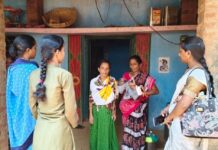
Odisha is witnessing a surge in women entrepreneurs, particularly in sectors such as food processing of millets, traditional snacks, handlooms, digital services, and handicrafts. With the support of the Odisha government’s progressive schemes, such as Mission Shakti and initiatives that promote Self-Help Groups (SHGs), many ordinary women have transformed into extraordinary state-grown start-ups. Successful entrepreneurs like Nazia Ali, Shyama Jha, and Shantilata Das, among others, are now paving the way for women in innovative and profitable enterprises, breaking through traditional barriers.
The participation of women from Odisha in politics and leadership roles has introduced a new dimension to revitalizing the Millennium Development Goals (MDG). The Odisha government’s approach to women’s empowerment is remarkable for its genuine efforts to enhance women’s involvement in all areas of development and governance.
The Odisha government, led by the Biju Janata Dal (BJD), previously allocated 50% of seats in Panchayati Raj institutions and one third of Lok Sabha seats for women. As a result, several members emerged as leaders among women. In contrast, during the BJP administration under Mohan Majhi, one of the Deputy Chief Ministers is a woman. Deputy Chief Minister Pravati Parida oversees the Women & Child Development Department of the state, actively working towards the comprehensive development of mothers and children.
In addition, the Speaker of the Odisha Assembly is a woman. Surama Padhy is skillfully leading the Odisha legislation, demonstrating her capable leadership on the floor. Bhubaneswar MP Aparajita Sarangi stands out as a prominent Parliamentarian, representing the state with pride while meticulously heading various Constitutional Panels. Furthermore, Anu Garg, a dynamic IAS Officer, has recently been appointed as the Chief Secretary of Odisha, marking a historic decision by the Odisha government to elevate women to significant positions.
In 2025, a significant crackdown on violence and cruelty against women and children has been recorded. The Odisha government and police have adopted a multi-faceted strategy to combat violence and cruelty towards these vulnerable groups. This strategy includes the establishment of specialized police units, the launch of helplines, the creation of special courts, and the initiation of community-level awareness and prevention programs.
Women and Child Cells and Desks have been set up in every police district, along with ‘Mahila & Shishu Desks’ in 608 police stations, to ensure a comprehensive and sensitive police response to crimes against women and children. A Crime Against Women & Children (CAW & CW) Wing has been established under the Crime Branch to monitor, supervise, and investigate significant and sensitive cases of crimes against women and children, ensuring successful prosecution.
In a similar vein, 24 specialized courts established under the Protection of Children from Sexual Offences (POCSO) Act are operational to accelerate the judicial process in cases of sexual offenses involving children. Investigative Units for Crimes Against Women (IUCAW) are active in 29 districts, concentrating on sensitive cases.
Additionally, there are 36 Anti-Human Trafficking Units (AHTUs) dedicated to the prevention, rescue, and rehabilitation of trafficking victims, collaborating with various departments and NGOs.
Law enforcement agencies implement strict regulations, including the Protection of Women from Domestic Violence Act, 2005, the Dowry Prohibition Act, 1961, and the POCSO Act, 2012, among others. The Emergency Response Support System (ERSS), accessible by dialing 112, offers a timely, prompt, and sensitive response to women and children in distress. The toll-free number 181 is available 24/7 for both emergency and non-emergency assistance, connecting victims with police, hospitals, and legal services. The helpline number 1098 is specifically designated for children requiring care and protection.
Moreover, One Stop Centres Sakhi provide comprehensive support, including medical aid, legal assistance, and psychological counseling, to women affected by violence, all under one roof. Among the ‘Community and Preventive Initiatives,’ the Odisha government has implemented Community Policing, known as “Ama Police Samiti,” to empower women to report issues without fear.
The Odisha Police, in collaboration with UNICEF, has conducted campaigns such as “Paree Pain Kathatiye” and “Operation Muskan/Smile” to promote awareness against child sexual abuse and to rescue missing children.
The Keonjhar police have initiated ‘Project Rakhi’, a QR-based WhatsApp chatbot, enabling women to file complaints directly from their mobile devices. With all the interventions and outcomes characteristic of a good-governance model, the women in the state have excelled in various aspects, whether socially, economically, psychologically, or politically. Thanks to the diverse support from the government, girls are thriving and beaming with joy, a testament to the innovative initiatives devised by the state for their social security and integrity. Furthermore, women are actively engaging in national development.
Read the remaining Schemes and Initiatives here:
Majhi Government: 2025 Was A Standout Year for Schemes and Initiatives– I
Majhi Government: 2025 Was A Standout Year for Schemes and Initiatives – III