










Renowned poet Robin S. Ngangom reflects on being announced as the recipient of the Jayanta Mahapatra National Award for Literature in an exclusive with OdishaPlus
OdishaPlus Bureau

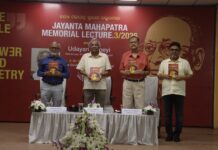
Renowned bilingual poet and translator Robin S. Ngangom has been announced as the recipient of the 3rd Jayanta Mahapatra National Award for Literature, to be presented during the Toshali Literature Festival 2026 on January 31.
In an exclusive conversation with OdishaPlus, Ngangom described the recognition as an honour received with “elated surprise and deep humility”, noting that the award holds special significance for him as it bears the name of Jayanta Mahapatra, a poet he deeply admired and shared a close literary bond with.
“I received the news with elated surprise and deep humility, mindful that there may be other writers more deserving of such recognition,” Ngangom said. “Yet because Jayanta Mahapatra is dear to me, and because he is a poet I have long admired, I am especially moved to receive an award instituted in his name and in his memory. It is an honour I will cherish always, both for what it signifies and for the enduring legacy it commemorates.”
Jayanta Mahapatra, one of India’s most influential voices in English poetry, was known for his contemplative and deeply humane verse that engaged with themes of time, faith, history, memory and moral responsibility. A Sahitya Akademi Award and Padma Shri awardee, Mahapatra gave Odisha a distinctive place in Indian English literature. Beyond his own writing, he played a significant role as a mentor and editor, encouraging poets across the country, particularly from the Northeast. The national award instituted in his name honours poets whose work reflects the ethical seriousness, lyrical restraint and human sensitivity that defined his literary legacy.
Reflecting on how the award may influence his creative journey, Ngangom spoke candidly about his own self-perception as a poet. “I have long regarded myself as a part-time and often struggling poet,” he said, adding that the recognition has strengthened his faith in the value of his work. Drawing inspiration from Mahapatra’s lifelong devotion to poetry, he expressed hope that creativity would continue to guide him forward. “In the spirit of Jayanta Mahapatra—who was a guiding light and a prolific poet, ever seized by the creative impulse—I hope that poetry will continue to seek me out.”
Recalling his personal association with the late poet, Ngangom remembered Mahapatra with deep fondness and gratitude. He credited him with providing his first significant publishing opportunity by selecting one of his poems for the inaugural poetry page of The Telegraph magazine. “That encouragement instilled in me the confidence and resolve to continue writing and publishing my work,” he said.
He also highlighted Mahapatra’s role as a mentor to poets from the Northeast. “He guided and supported many poets from the region, for whom he had a special regard,” Ngangom noted. “Above all, he was a brother in poetry. I believe we shared a ‘secret understanding of hearts’ that kept us closely connected, even when we were mostly physically distant from one another.”