





















Explore Odisha’s ecological crisis—vanishing rivers, declining forests, and climate change impacts shaping sustainability, livelihoods, and future development
Rabindra Kumar Nayak
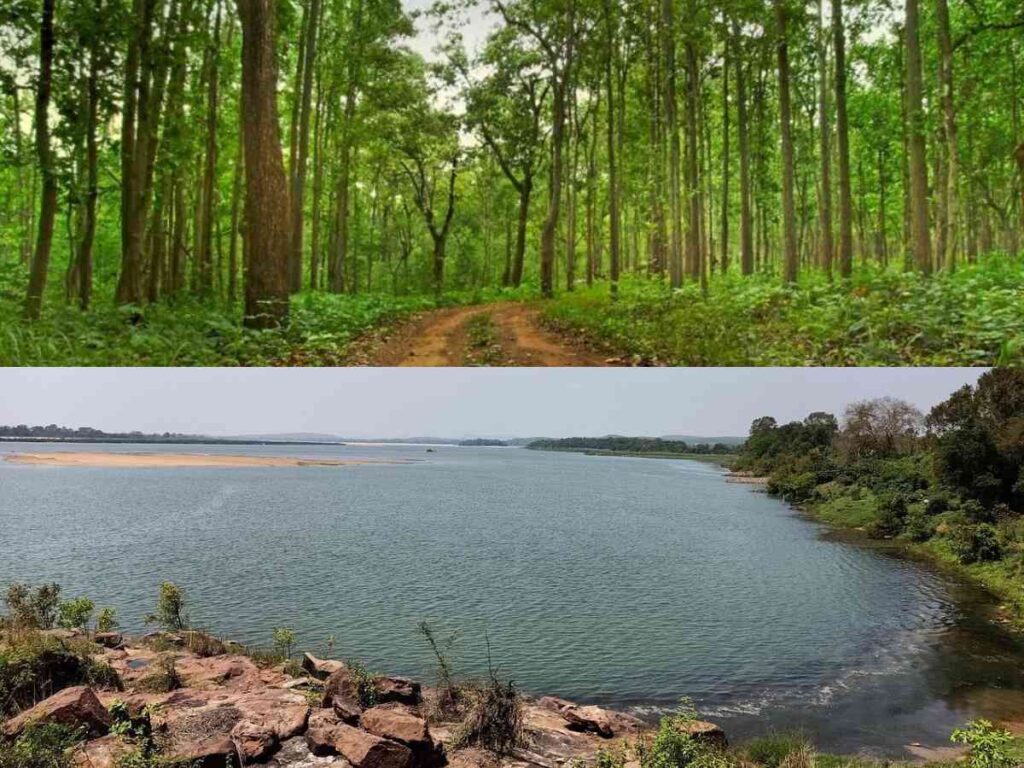
Odisha, long celebrated for its rivers, forests, and ecological richness, now stands at a critical threshold. The elements that have shaped its cultural memory—flowing rivers, dense forests, and tribal symbiosis with nature- are increasingly under threat. What emerges is not merely an environmental crisis but a deep ecological anxiety: a collective unease about a future where rivers may cease to flow freely and forests may fall silent. This anxiety is rooted in everyday realities, scientific evidence, and socio-political contradictions.
Rivers in Distress
Rivers in Odisha have historically sustained agriculture, culture, and livelihoods. Today, their ecological health is in steady decline. Studies on major rivers reveal severe water contamination caused by industrial discharge, urban runoff, and agricultural pollutants. Several river stretches are now officially classified as polluted, with water quality deteriorating to levels unfit for regular use.
The consequences are far-reaching. Declining oxygen levels, toxic substances, and disrupted aquatic ecosystems threaten fisheries and rural livelihoods. Rivers that once nurtured communities are increasingly becoming carriers of disease and ecological decay.
Beyond pollution lies a deeper structural concern, the disruption of natural river flows. Over-extraction, dam construction, sand mining, and interstate disputes have altered hydrological systems. Such interventions reduce rivers to fragmented or seasonal entities, undermining their ecological integrity.
Forests under Siege
If rivers are losing vitality, forests are losing their voice. Odisha’s significant forest cover conceals a troubling reality: declining quality and fragmentation. Deforestation driven by mining, infrastructure expansion, and urban growth has led to habitat loss, soil degradation, and water contamination.
Mining activities, particularly in mineral-rich districts, have emerged as major ecological disruptors. Forests are cleared for resource extraction, but the ecological costs are borne by biodiversity and local communities. Even protected areas face degradation due to administrative inefficiencies and a lack of community involvement.
The silence of forests is not merely the absence of trees; it signals the erosion of biodiversity, ecological balance, and indigenous knowledge systems that have sustained these landscapes for generations.
Climate Change
The degradation of rivers and forests is closely linked to climate change. Odisha, already vulnerable to cyclones, floods, and droughts, is experiencing increasing climatic unpredictability. Erratic rainfall patterns are disrupting agriculture and forest-based livelihoods, particularly in tribal regions.
Climate change intensifies existing vulnerabilities. Degraded forests lose their capacity to regulate climate, while polluted rivers struggle to sustain ecosystems. This creates a feedback loop of ecological instability, where environmental damage accelerates further degradation.
A False Dichotomy
At the heart of Odisha’s ecological anxiety lies a fundamental tension between development and sustainability. The state’s economy relies heavily on mining, industrialisation, and infrastructure expansion. While these generate revenue and employment, they also place immense pressure on natural resources.
The prevailing development model often treats rivers and forests as expendable assets rather than living systems. Projects are frequently implemented without adequate environmental safeguards or meaningful community participation. Compensatory measures, such as afforestation, rarely match the ecological value of what is lost.
This raises a critical question: can development be reimagined in a way that is both economically viable and ecologically sustainable?
Ecological Consciousness
Odisha’s ecological crisis is also cultural. Rivers and forests have long been integral to the state’s spiritual and social life. Sacred groves and traditional conservation practices once preserved ecological balance through community stewardship.
However, modern economic and administrative systems have weakened these practices. The shift from community-based management to state-controlled or market-driven approaches has eroded traditional ecological knowledge. What was once sacred is increasingly treated as exploitable.
This loss deepens ecological anxiety, creating a sense of alienation from nature that is both psychological and existential.
Politics of Ecology
Ecological degradation in Odisha is deeply political. Decisions regarding land use and resource extraction are shaped by economic interests and power structures. Marginalised communities, particularly tribal populations, often bear the consequences of environmental damage while having limited participation in decision-making.
Conflicts over displacement, land rights, and environmental justice highlight the urgent need for inclusive governance. Sustainable solutions must integrate ecological concerns with social equity.
For an Ecological Future
Despite the challenges, there are signs of hope. Efforts toward river conservation, afforestation, and climate resilience are gaining attention. However, their success depends on meaningful implementation rather than symbolic action.
A sustainable ecological future requires an integrated approach: strict enforcement of pollution controls, responsible resource management, community participation in forest governance, revival of traditional ecological knowledge, and holistic river basin planning.
Call to Action
“Vanishing rivers and silent forests” is not merely a description but a reflection of a deeper existential crisis. Odisha’s ecological anxiety signals a growing awareness that current trajectories are unsustainable. The loss of rivers and forests is not only an environmental issue but a civilisational one.
Yet anxiety can also be transformative. It compels reflection and demands action. For Odisha, this means rethinking development, restoring ecological consciousness, and rebuilding the relationship between humans and nature.
The future of its rivers and forests depends on whether this anxiety leads to meaningful change or remains an unheeded warning beneath the noise of progress.
(The author is a former Reader in English. Views expressed are personal.)