















How Odissi dance engages contemporary social, ecological, and ethical concerns through innovative choreography rooted in classical tradition
Bhaskar Parichha

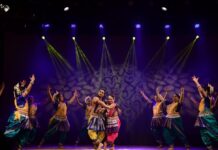
Tradition in Context, presented at the Kala Vikash Kendra Auditorium, Cuttack, as part of the birth centenary celebrations of Padma Vibhushan Guru Kelucharan Mohapatra, was not merely a commemorative event. It was a thoughtful inquiry into how classical Odissi can converse with the urgencies, anxieties, and ethical questions of the present world—without losing its aesthetic spine.
Conceived and choreographed by Dr. Rohini Dandavate and performed by Dr. Kaustavi Sarkar, the evening unfolded as a sequence of six distinct choreographic meditations. Each piece drew from diverse literary and social sources, yet remained anchored in Odissi’s grammar of tribhangi, chowka, and nuanced abhinaya.
The opening work, Agni, responded to the devastation caused by forest fires in California. Without slipping into literalism, the choreography evoked destruction and fragility through restrained movement, rhythmic tension, and charged stillness. Fire here was not spectacle but metaphor—an elemental force mirroring ecological imbalance and human vulnerability.
Vihang Gati, inspired by Richard Bach’s Jonathan Livingston Seagull, explored aspiration and freedom. Dr. Sarkar’s movement quality was fluid and expansive, suggesting flight not through mimicry but through rhythmic lift and spatial imagination. The piece resonated as a philosophical reflection rather than a narrative retelling.
The most unsettling work of the evening, Trigger, addressed the trauma of school shootings in the United States. The choreography resisted dramatization; instead, fractured movement phrases and abrupt rhythmic pauses conveyed fear, shock, and moral disquiet. Odissi’s sculptural stillness was used effectively to hold silence as meaning, allowing absence and rupture to speak.
In Enigmatic Bliss, based on Rabindranath Tagore’s poem Bichitro Anondo, the evening shifted inward. This was a finely textured exploration of life’s contradictions—joy and sorrow, surrender and resistance. Dr. Sarkar’s abhinaya here was particularly compelling, marked by emotional restraint and poetic clarity rather than overt expressiveness.
Ek Azad Pankh, inspired by Uday Dandavate’s poem of the same name, returned to the theme of freedom—this time as an inner state. The image of an “unstuck feather” became a metaphor for identity unbound by fear or expectation. The choreography allowed Odissi’s lyrical possibilities to breathe, revealing its capacity for introspective modernity.
The concluding Nachi Meera, a Meera bhajan, brought the evening back to devotional terrain. Yet even here, the emphasis was not on conventional bhakti iconography but on Meera’s defiant joy and spiritual autonomy. The piece served as a gentle reminder that dissent and devotion are not opposites in the Indian philosophical imagination.
Musically, the production benefited from a rich collaborative score, with compositions and vocals by Dr. Anirban Bhattacharyya, Dr. M.A. Jyothi, and Ashit Desai, supported by sensitive percussion, flute, and sitar. The soundscape complemented the choreography without overpowering it, maintaining Odissi’s essential balance between movement and music.
The emotional core of the evening lay in Dr. Rohini Dandavate’s return to Cuttack, to the very institution where she began learning Odissi six decades ago. This gesture infused the performance with a quiet gratitude—towards Guru Kelucharan Mohapatra, Shri Babulal Doshi, and the lineage that made such experimentation possible.
Dr. Kaustavi Sarkar, drawing from her engagement with multicultural audiences in the United States, performed with intellectual clarity and technical assurance. Her Odissi was neither museum-bound nor aggressively contemporary; it was reflective, dialogic, and deeply aware of place and time.
Tradition in Context demonstrated that classical dance does not need to abandon its roots to remain relevant. Instead, when approached with integrity and imagination, tradition itself becomes a living, questioning force—capable of responding to the world as it is, while remembering where it comes from.
(The author is a senior journalist and columnist. Views expressed are personal.)